Live: ---
Rail: 490.00-500.00 del

{{ weatherTemp }}°C
{{ weatherCity }}

AB Direct - Steers
AB Direct - Heifers
Live: ---
Rail: 490.00-500.00 del
Rail: 490.00-500.00 del
US Trade- Steers
Live: ---
Rail: ---
Rail: ---
US Trade - Heifers
Live: ---
Rail: ---
Rail: ---
Canadian Dollar
$71.65
0.08
0.08
February 13, 2026
Inspiration
The Return on Mentorship: Experiences from host ranches
As the number of farms decreases and the age of farmers increases across Canada, intergenerational knowledge transfer of farming practices is diminishing.
Fortunately, thanks to the ambition and efforts of producers and the work of organizations like Young Agrarians, new and experienced farmers can participate in apprenticeships to learn and gain valuable experiences. The Young Agrarians Apprenticeship program (YAAP) is one such opportunity.
Through this initiative, each year, host farmers and ranchers from across the country welcome a new crop of eager and green apprentices onto their operations.
“Giving somebody a leg up on understanding how to do things to go to their next step is what we do,” says Laura Hart of Hanna’s Hart Ranches. She and her husband Mike hosted an apprentice for the first time throughout the 2025 season. Their diversified operation includes beef cattle raised for auction, goats, hay and a greenhouse.
The Hart family implemented regenerative agriculture into their operation long before it became a widespread term.
“This is kind of fragile land out here. So, everybody’s been repairing it since the 30s, pretty much,” Mike says. “Now we’re starting to see ways that we can speed up the regen process.” For example, they harvest from hay lands once every four years. In between harvests, yearling steers graze that land for three years.
Spanning British Columbia, Alberta, Saskatchewan, and Manitoba, the Young Agrarians network connects aspiring farmers and growers with host farms and ranches specializing in regenerative agriculture. Applicants selected for the season are fully immersed in day-to-day operations. This paid learning opportunity offers peer mentorship and hands-on experience, equipping apprentices with the skills and knowledge needed to run a profitable and sustainable farm business.
Host farms in Alberta offer great diversity in the commodities grown and raised and skills offered. Beef producers are key participants in the program.
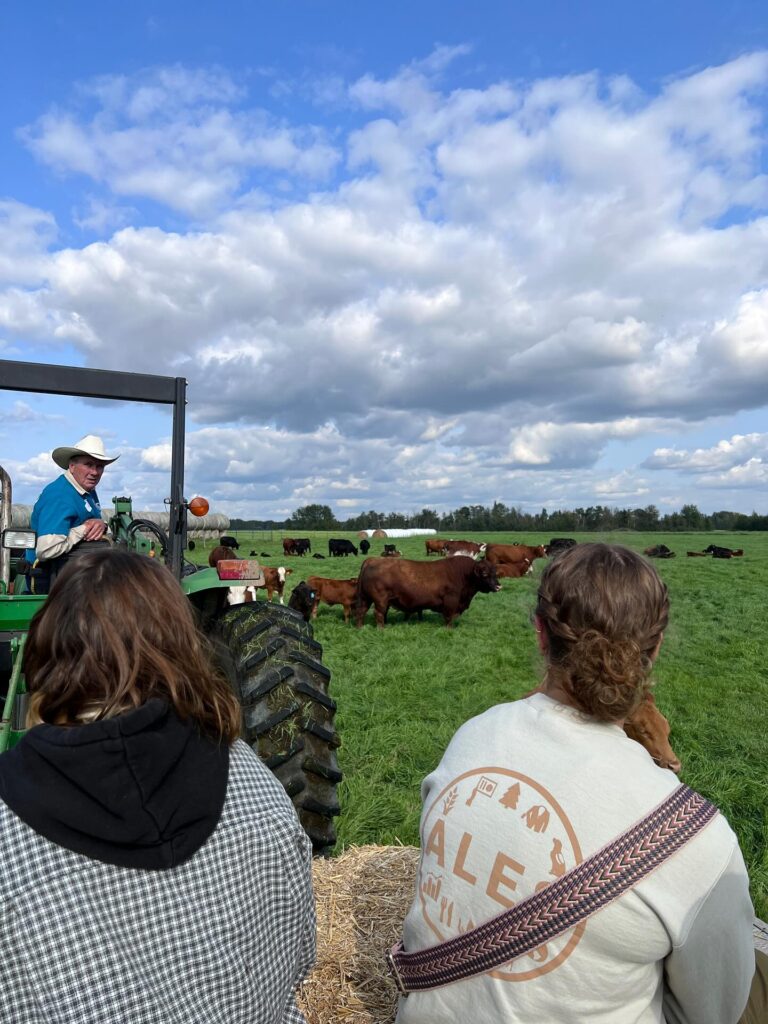
At Triple Lyoness Farm in Dapp, apprentices learn such tasks as processing calves, rotating cattle on pasture, maintaining fences, caring for broiler chickens and safely operating large equipment.
“They fell in love with the calves quickly and learned how to manage protective mothers also very quickly. And then as calving season wrapped up, they learned that the other part of cattle, a.k.a. fencing, isn’t as fun as the cattle themselves,” Briana Carlyon of Triple Lyoness Farm says of the farm’s two apprentices last year. “After checking all that fence, we built some fence. And they still continued their begrudging respect of what fences do for livestock in our area.”
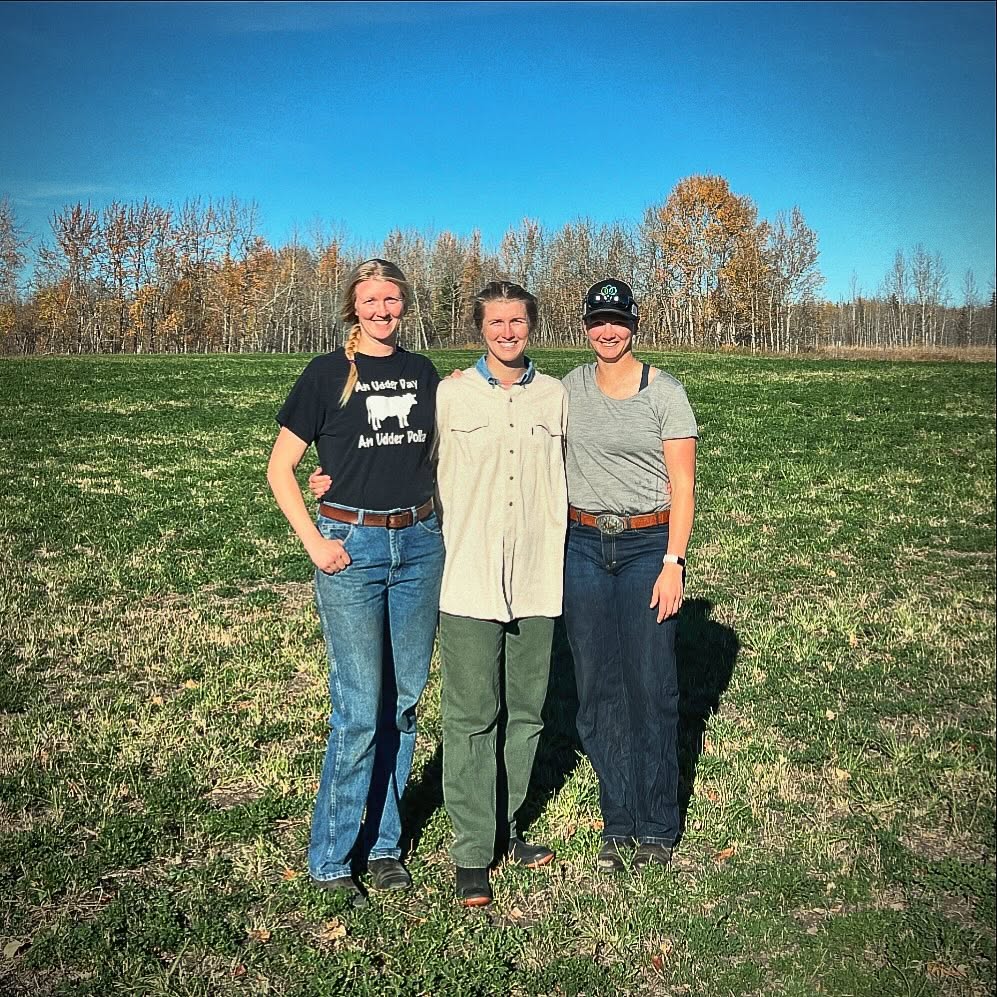
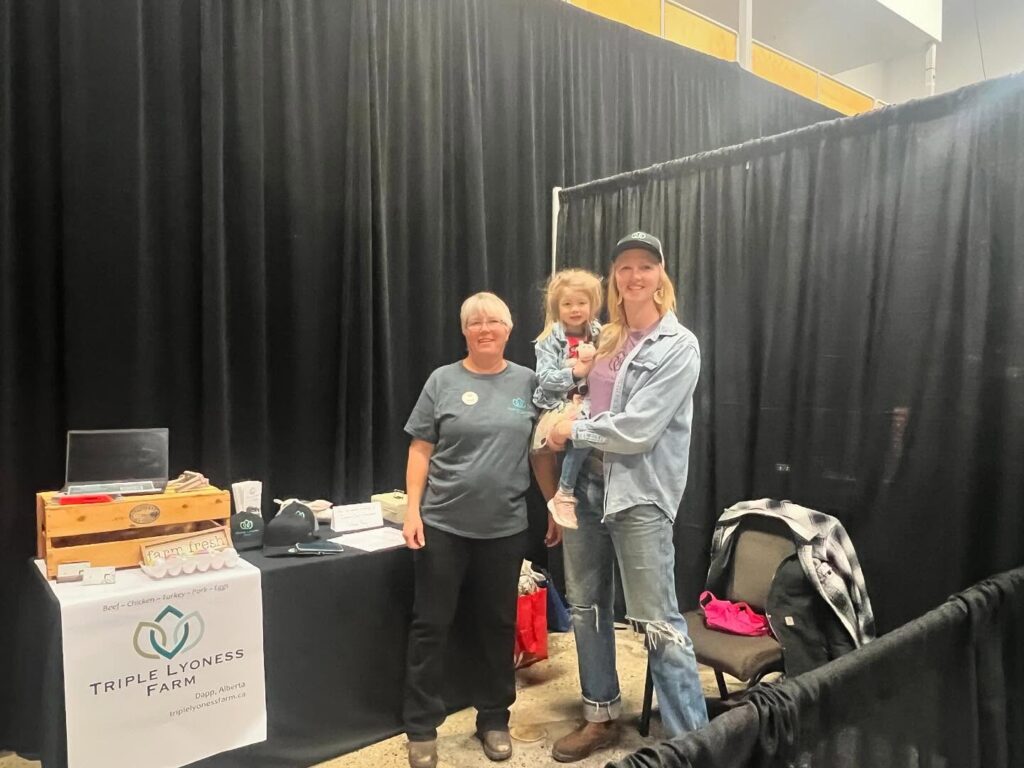
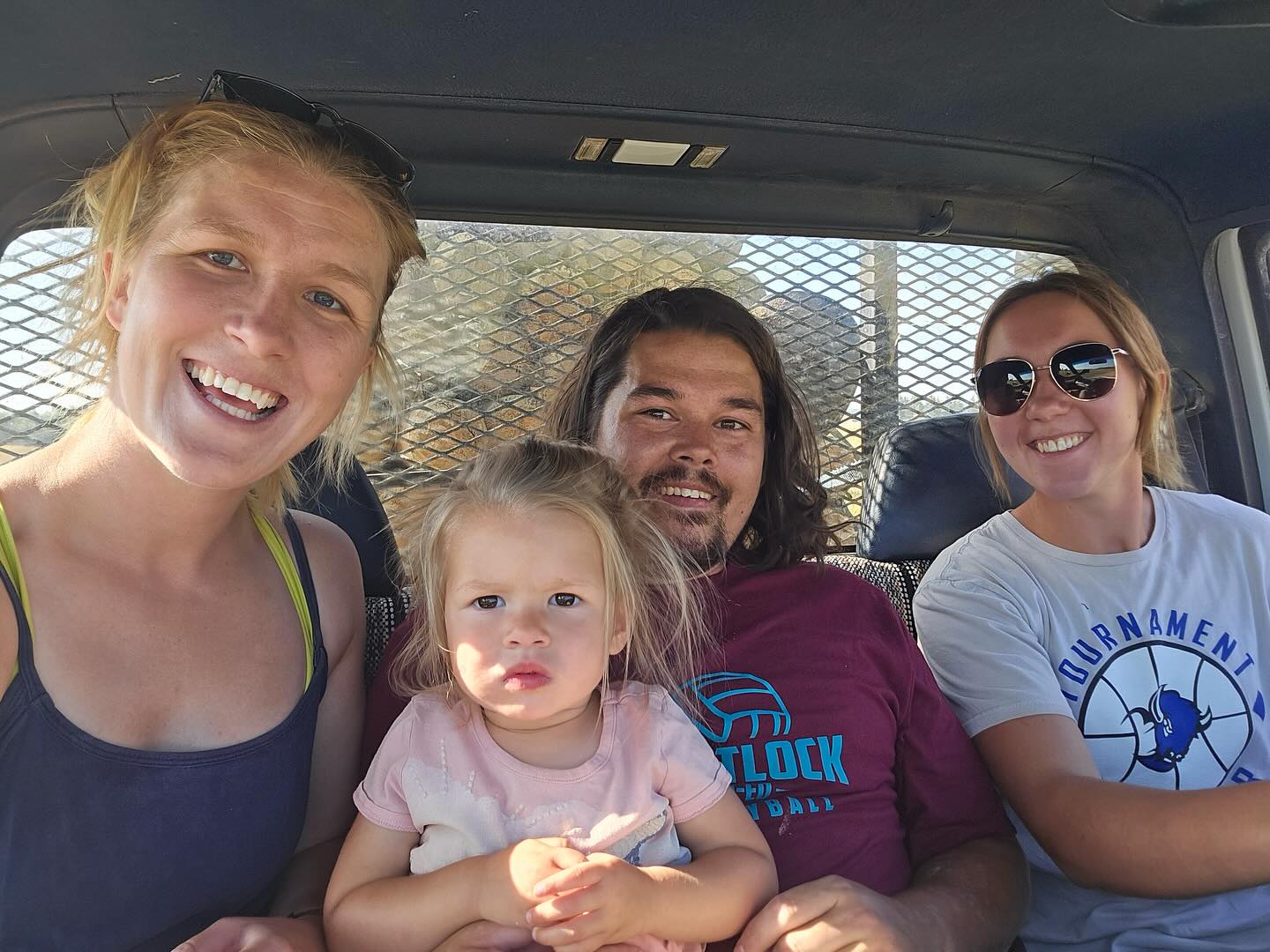
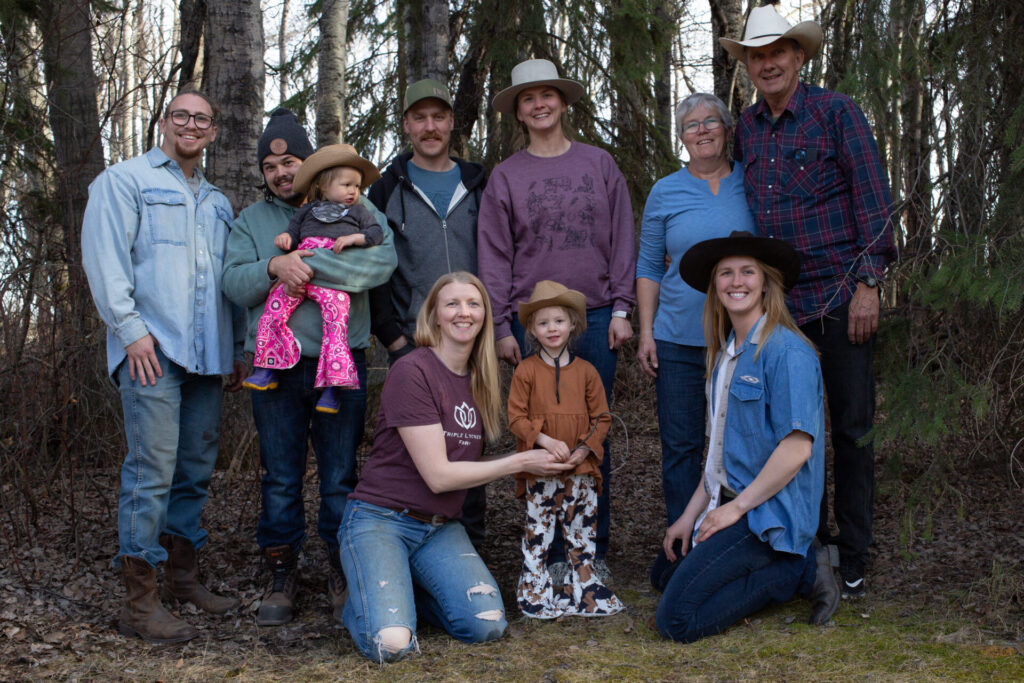
Briana farms with her parents Rod and Janet and siblings Andria and Jessica.
The Carlyon family have hosted apprentices for the last three years on their diverse farm, which is home to 250 commercial cows and 300 backgrounding steers each year.
“It was just kind of a natural step to help us find young people who are motivated and interested in this space,” Rod Carlyon, co-owner of Triple Lyoness Farm, says of joining YAAP. The family have extensive mentorship experience through coaching sports, volunteering with 4-H and collaborating with the University of Alberta and Frank Robinson Youth Academy over the years.
“It was just kind of a natural step to help us find young people who are motivated and interested in this space.”
Rod Carlyon, co-owner of Triple Lyoness Farm
Mentoring is an investment, however, and host farmers must balance patience with the reality that working farms and ranches are busy and must turn a profit. Apprentices are expected to be hard-working staff members but often need more time and instruction to learn how to complete tasks. Hosts need to be good communicators and passionate about transferring knowledge to the next generation.
“You’re taking kind of a rough diamond who is passionate but probably doesn’t know a lot,” Rod says. “Up front you have to invest time to harness this passion and direct it.”
Producers who are interested in hosting apprentices must also be willing to share all aspects of the business, including finances, as well as help apprentices find temporary housing.
Hart Ranches and Triple Lyoness Farm appreciate the insight, enthusiasm and energy that apprentices bring to their operations. People who didn’t grow up in the agricultural industry can provide fresh perspectives on farm tasks.
“It really helps when we have people…who have few preconceived notions on how to do things,” Rod says. “Often in agriculture, the folks have been on their place for decades and they’ve often done things for decades a particular way. Young fresh minds will often ask well, ‘why that way, why not a different way’.”
This annual review of operations, encouraging questions and communicating the why and how of tasks are avenues for continuous improvement, Rod adds.
Overall, hiring an apprentice goes much beyond hiring an employee for the season, but can be incredibly rewarding as aspiring farmers and ranchers learn and grow through impactful mentorship.
Editor’s Note: Writer Kate Ayers participated in the 2025 Young Agrarians Apprenticeship Program working on a three-acre organic mixed-vegetable farm on Vancouver Island.
Share this article on



Latest News
-
October 23, 2026 News
Alberta harvest nearing the finish line
-
October 23, 2026 News
Young Agrarians accepting applications for 2027 mentorship program
-
October 22, 2026 News
Canadian agriculture represented at G7 and EU meetings in Europe
Cattle Report
Updated: October 23, 2026
Steers
Live: ---
Rail: 490.00-500.00 del
Heifers
Live: ---
Rail: 490.00-500.00 del
Choice Steers
Live: ---
Rail: ---
Choice Heifers
Live: ---
Rail: ---
Boner Cows
Over 500 lbs: 255.73
Canadian Dollar
$71.65 0.08
Livestock Price Insurance Index
| Expiry | Fed | Feeder | Calf |
|---|---|---|---|
| 18-Jan-27 | 292 | 470 | -- |
| 15-Feb-27 | 292 | 460 | -- |
| 15-Mar-27 | 292 | 460 | -- |
| 12-Apr-27 | 298 | 446 | -- |
| 10-May-27 | 304 | 458 | -- |
| 07-Jun-27 | 310 | 462 | -- |
| 05-Jul-27 | 302 | -- | -- |
Last Updated on October 22, 2026