Live: ---
Rail: 490.00-492.00 del

{{ weatherTemp }}°C
{{ weatherCity }}

AB Direct - Steers
AB Direct - Heifers
Live: ---
Rail: 490.00-492.00 del
Rail: 490.00-492.00 del
US Trade- Steers
Live: 222.00-223.00 (NE, IA)
Rail: 348.00-355.00 (NE, IA)
Rail: 348.00-355.00 (NE, IA)
US Trade - Heifers
Live: 222.00-223.00 (NE, IA)
Rail: 348.00-355.00 (NE, IA)
Rail: 348.00-355.00 (NE, IA)
Canadian Dollar
$71.69
0.09
0.09
January 27, 2026
Business Tools
An Update from the Alberta Agri-Systems Living Lab
The Alberta AgriSystems Living Lab (AALL) continues to strengthen collaboration between producers, researchers, and partners across Alberta to test, refine, and share innovative best management practices (BMPs) that enhance resilience and profitability on crop, livestock and forage operations.
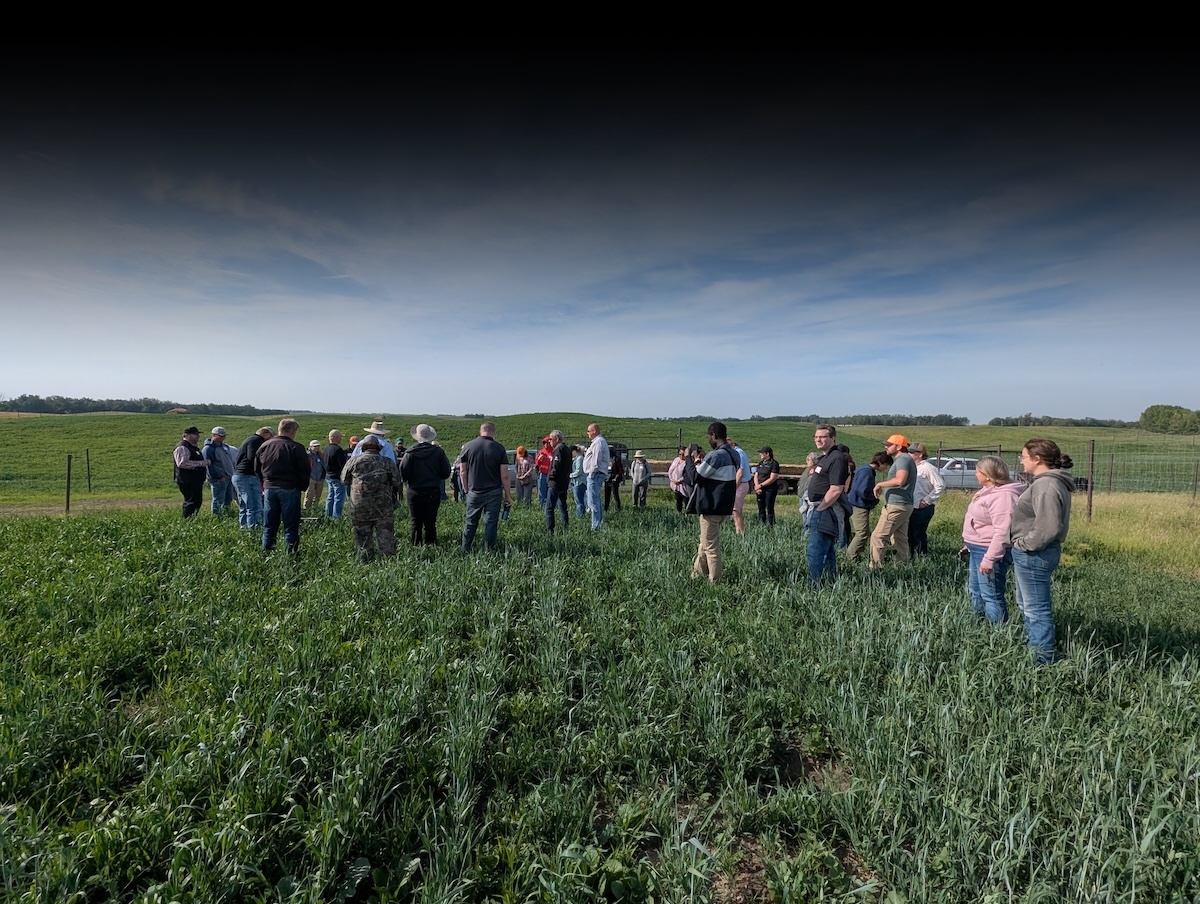
Most of the core producers implementing BMPs through the AALL were in their third field season in 2025. Throughout, producer observations of the practices on farm have been key, and researchers have adjusted sample and data collection procedures accordingly.
The key highlights from the project include:
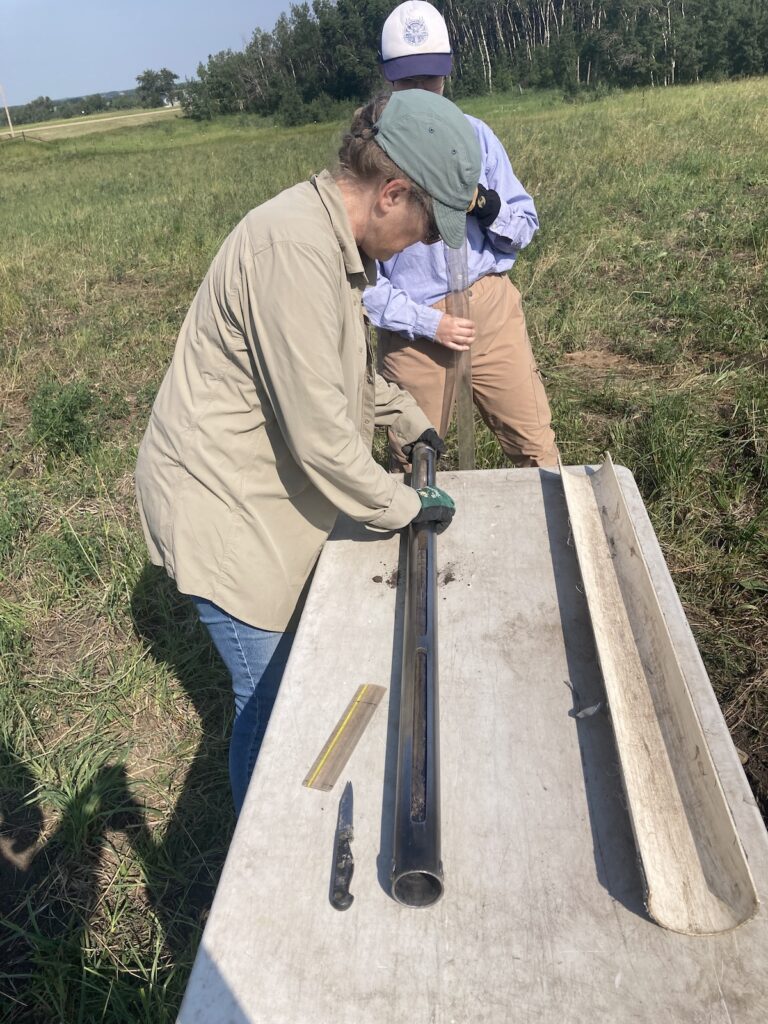
- Comprehensive monitoring: collection and analysis of shallow and deep soil cores, crop yield, GHG flux, and biomass samples.
- Several knowledge transfer events including field days on project sites in collaboration with the research teams, videos, producer case studies, webinars and peer to peer learning opportunities.
- Regular producer meetings and field visits promote shared learning and producer-led innovation.
- Continued partnership with the CATG project (University of Alberta) to explore links between grazing management, livestock performance, soil microbiomes, plant communities and productivity, soil carbon dynamics, and GHG emissions.
- Sharing preliminary data, as available, with participating farms and partners detailing project progress up to date.
- Cost-benefit analysis of selected BMPs.
Adaptive Multi-Paddock (AMP) Grazing
Several producers across Alberta continue to work with the AALL to refine rotational and adaptive grazing strategies to improve pasture health, water use, and forage utilization. Some of the specific activities include:
- Increasing subdivision of pastures for shorter grazing periods and longer rest times.
- Integration of solar watering systems to provide sustainable water sources to multiple paddocks.
- Continued soil, forage, fecal, and GHG sampling to assess soil carbon, forage stand composition, and microbial communities.
- Despite ongoing drought stress in parts of the province, many producers report more uniform grazing and improved grass recovery.
Forage and Pasture Rejuvenation
Several participants are testing various pasture rejuvenation methods to improve pasture productivity and resilience. Research activities are ongoing to compare rejuvenated and control areas to monitor success.
Early indications suggest benefits to forage production, particularly where rotational grazing is paired with rejuvenation, but also a significant time lag before the meaningful establishment of new species.
Annual and Polycrop Integration
Some farms are experimenting with polycropping systems with diverse annual mixes used for silage, grazing, or cover, to improve soil function and reduce input costs.
- Trials on grey wooded and sandy soils explore ways to build organic matter and reduce compaction.
- Research evaluation at these sites continues to assess the effects of these practices on soil health (such as structure, organic carbon and aggregation) and GHG emissions.
- Producers can assess trade-offs between productivity, feed quality, and the input reduction potential.
Precision agriculture tools
- AALL teams are integrating precision technologies to improve nutrient and crop management decisions.
- Variable-rate fertilizer and seeding trials are being conducted to optimize input use and improve crop response on variable soils.
- Drone-based imaging and mapping are used to capture high-resolution data on crop health, yield and variability such as topography in some instances.
- At selected feedlot sites, drone-mounted GHG sensors are being piloted to measure and map methane and nitrous oxide emissions, helping to evaluate mitigation strategies in real time.
- These tools can help producers make data-driven management choices while improving environmental performance.
Lime, Compost and Manure Management
- Producers are experimenting with innovative lime, compost and manure storage and application strategies to maximize nutrient recovery and minimize environmental losses.
- Evaluations focus on nutrient availability, soil response, pH and salinity management across variable field zones.
- Producers are optimizing storage and application timing to reduce potential runoff and volatilization losses.
- These studies will help refine cost-effective, environmentally responsible nutrient recycling practices on mixed crop-livestock operations.
Winter and Extended Grazing Systems
- Swath grazing, stockpiled forage, and standing corn grazing trials continue to support low-cost winter-feeding strategies.
- Researchers and producers are collaborating to evaluate soil impacts, manure distribution, and forage utilization efficiency.
- Real-time adjustments to fencing, timing, and feed supplementation are helping producers adapt to unpredictable weather conditions.
Looking forward, the AALL will focus on:
- Collection and analysis of the last year of field data in 2026.
- Integrating data across farms to assess regional trends.
- Strengthening partnerships among producers, AAFC, the University of Alberta, and local organizations.
- Developing accessible events, tools and resources for BMP adoption and evaluation.
- Continued socio-economic analysis to provide insight into which practices and management situations provide the most return.
The AALL continues to illustrate the significant role of producer participation in implementing practice change and how researchers can support decision-making processes on farm, influencing profitability, sustainability and overall resilience of farming operations.
Over the winter, please join us for our webinar series and check out all our resources at agrisystemsll.ca.
This was first published in Volume 5 Issue 4 of ABP Magazine (Winter 2025). Watch for more digital content from the magazine on ABP Daily.
Share this article on



Latest News
-
September 18, 2026 News
Stock talks strengthen relationships between producers and municipalities
-
September 18, 2026 News
Dominican Republic reopens market to Canadian beef
-
September 16, 2026 News
Alberta easing wetland approval requirements for farmers
Cattle Report
Updated: September 18, 2026
Steers
Live: ---
Rail: 490.00-492.00 del
Heifers
Live: ---
Rail: 490.00-492.00 del
Choice Steers
Live: 222.00-223.00 (NE, IA)
Rail: 348.00-355.00 (NE, IA)
Choice Heifers
Live: 222.00-223.00 (NE, IA)
Rail: 348.00-355.00 (NE, IA)
Boner Cows
Over 500 lbs: 282.06
Canadian Dollar
$71.69 0.09
Livestock Price Insurance Index
| Expiry | Fed | Feeder | Calf |
|---|---|---|---|
| 14-Dec-26 | 282 | 438 | -- |
| 11-Jan-27 | -- | -- | -- |
| 08-Feb-27 | 278 | 432 | -- |
| 08-Mar-27 | 278 | 430 | -- |
| 05-Apr-27 | 282 | 426 | -- |
| 03-May-27 | 288 | 426 | -- |
| 31-May-27 | 296 | 434 | -- |
Last Updated on September 17, 2026