Live: ---
Rail: 500.00 del

{{ weatherTemp }}°C
{{ weatherCity }}

AB Direct - Steers
AB Direct - Heifers
Live: ---
Rail: 500.00 del
Rail: 500.00 del
US Trade- Steers
Live: 226.00 (TX) few
Rail: ---
Rail: ---
US Trade - Heifers
Live: 226.00 (TX) few
Rail: ---
Rail: ---
Canadian Dollar
$70.73
0.32
0.32
October 15, 2026
Innovation & Technology
New tool helps producers track crop water use
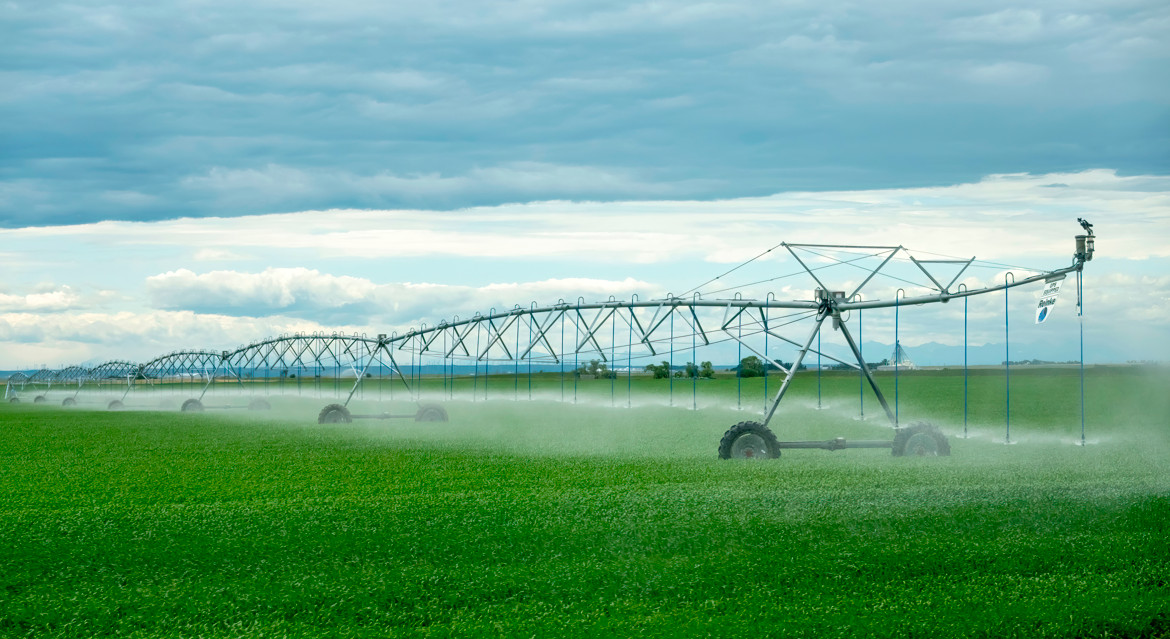
A new online tool developed at Lethbridge Polytechnic could help producers better understand how much water their crops are using throughout the growing season.
Called Irrimap, the program measures evapotranspiration (ET), which combines water lost through evaporation from the soil surface and transpiration from growing plants. The information can be used to estimate crop water use and help guide irrigation decisions.
According to Dr. Michael Kehoe, research scientist with the Mueller Irrigation Research Group (MIRG), ET is an important measurement because it provides insight into changing soil moisture levels and crop water demand.
“Measuring ET is important to determine soil moisture levels, giving producers, agronomists and researchers the information they need to make decisions on irrigation duration, amounts and more,” he said.
The web-based tool uses publicly available data to estimate ET across areas ranging from individual fields to full sections. The information can be accessed from a phone, tablet, or computer.
As irrigation management becomes increasingly dependent on data, tools that help estimate water use can provide producers with another source of information when deciding when and how much to irrigate.
For producers facing rising input costs, understanding water requirements can also play a role in managing irrigation costs and improving water-use efficiency.
The project received support from Agriculture and Agri-Food Canada (AAFC) through research conducted by Evan Derdall, as well as funding from the Saskatchewan Ministry of Agriculture through the Sustainable Canadian Agricultural Partnership (Sustainable CAP).
Researchers say Irrimap is also being incorporated into other projects related to crop input management.
“One of the benefits of Irrimap is that it is feeding into other tools we’re researching and developing, like crop input optimization tools,” said Kehoe. “Projects like these ensure data-backed decisions are made that better manage inputs to minimize risks to yield.”
As prodcuers continue looking for ways to manage water efficiently and make the most of available resources, tools that provide field-level information on crop water use may become an increasingly common part of irrigation management.
Leave a Comment

Latest News
-
October 15, 2026 Innovation & Technology
New tool helps producers track crop water use
-
October 15, 2026 Business Tools
Research project aims to stay ahead of roundworm resistance in cattle
-
October 14, 2026 News
Alberta reopens water registration program for eligible grazing leaseholders
Cattle Report
Updated: October 15, 2026
Steers
Live: ---
Rail: 500.00 del
Heifers
Live: ---
Rail: 500.00 del
Choice Steers
Live: 226.00 (TX) few
Rail: ---
Choice Heifers
Live: 226.00 (TX) few
Rail: ---
Boner Cows
Over 500 lbs: 261.53
Canadian Dollar
$70.73 0.32
Livestock Price Insurance Index
| Expiry | Fed | Feeder | Calf |
|---|---|---|---|
| 04-Jan-27 | -- | -- | -- |
| 01-Feb-27 | 288 | 456 | -- |
| 01-Mar-27 | 286 | 450 | -- |
| 29-Mar-27 | 290 | 448 | -- |
| 26-Apr-27 | 296 | 444 | -- |
| 24-May-27 | 304 | 450 | -- |
| 21-Jun-27 | 302 | 454 | -- |
Last Updated on October 8, 2026

Add abpdaily.com to your home screen
Tap the menu button next to the address bar or at the bottom of your browser.
Select ‘Install’ or ‘Add to Homescreen’ to stay connected.
Share this article on
About the Author
Kara grew up on a grain farm near Bow Island, Alta. After studying at SAIT and the University of Calgary, where she earned a degree in communication and media studies and a diploma in broadcast news, she began her career in agricultural communications and journalism.