Live: ---
Rail: ----

{{ weatherTemp }}°C
{{ weatherCity }}

AB Direct - Steers
AB Direct - Heifers
Live: ---
Rail: ---
Rail: ---
US Trade- Steers
Live: ---
Rail: ---
Rail: ---
US Trade - Heifers
Live: ---
Rail: ---
Rail: ---
Canadian Dollar
$70.22
0.34
0.34
October 14, 2026
Checking in with ABP
Research projects, disease preparedness among highlights in ABP update
Research projects, disease preparedness among highlights in ABP update
Alberta Beef Producers’ producer-led Research Committee is currently reviewing research proposals and associated technical reviews, with funding decisions expected before the end of 2026.
Proposals are being evaluated on scientific merit and alignment with the recently renewed Five-Year Canadian Beef Research and Knowledge Mobilization Strategy, as well as short-, medium-, and long-term sector benefits.
ABP notes that summaries of completed and in-progress projects are available on the research page at albertabeef.org.
Addressing research centre closures
Discussions continue regarding potential mechanisms to reduce the impacts of the Agriculture and Agri-Food Canada (AAFC) research centre closures announced in January.
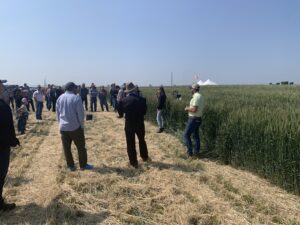
A two-year agreement was reached with the University of Guelph to support two meat scientists located at Lacombe, and there is no meat science program in Western Canada. Questions also remain about access to important long-term datasets, as well as the eventual divestiture of the land and facilities.
Living Lab prepares to share results
The Alberta AgriSystems Living Lab is wrapping up its final year, concluding in March of 2027.
Living Lab partners are looking forward to sharing the results of what ABP described as a highly productive collaboration between producers and researchers. Additional information will be shared through a webinar series beginning Oct. 21.
Strengthening foot-and-mouth disease preparedness
ABP, the Canadian Cattle Association, National Cattle Feeders’ Association, Alberta Cattle Feeders’ Association and Animal Health Canada recently completed three foot-and-mouth disease drills.
The exercises progressed from a suspected U.S. case to confirmed Alberta cases. Lessons learned included the need for stronger industry governance and response structures, integrated communications, and clearer expectations during an outbreak.
The work also identified important policy questions requiring further exploration. Templates, role descriptions, information and resources are being consolidated ahead of a larger drill exercise planned for 2027.
Bovine tuberculosis investigations nearing completion
The bovine tuberculosis investigations associated with cases discovered in 2024 and 2025 are close to completion, with no additional cases discovered to date.
A handful of trace-out and proximity herds will be tested this fall. Producers with questions or concerns are encouraged to contact Karin Schmid directly.
ABP also noted that a second investigation debrief was held jointly with the Canadian Food Inspection Agency in September 2026 to discuss challenges and opportunities to improve investigation processes.
Advocating for stronger disease recovery support
While ABP was pleased to see the joint request from Alberta, Saskatchewan and Manitoba for an Agri-Recovery assessment, the organization says significant deficiencies remain in business risk management tools designed to support business continuity and recovery from reportable disease events.
ABP says it will continue to advocate for appropriate programs and tools to mitigate negative impacts on affected producers and the wider industry, both in the immediate term and into the future.
Beef Code review continues
The Beef Code Committee is reviewing all comments received, including those submitted by ABP, for the update to the Code of Practice for the Care and Handling of Beef Cattle.
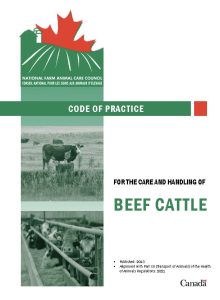
The revised Code is scheduled for release in the second quarter of 2027.
Seeking changes to meat trade and BSE regulations
ABP recently submitted comments to two federal consultations regarding interprovincial trade of red meat and proposed changes to enhanced feed and specified risk materials regulations.
According to ABP, its resolutions aim to reduce interprovincial trade barriers for red meat and improve the proposed program while ensuring the high-quality and food safety standards of trading partners continue to be met.
The organization added that it is looking for revisions to the enhanced feed ban and the classification of specified risk materials that would harmonize Canada’s approach with that used by the United States and more accurately reflect Canada’s negligible BSE risk status.
This was first published in Volume 6 Issue 3 of ABP Magazine (September 2026). Watch for more digital content from the magazine on ABP Daily.
Leave a Comment

Latest News
-
October 14, 2026 Checking in with ABP
Research projects, disease preparedness among highlights in ABP update
-
October 13, 2026 News
Demand for productive acres keeps Alberta land values climbing
-
October 13, 2026 Current Markets & Forecasts
Canfax Weekly Article: Report for the week of October 13, 2026
Cattle Report
Updated: October 14, 2026
Steers
Live: ---
Rail: ----
Heifers
Live: ---
Rail: ---
Choice Steers
Live: ---
Rail: ---
Choice Heifers
Live: ---
Rail: ---
Boner Cows
Over 500 lbs: 265.99
Canadian Dollar
$70.22 0.34
Livestock Price Insurance Index
| Expiry | Fed | Feeder | Calf |
|---|---|---|---|
| 04-Jan-27 | -- | -- | -- |
| 01-Feb-27 | 288 | 456 | -- |
| 01-Mar-27 | 286 | 450 | -- |
| 29-Mar-27 | 290 | 448 | -- |
| 26-Apr-27 | 296 | 444 | -- |
| 24-May-27 | 304 | 450 | -- |
| 21-Jun-27 | 302 | 454 | -- |
Last Updated on October 8, 2026

Add abpdaily.com to your home screen
Tap the menu button next to the address bar or at the bottom of your browser.
Select ‘Install’ or ‘Add to Homescreen’ to stay connected.
Share this article on
About the Author
Karin grew up on a mixed farm near Keoma, AB, raising purebred Simmental cattle and grain, and is still involved in the family operation to a limited extent. She has a Master’s Degree in Agriculture from the University of Alberta, and her thesis focused on the genetic and metabolic factors affecting feed efficiency in beef cattle. Before joining Alberta Beef Producers (ABP) in 2011, Karin spent just over four years with the Canadian Hereford Association as their Breed Development Coordinator. At ABP, Karin is the Lead, Beef Production and Extension, providing technical support in the areas of cattle health and welfare, research, and production practices. She works very closely with several industry and government organizations on issues of importance to the industry, and large part of her job is translating science to producers and explaining producer needs to researchers.