Live: ---
Rail: 491.50-497.75 FOB feedlot (last week)

{{ weatherTemp }}°C
{{ weatherCity }}

AB Direct - Steers
AB Direct - Heifers
Live: ---
Rail: 491.50-497.75 FOB feedlot (last week)
Rail: 491.50-497.75 FOB feedlot (last week)
US Trade- Steers
Live: 218.00-223.00 (IA, NE) 226.00 (TX, KS) last week
Rail: 345.00-350.00 (NE, IA) last week
Rail: 345.00-350.00 (NE, IA) last week
US Trade - Heifers
Live: 218.00-223.00 (IA, NE) 226.00 (TX, KS) last week
Rail: 345.00-350.00 (NE, IA) last week
Rail: 345.00-350.00 (NE, IA) last week
Canadian Dollar
$70.59
0.29
0.29
October 13, 2026
News
Demand for productive acres keeps Alberta land values climbing
Alberta farmland values continued to move higher during the first half of 2026, even as producers faced rising costs, tight margins and ongoing market uncertainty.
According to Farm Credit Canada (FCC)’s mid-year farmland values report, cultivated farmland values in Alberta increased 5.3 per cent between January and June, placing the province among the strongest performers in Canada.
While land values continue to climb across much of the country, Alberta remains one of the more active markets, supported by demand for productive acres and a limited supply of land available for sale.
The increase comes at a time when producers are weighing major purchases carefully. Higher borrowing costs, elevated input prices and uncertainty around trade continue to influence investment decisions, but demand for quality farmland remains strong.
The strongest increases were reported in Alberta’s North and Peace regions, where sales activity supported further gains in land values.
In many other parts of the province, fewer transactions meant values held relatively steady through the first half of the year.
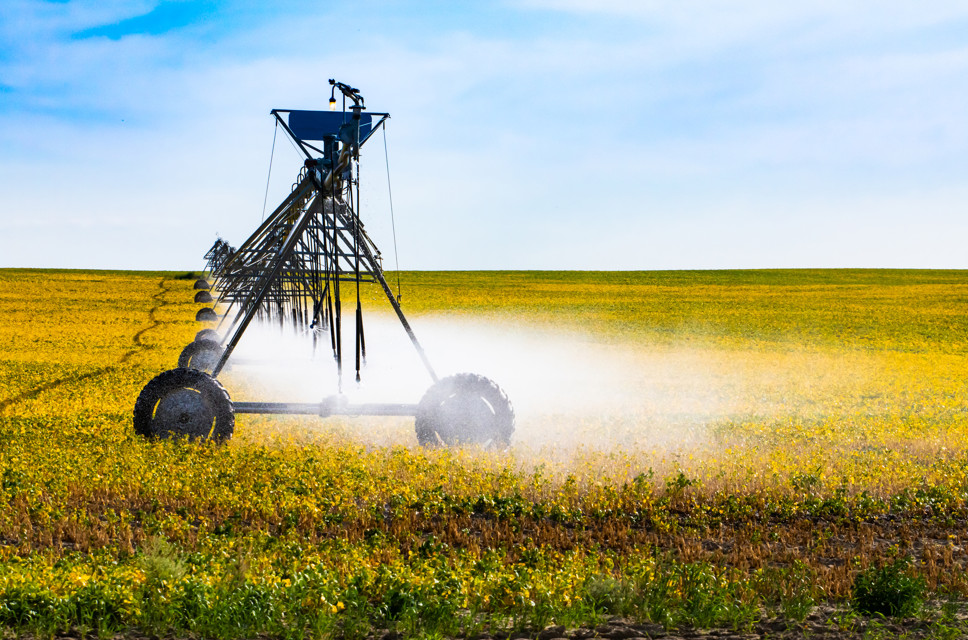
In southern Alberta, irrigation continues to be a key factor influencing land prices. Irrigated parcels command a premium, with those values often extending to nearby dryland acres.
Land quality, access to water and location are playing an increasingly important role in determining value, particularly as producers look closely at how a purchase fits within their existing operation.
Alberta holding its ground
Nationally, cultivated farmland values increased 3.8 per cent during the first six months of 2026 and seven per cent over the past year. While values are still moving higher, the pace has slowed compared to the rapid appreciation seen in the years following the pandemic.
FCC’s analysis shows Alberta has retained more of its recent growth than any other province. The province’s annual increase of 9.4 per cent sits just below the peak growth rate recorded in late 2025.
Meanwhile, growth has eased more noticeably in provinces such as Ontario and British Columbia, which saw some of the country’s strongest gains earlier in the decade.
For Alberta producers, the report points to a farmland market that remains steady despite economic pressures. Buyers are still active, but purchases are increasingly being driven by operational needs, productivity and long-term value rather than expansion for expansion’s sake.
Leave a Comment

Latest News
-
October 13, 2026 News
Demand for productive acres keeps Alberta land values climbing
-
October 13, 2026 Current Markets & Forecasts
Canfax Weekly Article: Report for the week of October 13, 2026
-
October 12, 2026 Checking in with ABP
Contest connects consumers with life on an Alberta ranch
Cattle Report
Updated: October 13, 2026
Steers
Live: ---
Rail: 491.50-497.75 FOB feedlot (last week)
Heifers
Live: ---
Rail: 491.50-497.75 FOB feedlot (last week)
Choice Steers
Live: 218.00-223.00 (IA, NE) 226.00 (TX, KS) last week
Rail: 345.00-350.00 (NE, IA) last week
Choice Heifers
Live: 218.00-223.00 (IA, NE) 226.00 (TX, KS) last week
Rail: 345.00-350.00 (NE, IA) last week
Boner Cows
Over 500 lbs: 262.59
Canadian Dollar
$70.59 0.29
Livestock Price Insurance Index
| Expiry | Fed | Feeder | Calf |
|---|---|---|---|
| 04-Jan-27 | -- | -- | -- |
| 01-Feb-27 | 288 | 456 | -- |
| 01-Mar-27 | 286 | 450 | -- |
| 29-Mar-27 | 290 | 448 | -- |
| 26-Apr-27 | 296 | 444 | -- |
| 24-May-27 | 304 | 450 | -- |
| 21-Jun-27 | 302 | 454 | -- |
Last Updated on October 8, 2026

Add abpdaily.com to your home screen
Tap the menu button next to the address bar or at the bottom of your browser.
Select ‘Install’ or ‘Add to Homescreen’ to stay connected.
Share this article on
About the Author
Kara grew up on a grain farm near Bow Island, Alta. After studying at SAIT and the University of Calgary, where she earned a degree in communication and media studies and a diploma in broadcast news, she began her career in agricultural communications and journalism.