Live: ---
Rail: 486.50-487.00 FOB feedlot (last week)

{{ weatherTemp }}°C
{{ weatherCity }}

AB Direct - Steers
AB Direct - Heifers
Live: ---
Rail: 486.50-487.00 FOB feedlot (last week)
Rail: 486.50-487.00 FOB feedlot (last week)
US Trade- Steers
Live: 214.00-218.00 (NE), 218.00 (TX, KS) last week
Rail: 335.00-340.00 (IA) last week
Rail: 335.00-340.00 (IA) last week
US Trade - Heifers
Live: 214.00-218.00 (NE, IA), 218.00 (TX, KS) last week
Rail: 335.00-340.00 (NE, IA) last week
Rail: 335.00-340.00 (NE, IA) last week
Canadian Dollar
$70.99
0.12
0.12
November 7, 2026
Issues & Insights
Balancing land and wildlife management
Since the settlement of Alberta, beef producers have always been stewards of the land and wildlife.
While the vast majority of producers take pride in the wildlife species found on the lands they manage, they also recognize that overabundance of some wildlife species can create issues that severely impact their bottom line and subsequent way of life. Our goal at ABP is to help minimize these impacts while allowing producers to enjoy and promote the persistence of all desirable wildlife on their lands.
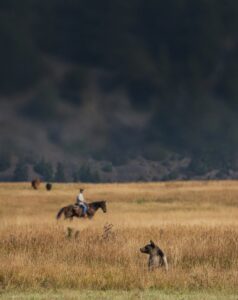
In recent years, some of the most challenging wildlife issues impacting producers have resulted from increasing populations of predators and ungulates. ABP takes these issues very seriously and aims to address them through a multifaceted approach involving policy changes, improvements to wildlife damage mitigation and prevention programming, and increased access to resources for producers.
Resolutions passed by the ABP board and delegate body have been instrumental in providing direction on the path towards mitigating wildlife issues. This year, passed resolutions have focused on producers’ ability to protect livestock from predators and on increasing control over the allocation of hunting licences for problem ungulates. In addition, ABP has passed a resolution calling for the return of the grizzly bear hunt.
Ungulates
Earlier this year, ABP staff completed a jurisdictional scan of elk management across three provinces and five American states. This work has led to strong recommendations for improving elk management within Alberta, and will ultimately provide insight and direction for the establishment of ungulate programming and lobbying efforts targeting problem ungulates.
Another key priority is the quantification of wildlife damages that are largely unknown to wildlife managers, particularly damages that are not covered by current compensation programming. This winter, ABP will be working in partnership with CANFAX to complete a study on wildlife-related costs borne by producers.
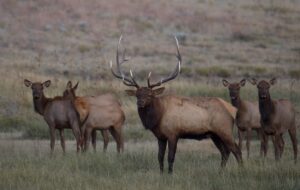
This study will be targeting ungulate damages and seeks to quantify all ungulate damages, including damages to infrastructure and fencing. To complete this study, ABP will require producers’ assistance through interviews and surveys. If you are a producer experiencing wildlife damages, please consider helping out with this important work.
Although Alberta currently has ungulate damage compensation programming, ABP is aware of its limitations, including but not limited to: lack of coverage for alternative feeding methods after October 31, lack of coverage for grazing lands, and lack of resources for feed protection projects. ABP will be engaging the Government of Alberta and AFSC with the goal of improving ungulate damage compensation, prevention, and mitigation programming.
With an overwhelming abundance of information available online, finding the right resources for wildlife and land management can be challenging for anyone.
Predators
Increasing predator populations continue to be an issue for many producers, with grizzly bears causing conflicts in several regions of the province. ABP staff and the Wildlife Working Group have been taking a comprehensive approach to developing a strong case for lobbying in favour of ABP’s grizzly bear resolutions.
In addition, ABP staff have been meeting with partner organizations to discuss the potential for alignment on overall goals and the grizzly bear lobbying process.
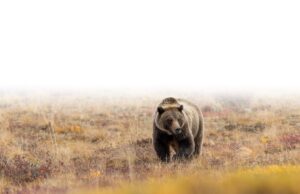
While grizzly bears are an issue for many producers operating in bear country, ABP recognizes that other predators can also pose a significant risk to operations.
As a result, ABP is seeking to develop and implement a province-wide carnivore program with significant improvements to carnivore compensation, mitigation, and loss prevention.
This program aims to borrow from B.C.’s Livestock Protection Program, and will include producer-led verification for losses, address current compensation issues, and provide increased funding for loss-prevention programming.
Reporting problem wildlife
Many producers have expressed frustrations with current wildlife management systems, where they have minimal input into wildlife management on their lands, particularly for problem wildlife species. At ABP, we are addressing this issue through the creation of a tool that allows producers to quickly and efficiently report instances of problem wildlife. We aim to use producer reports of problem wildlife as evidence of wildlife issues, with the goal of improving local wildlife management for producers experiencing wildlife conflicts. Our goal is to have this problem wildlife reporting tool available by the spring.
Producer resources
With an overwhelming abundance of information available online, finding the right resources for wildlife and land management can be challenging for anyone. At ABP, we are committed to making these resources more accessible for producers. We are developing an interactive online tool that producers can use to research resources for problem wildlife, stewardship, and best management practices.
This was first published in Volume 6 Issue 3 of ABP Magazine (September 2026). Watch for more digital content from the magazine on ABP Daily
Leave a Comment

Latest News
-
November 7, 2026 Issues & Insights
Balancing land and wildlife management
-
November 6, 2026 News
Federal Budget 2026 includes changes to farm succession and capital investment rules
-
November 6, 2026 Checking in with ABP
Join us at ABP's 2026 Annual General Meeting and Convention
Cattle Report
Updated: November 9, 2026
Steers
Live: ---
Rail: 486.50-487.00 FOB feedlot (last week)
Heifers
Live: ---
Rail: 486.50-487.00 FOB feedlot (last week)
Choice Steers
Live: 214.00-218.00 (NE), 218.00 (TX, KS) last week
Rail: 335.00-340.00 (IA) last week
Choice Heifers
Live: 214.00-218.00 (NE, IA), 218.00 (TX, KS) last week
Rail: 335.00-340.00 (NE, IA) last week
Boner Cows
Over 500 lbs: 244.81
Canadian Dollar
$70.99 0.12
Livestock Price Insurance Index
| Expiry | Fed | Feeder | Calf |
|---|---|---|---|
| 01-Feb-27 | 274 | 436 | -- |
| 01-Mar-27 | 274 | 430 | -- |
| 29-Mar-27 | 278 | 428 | -- |
| 26-Apr-27 | 284 | 426 | -- |
| 24-May-27 | 292 | 430 | -- |
| 21-Jun-27 | 292 | 434 | -- |
| 19-Jul-27 | 286 | -- | -- |
Last Updated on November 5, 2026

Add abpdaily.com to your home screen
Tap the menu button next to the address bar or at the bottom of your browser.
Select ‘Install’ or ‘Add to Homescreen’ to stay connected.
Share this article on
About the Author
Sam Vriend is Wildlife Policy Advisor with Alberta Beef Producers. He brings extensive experience in conservation, ecology, and stakeholder collaboration, having worked across government, private industry, and not-for-profit organizations. His career includes roles in wildland fire response, conservation, ecology, and biology. He holds a Bachelor’s degree in Environmental Studies – Biology and a Master’s degree in Environmental Practice. Raised on a family-owned tree nursery near Edmonton and now based in Lethbridge with his wife and two sons, Samuel has strong personal ties to Alberta’s working landscapes. Outside of work, he enjoys hunting and fishing throughout the province with family and friends.