Live: ---
Rail: 542.00-543.50 FOB feedlot (last week)

{{ weatherTemp }}°C
{{ weatherCity }}

AB Direct - Steers
AB Direct - Heifers
Live: ---
Rail: 542.00-543.50 FOB feedlot (last week)
Rail: 542.00-543.50 FOB feedlot (last week)
US Trade- Steers
Live: 245.00 (NE) 245.00-246.00 (TX, KN) last week
Rail: 380.00-386.00 (NE, IA) last week
Rail: 380.00-386.00 (NE, IA) last week
US Trade - Heifers
Live: 245.00 (NE) 245.00-246.00 (TX, KN) last week
Rail: 380.00-386.00 (NE, IA) last week
Rail: 380.00-386.00 (NE, IA) last week
Canadian Dollar
$72.09
0.17
0.17
February 23, 2026
Current Markets & Forecasts
Canfax Weekly Article | Report for the week of February 23, 2026
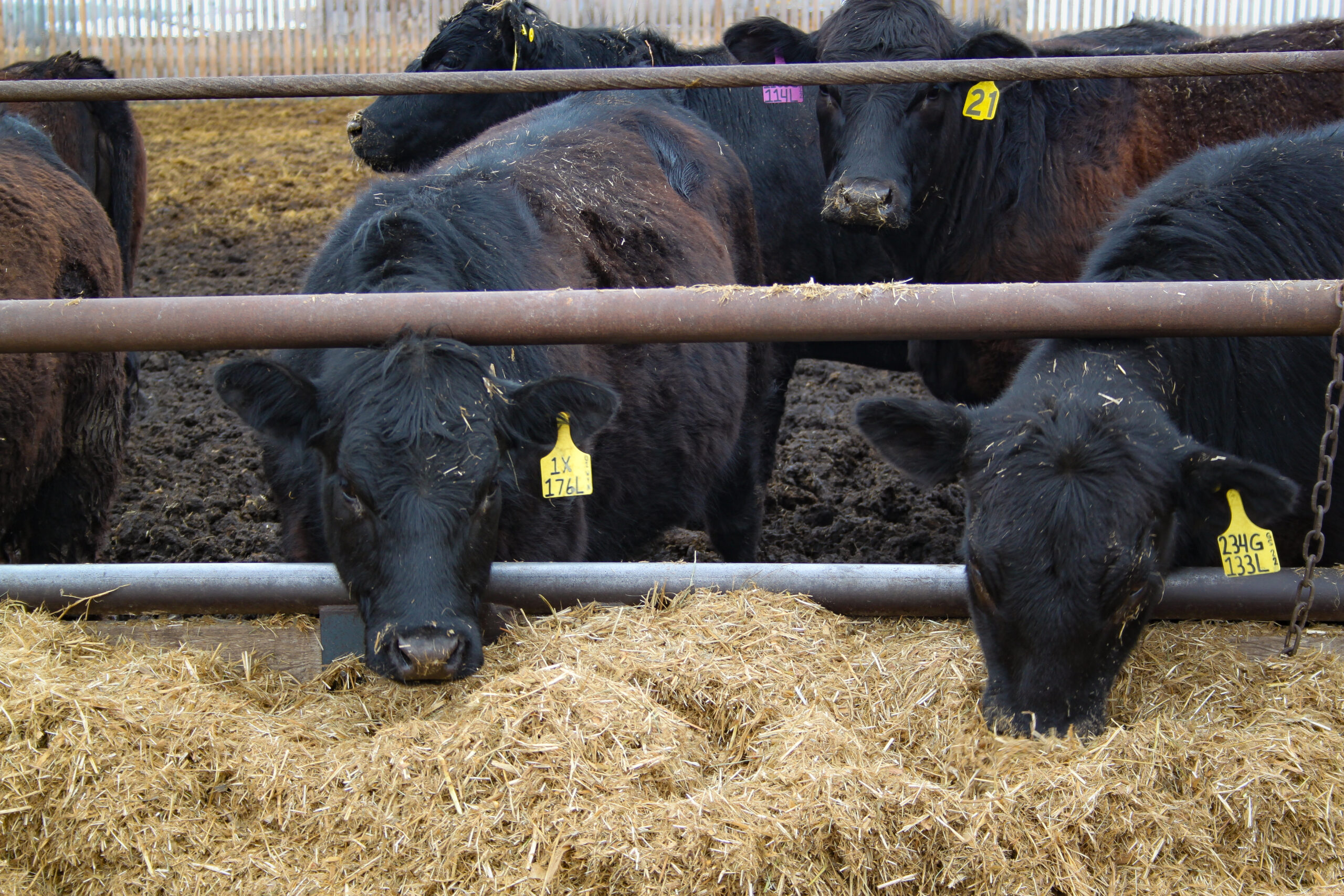
Alberta weighted average fed steers closed the week just north of $315/cwt, while heifers were at $313/cwt. Dressed sales were reported from $520–530/cwt delivered, $5–7/cwt stronger than the prior week. Cattle that traded were scheduled from immediate to the first half of March delivery. U.S. packer interest was noted, but no sales were confirmed. Cattle from Saskatchewan are being shipped west for slaughter rather than going to Ontario. In the west, feedlots are adding weight to their cattle versus turning pens over. Western Canadian steer carcass weights during the first six weeks of 2026 averaged 976 pounds, 36 pounds heavier than the same period last year. With the U.S. fed market strengthening, producers in both Western and Eastern Canada may look to dig in for higher prices.
Last week, Alberta auction volumes were smaller in many areas due to cooler temperatures across much of the Prairies. Demand remains strong with good interest from grass buyers and local feedlots. Eastern Canadian feedlot interest also remains supportive. Canfax average feeder steers closed the week $4–8/cwt stronger than the previous week. Forward delivery this week was lightly tested. Yearling steers coming off grass in Alberta/Saskatchewan, weighing from 900–1000 pounds for September delivery, traded on either side of $490/cwt.
Last week, the non-fed market saw stronger prices across the board. Alberta D2 and D3 cows closed the week $2–5/cwt stronger. D2 cows averaged $234/cwt, a new record high. D3 cows averaged $210/cwt, just $3/cwt shy of the record high. Feeder cows put in new record prices at $254/cwt, $8/cwt stronger, and have traded stronger for four consecutive weeks. Butcher bulls also started to pick up momentum; prices are 6 per cent stronger over the last three weeks, averaging $242/cwt, $6/cwt away from the record high made in early July last year. Railgrade cows were reported from $420–430/cwt, $2.50/cwt stronger than the previous week.
Bull
- Stronger U.S. fed prices should be supportive for the Canadian fed market
- Non-fed market saw stronger prices across the board
- Feeder market demand remains strong with good local interest and interest from Eastern Canada
Bear
- For the first six weeks of 2026, Western steer carcass weights averaged 967 pounds, 37 pounds heavier than last year
- Choice cutout continued to move sideways for the past three weeks
- USDA February 1st cattle on feed report saw January marketings down 13 per cent from last year and the smallest since 2015
Share this article on




Latest News
-
April 6, 2026 Checking in with ABP
Canfax Weekly Article | Report for the week of April 6, 2026
-
April 2, 2026 Checking in with ABP
Incorporating the leptin gene in breeding and feedlot decisions
-
March 31, 2026 Checking in with ABP
Strychnine emergency use approved for Alberta and Saskatchewan producers
Cattle Report
Updated: April 6, 2026
Steers
Live: ---
Rail: 542.00-543.50 FOB feedlot (last week)
Heifers
Live: ---
Rail: 542.00-543.50 FOB feedlot (last week)
Choice Steers
Live: 245.00 (NE) 245.00-246.00 (TX, KN) last week
Rail: 380.00-386.00 (NE, IA) last week
Choice Heifers
Live: 245.00 (NE) 245.00-246.00 (TX, KN) last week
Rail: 380.00-386.00 (NE, IA) last week
Boner Cows
Over 500 lbs: 326.98
Canadian Dollar
$72.09 0.17
Livestock Price Insurance Index
| Expiry | Fed | Feeder | Calf |
|---|---|---|---|
| 29-Jun-26 | 330 | 492 | -- |
| 27-Jul-26 | 324 | -- | -- |
| 24-Aug-26 | 318 | 494 | -- |
| 21-Sept-26 | 312 | 492 | 600 |
| 19-Oct-26 | 304 | 488 | 602 |
| 16-Nov-26 | 296 | 480 | 596 |
| 14-Dec-26 | 300 | 470 | 596 |
Last Updated on April 2, 2026