Live: ---
Rail: 480.00 del

{{ weatherTemp }}°C
{{ weatherCity }}

AB Direct - Steers
AB Direct - Heifers
Live: ---
Rail: 480.00 del
Rail: 480.00 del
US Trade- Steers
Live: 210.00 (IA)*few
Rail: 335.00 (IA)*few
Rail: 335.00 (IA)*few
US Trade - Heifers
Live: 210.00 (IA) *few
Rail: 335.00 (IA)*few
Rail: 335.00 (IA)*few
Canadian Dollar
$70.28
0.05
0.05
November 13, 2026
Health & Production
Heart Health Matters in Beef Herd
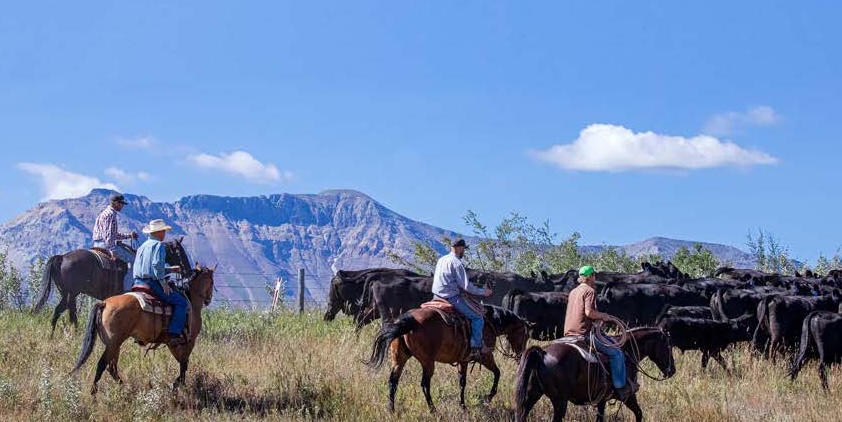
The incidence of congestive heart failure is increasing in beef cattle across North America. Here, we consider the causes of this growing problem and the tools producers can use to detect and address it before cattle enter the feedlot.
Bovine congestive heart failure (BCHF) is a growing problem in beef cattle worldwide. Also called brisket disease or high mountain disease, it can severely affect herds at higher elevations, and has now also become a significant cause of death in feedlot cattle at lower elevations. Estimates suggest mortality from BCHF has risen to above seven per cent in severely affected pens, with annual losses exceeding $250,000 at a single operation.*
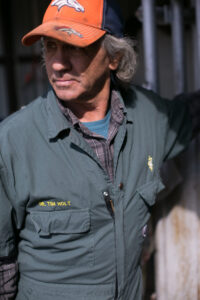
BCHF, and its precursor hypertension, is generally initiated by hypoxia—when the body is starved for oxygen. Dr. Timothy Holt, veterinarian and professor in livestock medicine at Colorado State University, explains: “At 2,000 metres, cattle become hypoxic because of the altitude. But in feedlots at lower elevation where we are starting to see this, the cattle become hypoxic for other reasons, such as increased body size and body fat.”
If you can’t grade better than select, or if you are getting reports that your cattle are dying of heart failure in the feedlot, you have to really start looking at the genetic heritability of hypoxia.
Increased body fat can result in fat being deposited in and around the heart as well as in the chest cavity, impeding normal breathing patterns, Holt says. “This results in a hypoxic state that can lead to heart failure.”
Holt has been actively researching pulmonary hypertension in cattle for decades, and has been using pulmonary arterial pressure (PAP) testing since the early ’90s to assess risk. “Through our research to identify animals with high blood pressure in the early ’80s, we were able to prove hypertension was a significant problem, and we realized it’s also a heritable problem.”
Here in Alberta, high altitude is not generally a cause of hypoxia, except in cases where cattle spend the summer grazing the eastern slopes of the Rockies. The most frequent causes here include genetic predisposition or obesity.
Obesity increases the risk
The cattle industry is weight-driven. For generations, genetic selection has favoured growth rate and carcass merit, resulting in heavier carcasses with better marbling scores. Genetics supporting higher carcass weights enter the ranch through the bulls beef producers buy from seedstock producers.**
While breeding for bigger carcass weights can increase profitability, it also increases the risk of BCHF. “The bigger they are, the more prone they are to heart failure,” Holt says.
Bulls identified as genetically predisposed to the hypoxia that leads to BCHF, and their offspring, should only be bred at lower elevations.
According to the Beef Cattle Research Council, the average weight of Canadian feeder cattle increased from 945 pounds in 1960 to 1,450 pounds in 2024, a 53 per cent increase, and that number continues to rise.**
Any cattle genetically prone to hypoxia will be affected. “As they get bigger and bigger in the feedlot, they can’t maintain oxygen levels to maintain life, and that sends them into heart failure,” says Holt.
Genetic predisposition: Assess herd heart health
Producers who are questioning the cause of heart failure deaths or high altitude disease in their cattle on the ranch or at the feedlot should consider the genetics of the herd to see if they have inadvertently brought potential carriers.
Producers who have identified a problem can review the catalogues where they buy semen or cattle, and look at expected progeny differences (EPDs) for PAP, advises Holt. “If they find out they are using bulls that have plus 1 or more for PAP-EPD, that’s something they should evaluate.”
Feedlot performance may also uncover a problem. “If you can’t grade better than select, or if you are getting reports that your cattle are dying of heart failure in the feedlot, you have to really start looking at the genetic heritability of hypoxia,” Holt says.
Care for heart and lungs
Cattle are born with a very small pulmonary system compared to their weight.
“One of the biggest problems is cattle have a very small lung capacity for their size and, as we take their weight higher and higher, they are virtually outgrowing their cardiovascular space,” Holt says.
To keep cattle healthy, producers need to care for their pulmonary system. “The most important thing is to protect the health of the cows, and that means taking care of their heart and their lungs,” says Holt.
Holt recommends preventative measures such as a respiratory vaccination program and mineral supplementation. “Anything we can do to care for their pulmonary system is going to help,” Holt says.
PAP test identifies cattle at risk
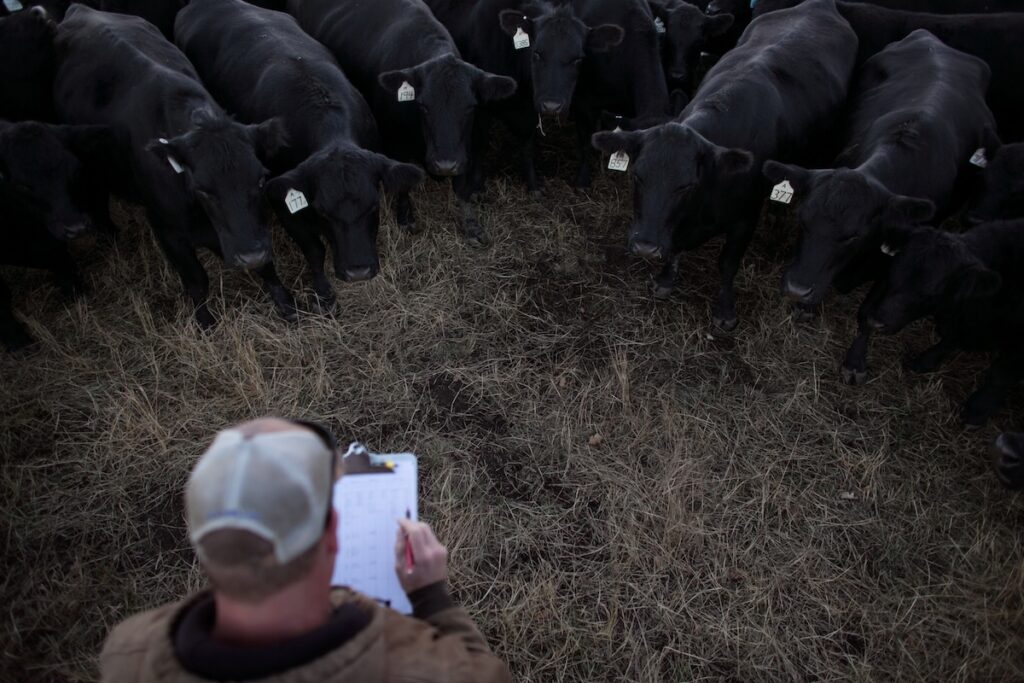
If a producer is experiencing a problem, working with a veterinarian who can perform the PAP test while the herd is grazing at higher elevation can help identify cattle experiencing hypertension in response to hypoxia, and therefore at risk of BCHF.
The PAP test measures lung blood flow resistance, and the score goes up whenever anything causes a decrease in the lung space. Veterinarians can take a training session on how to perform the PAP test.
“The PAP test identifies animals with hypertension, and they are considered to be at risk of the hypoxic cascade. However, it does not tell us whether they are at risk due to heritability or due to lung disease,” says Holt.
In either case, the PAP test needs to be done above 1,500 metres, ruling it out for most Alberta producers, except those who graze their herds in the mountains. An alternative is to use PAP-EPD information provided through the journals and catalogues that sell bull semen.
“If they can select animals with a negative EPD for PAP, that will help. Then they can also use some of the genetic markers as well—they are not 100 percent accurate, but neither is anything else we do,” suggests Holt.
Whether identified through PAP testing or by exploring PAP-EPD scores through breeder associations, bulls identified as genetically predisposed to the hypoxia that leads to BCHF, and their offspring, should only be bred at lower elevations, Holt suggests.
Your veterinarian may advise treating cattle identified as having hypertension with diuretics, limiting water and salt intake, antibiotics, oxygen therapy, and possibly thoracentesis, all performed in a climate-controlled environment.
The research and record-keeping involved in identifying at-risk cattle can be complicated and confusing. But for those ranchers experiencing problems with BCHF in the herd, they are a huge help. For those who are not, considering the ideal size of cattle to support profitability without overreaching the smaller pulmonary space of the breed is an important prevention strategy.
Sources: Dr. Timothy Holt, veterinarian and professor in livestock medicine at Colorado State U Timothy.Holt@ColoState.EDU; *Vander Ley, Brian and Heaton, Michael P. “Factsheet: Genetic risk factor testing for bovine congestive heart failure in feedlot cattle.” **Bergen, Dr Reynold. “Big Cows and Big Questions.” Beef Cattle Research Council. December 17, 2024 https://www.beefresearch.ca/blog/big-cows-and-big-questions/
This was first published in Volume 6 Issue 3 of ABP Magazine (September 2026). Watch for more digital content from the magazine on ABP Daily
Leave a Comment

Latest News
-
November 13, 2026 Health & Production
Heart Health Matters in Beef Herd
-
November 13, 2026 Health & Production
Winter feeding decisions start with body condition
-
November 11, 2026 Checking in with ABP
Annual forages can cut feed costs and extend grazing
Cattle Report
Updated: November 13, 2026
Steers
Live: ---
Rail: 480.00 del
Heifers
Live: ---
Rail: 480.00 del
Choice Steers
Live: 210.00 (IA)*few
Rail: 335.00 (IA)*few
Choice Heifers
Live: 210.00 (IA) *few
Rail: 335.00 (IA)*few
Boner Cows
Over 500 lbs: 240.06
Canadian Dollar
$70.28 0.05
Livestock Price Insurance Index
| Expiry | Fed | Feeder | Calf |
|---|---|---|---|
| 08-Feb-27 | 280 | 456 | -- |
| 08-Mar-27 | 282 | 454 | -- |
| 05-Apr-27 | 299 | 452 | -- |
| 03-May-27 | 294 | 450 | -- |
| 31-May-27 | 302 | 454 | -- |
| 28-Jun-27 | 300 | 454 | -- |
| 26-Jul-27 | 294 | -- | -- |
Last Updated on November 13, 2026

Add abpdaily.com to your home screen
Tap the menu button next to the address bar or at the bottom of your browser.
Select ‘Install’ or ‘Add to Homescreen’ to stay connected.
Share this article on
About the Author
Robin Galey fell into an agricultural communications career after falling off a horse in the Alberta foothills over 25 years ago. She has been cheerfully writing and editing agricultural communications from her home office in Calgary ever since. She seldom rides horses.