Live: ---
Rail: ---

{{ weatherTemp }}°C
{{ weatherCity }}

AB Direct - Steers
AB Direct - Heifers
Live: ---
Rail: ---
Rail: ---
US Trade- Steers
Live: 246.00*few (KN)
Rail: ---
Rail: ---
US Trade - Heifers
Live: 246.00*few (KN)
Rail: ---
Rail: ---
Canadian Dollar
$72.58
0.20
0.20
January 16, 2026
Checking in with ABP
Ways to minimize shrink when handling cattle
One of the costs when selling cattle is shrink — pounds lost when cattle are stressed and emptying their bladders and digestive tract. The body weight of individuals may vary. Morning weights, when cattle are relatively empty, are less than mid-day or evening weights when the gut is full, unless they were held off feed before weighing.
There are two kinds of shrink: gut shrink and tissue shrink. Whenever you start moving cattle, gut shrink starts immediately, especially if they are nervous and urinate and defecate more. This kind of shrink is temporary if they have access to feed and water after they are handled, transported, etc.
Tissue shrink is more serious, due to fluid loss within body tissues. This can start at the same time but is more severe when cattle are off feed and water longer, such as a long transport or prolonged handling. An example would be if a rancher gathers cattle, works and sorts them, puts the calves on a truck and sends them to a sale barn and they didn’t have feed or water. If they don’t eat or drink for 24 hours or longer with no way to replenish fluid loss, they become dehydrated with fluid loss from muscles and other body tissues. This type of shrink takes longer to resolve than fill shrink; water in the tissues is harder to replace quickly.
Shrink losses of up to 10 per cent of body weight are common in cattle held off feed and water for 24 hours, and in some circumstances shrinks of up to 18 per cent occur.
It takes longer for the animal to recover from this type of weight loss, and it can be detrimental to health. One reason why cattle, and especially calves, may have a hard time recovering from tissue shrink is that after 24 hours of being held off feed, some of the important microbes in the rumen die off, making it difficult for the animal to digest feed when it does start eating again.
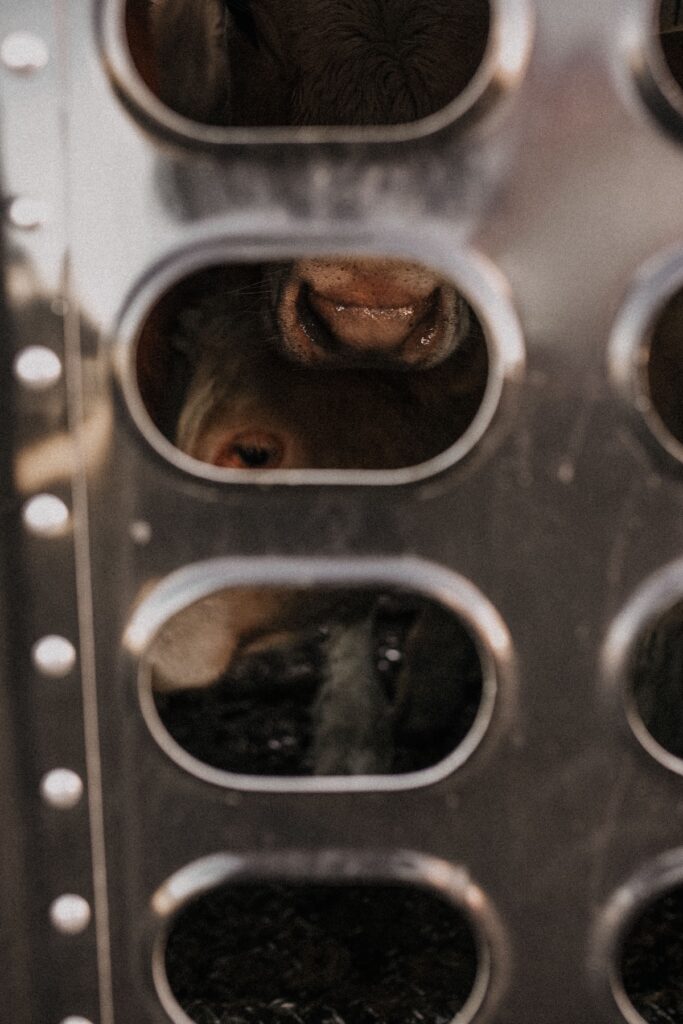
A long truck ride can result in excessive shrink. A study in Iowa looked at the time it takes for calves and yearlings to regain in-transit weight loss after arriving at a feedlot. The cattle were hauled an average of 660 miles. At point of departure the yearlings averaged 673 pounds and calves 504 pounds. During shipment the yearlings lost 9.62 per cent of pre-shipment weight; the calves lost 9.46 per cent. The yearlings required 16 days and the calves 13 days to recover the weight loss.
Mature cattle may lose a lot of weight if held off feed and water for 24 hours or pass a lot of manure and urine in a short time, as when exercising or excited. They lose about 8 to 10 pounds per defecation or urination; a gallon of fluid weighs about 8 pounds. Shrink losses of up to 10 per cent of body weight are common in cattle held off feed and water for 24 hours, and in some circumstances shrinks of up to 18 per cent occur. Research has shown that about 60 per cent of excretory shrink loss is due to manure passage and about 40 per cent due to urine secretion.
Some buyers insist that cattle be held in a corral overnight without feed before weighing, or gathered from pasture early in the morning before they have a chance to graze and drink. If cattle are weighed at the ranch or won’t be hauled very far for weighing, the buyer may want a certain percent of the weight (at the scale) subtracted, before the price per pound is calculated. This “pencil shrink” is deducted from actual weight, to base the price on a weight that would be more equivalent to “shrunk” weight.
Dr. Colin Palmer, Associate Professor, Department of Large Animal Clinical Sciences, Western College of Veterinary Medicine, University of Saskatchewan, says shrink is often misunderstood, especially its drawbacks to cattle health. Cattle stay healthier and bounce back faster after transport and sale if they are not excessively shrunk during this stressful time.
Shrink, and the stress involved, which hinders the immune system, may make these animals more vulnerable to disease. Cattle that don’t experience as much stress and shrink during sorting and transport are more likely to stay healthy. Calves sold right off their mothers are best sold at home rather than hauled to a sale, because they won’t eat much during the first 18 to 24 hours after weaning. Even if they have feed and water in front of them, they shrink as much as if they were held off feed and water.
Cattle on lush green feed, silage, or high-protein alfalfa hay will shrink more than cattle on drier grass pasture, grass hay, or other low-moisture feeds. One study showed that cattle from dry pasture had a 3.5 per cent shrink after a two-hour haul, compared to 5.3 per cent shrink for cattle off lush green forage.
Calves do better if weaned a few weeks ahead of selling—given time to adjust to weaning, especially if held long enough to start gaining weight again. Selling only a week or two after weaning may result in the loss of actual body weight. If they are sold after being fully weaned, they’re not stressed and will shrink less if they have to be in a corral or hauled before weighing.
Credit: Sam Wirzba
Cull cows sold right after you wean their calves may not eat much because they are stressed over losing their calves. “Weaned calves or yearlings generally don’t shrink as much. Cull bulls sold and weighed directly off the ranch don’t shrink as much as bulls hauled to sales,” Palmer said.
When taken to new surroundings at a sale yard and held overnight, bulls may spend more time fighting or walking the fence than eating. Any animal that is exercising or emotionally upset will shrink. Other stresses include hot weather, stormy wet weather and high humidity; cattle won’t eat well during these times.
Palmer points to a study showing that allowing calves to consume forage before being sorted and shipped can reduce the amount of shrink by up to 2.9 per cent. It helps if they are not “empty” before a long truck ride. “A study done at Kansas State University and University of Arkansas reported that steers gathered at daybreak from pasture and placed in holding pens without feed or water lost 1.25 per cent of their body weight per hour during the first 2 to 2.5 hours, and 1.61 per cent of their body weight during the next 2.5 to 3 hours,” said Palmer. Cattle tend to defecate and urinate more when they are nervous. A 30-minute roundup into the corral may result in 1 per cent shrink.
“Loading, hauling (less than 100 miles), unloading and weighing will generally create an additional 2.5 per cent shrink; sorting or waiting an extra hour before weighing will be another 1 per cent; 12 or more hours without feed or water before weighing will be an additional 2.5 per cent, etc. Cattle that have been sold and held by an order buyer or for resale often recapture their shrink and weigh significantly more the second time — even if it’s just a few days — due to shrink from the poor handling prior to the first weighing,” he said. There is often a great deal of money lost to the producer because of shrink.
You may not be able to do much about the price you get for your cattle, but you can do things to minimize shrink. Try not to sell during bad weather. Avoid rough handling, poor feed, and dirty water in the holding corral, since cattle may refuse to drink, delays in transport or weighing after cattle are gathered, or overloading or under-loading trucks. Crowded cattle are more stressed and nervous. Under-loading can increase shrink since it allows cattle to move around in the truck.
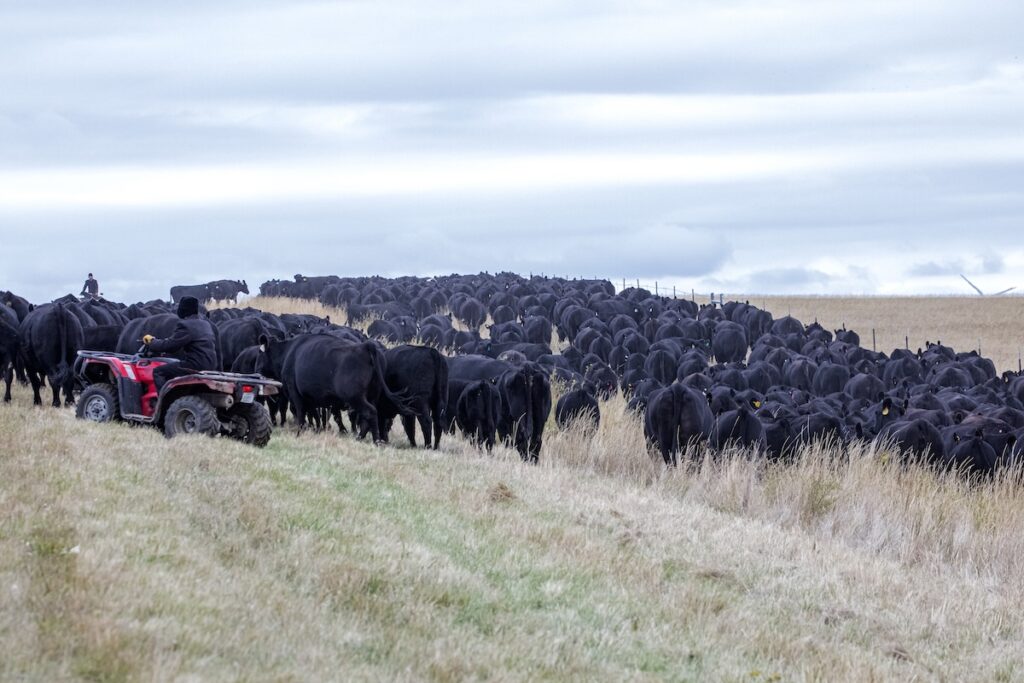
The biggest mistake people make is hurrying — not handling cattle quietly and slowly on sale day. It pays to have good facilities where cattle can be worked through and loaded easily. Take whatever time is needed to do it slowly and gently. Gathering should be done calmly, such as luring cattle into the corral with feed rather than chasing. Plan ahead and do sorting ahead of sale day. If calves are already weaned and sorted or if your cull cows are already in a separate pen or pasture from the rest of the herd, they will have regained temporary shrink from the sort and can be moved quietly onto the scales or truck with a minimum of shrink.
Studies on shrink and effect on health
Dr. A. L. Schaefer, a research scientist (animal physiology), serves as an adjunct professor at two Canadian universities and has published over 120 scientific journal manuscripts. Former president of the Canadian Society of Animal Science, former editor of the Canadian Journal of Animal Science and an editorial board member of several foreign scientific journals, he has worked on numerous studies addressing problems associated with shrink.
“Some years back, meat scientists at the Lacombe Research Center told me they were seeing muscle shrink and dark cutters and wondered what was happening with these cattle,” he said. Schaefer explained that cattle are prey animals; their survival tactics are to fight or flee from predators (short-term stress). They are not programmed to handle being gathered and sorted, weighed, held overnight in pens without feed, loaded or unloaded, or transported long distances. Cattle sent to slaughter may experience several hours of transport, after which they are held in pens overnight prior to slaughter, and typically lose 6 per cent or more of their weight and then show degradation in meat quality.
“We started to measure some of the stressors. At that time, part of the attitude in the beef industry was that shrink is just loss of fluid from the gut. Many people thought shrink is good, so the buyer doesn’t have to pay for useless water,” said Schaefer.
“We looked at composition of fluid loss, dissecting slaughtered animals, comparing the ones with greater shrink with those of lesser shrink, to see where weight loss was coming from. About half the loss was from the GI tract and about half from muscle tissue. Loss of muscle in finished animals results in reduction in carcass yield and quality,” he said. When animals lost fluid from tissues the meat became tougher.
“The energy and water that’s been lost is important. That fluid and material in the stomachs is what provides energy to counteract stress, so it is important to keep cattle watered.” Stress triggers cortisol release, and long term stress (more cortisol) hinders the immune system. This is why some calves (barely weaned, long transport) get sick after they get to the feedlot. Preconditioning allows calves to get past initial stress and become accustomed to new ways of accessing feed and water. They can better tolerate the stresses they encounter at sale time. With finished cattle, feedlots today try to have same-day slaughter, and stop the weight slide and stress impacts as soon as possible.
More marketing tips
Reid McDaniel, feedlot specialist at South Dakota State University, emphasizes that hydration, feed status, and handling before loading all influence shrink. Extended hauling times increase stress, and cattle that arrive gaunt should be given water and feed for 24 to 48 hours before additional handling.
Handling and shipping generally have a greater impact on shrink than simply withholding feed and water. Low-stress handling is critical. Accurately estimating shrink is also important, as underestimating shrink can result in significant financial loss.
Feedlots typically apply an average pencil shrink of about four per cent, with lower percentages used for cattle shipped shorter distances. Studies show allowing calves to consume forage before sorting and shipping can reduce shrink by up to 2.9 per cent.
Research has found cattle gathered at daybreak and held without feed or water can lose more than one per cent of body weight per hour in the first several hours. A short roundup can result in one per cent shrink, while loading, hauling, unloading, and weighing can add another 2.5 per cent. Additional delays and extended time without feed or water increase shrink further.
While market prices are beyond a producer’s control, shrink can be minimized by avoiding poor weather, rough handling, dirty water, feed shortages, transport delays, and improper truck loading. Crowding increases stress, while under-loading allows cattle to move excessively, increasing shrink.
The most common mistake is rushing cattle. Calm, quiet handling, good facilities, and advance planning help reduce shrink. Sorting cattle ahead of sale day and allowing them to recover before transport or weighing can significantly reduce weight loss and stress.
This was first published in Volume 5 Issue 4 of ABP Magazine (Winter 2025). Watch for more digital content from the magazine on ABP Daily.
Share this article on



Latest News
-
April 8, 2026 Checking in with ABP
Young Creators Contest winners celebrated
-
April 8, 2026 Checking in with ABP
4-H Alberta spotlights volunteers and spring opportunities
-
April 6, 2026 Checking in with ABP
Canfax Weekly Article | Report for the week of April 6, 2026
Cattle Report
Updated: April 9, 2026
Steers
Live: ---
Rail: ---
Heifers
Live: ---
Rail: ---
Choice Steers
Live: 246.00*few (KN)
Rail: ---
Choice Heifers
Live: 246.00*few (KN)
Rail: ---
Boner Cows
Over 500 lbs: 324.29
Canadian Dollar
$72.58 0.20
Livestock Price Insurance Index
| Expiry | Fed | Feeder | Calf |
|---|---|---|---|
| 06-July-26 | 326 | -- | -- |
| 03-Aug-26 | 322 | -- | -- |
| 31-Aug-26 | 314 | 482 | -- |
| 28-Sept-26 | 310 | 482 | 596 |
| 26-Oct-26 | 302 | 476 | 594 |
| 23-Nov-26 | 296 | 468 | 590 |
| 21-Dec-26 | 298 | 462 | 592 |
Last Updated on April 9, 2026