Every third weekend in August, people from all over Alberta can bring their burning questions to food producers across the province.
Alberta Open Farm Days is a free two-day event for families to learn about agriculture and food production. With nearly 150 host farms, visitors can meet and chat directly with farmers, ranchers, and culinary partners. Over the weekend, many producers run tours and deliver hands-on experiences to show people where their food comes from and how it’s produced.
On Aug. 15 and 16 this summer, Alberta Open Farm Days celebrated its 14th edition, and beef producers ensured the sector was well represented. We talked to participating beef producers, who shared their experiences and tips for ranchers considering taking part in the future.
Open Farm Days prep
Host producers put in a lot of work behind the scenes to make sure the weekend goes as smoothly as possible. Fortunately, Open Farm Days landed on one of the few sunny weekends this summer, and visitors were eager to see the cattle and learn about beef production.
Bob Hahn at Hahn Angus Meat Market in Sherwood Park hosted on Saturday and Sunday, showing visitors brisket preparation, carrying out farm tours, and displaying working dogs in action. Bob owns a purebred Angus operation. Since COVID-19, he has ramped up direct-to-consumer sales with a brick-and-mortar meat shop.
“Last year we sold 42 animals through the meat shop. Meat sales are actually outpacing the purebred sales at this point,” Bob says. “This growing trend of people wanting to buy from their local farmer is certainly not going away. I would guess that last year our sales increased 30 per cent. I’m probably in line for raising that another 20 per cent over last year.”
Hosting Open Farm Days the last two years has helped raise Bob’s meat sales as people see and learn about his operation. Visitors who buy products during the event often become repeat customers, he says.
At Bonnyville’s Charlotte Lake Farms, Leona and Guy Bonneau have hosted Open Farm Days visitors since 2019. The third-generation farmers, who celebrate 115 years on the land this year, provide pasture tours. Visitors learned how the family manage their cattle with rotational grazing and why this management practice is an important part of caring for both the animals and the land. The Bonneaus also shared how they decide when it’s time to move the herd and when a pasture is ready to be grazed again, as well as how weather impacts the grass and the daily forage needs of the cattle.
“People asked lots of great questions about what we do and were interested in the reality of how a real farm works.”
(Photo by: Kasko Cattle Co.)
Janice and Kevin Wirsta of K-Cow Ranch in Elk Point have been a part of Alberta Open Farm Days since its inception. Visitors toured the farm and learned about the family’s purebred Hereford, Charolais, and Black Angus cattle, as well as what it takes to raise high-quality livestock.
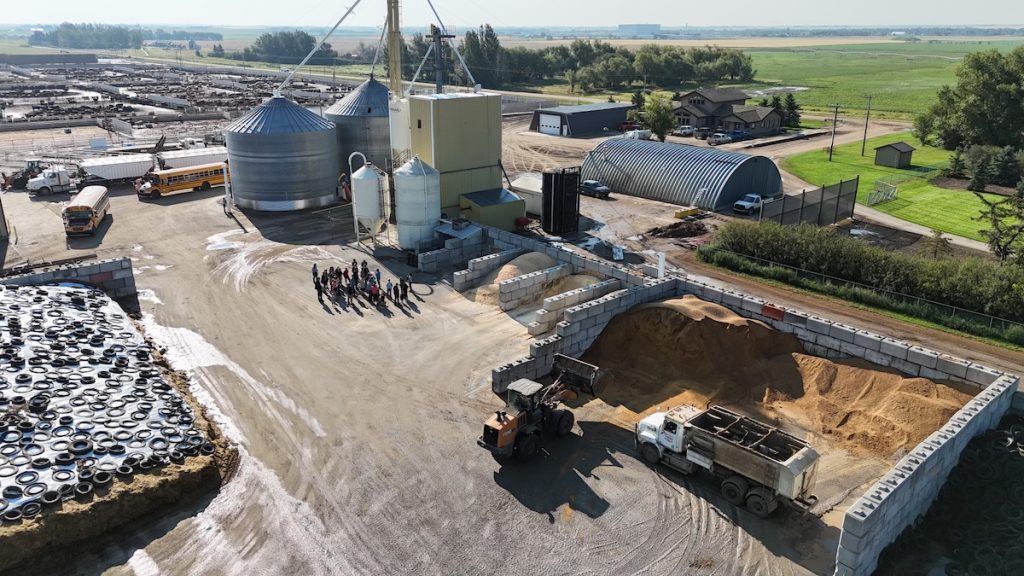
Kasko Cattle Co. hosted nearly 100 visitors as part of a tour facilitated by the Coaldale and District Agricultural Society. Ryan Kasko and his family, who run the multi-generational feeder and irrigated crop operation, showed visitors cattle care, feeding, and handling.
Bridging the gap
One of Open Farm Days’ objectives is learning, providing opportunities for the generations removed from the farm to see primary production firsthand and hear the stories and lessons of the farmers and ranchers who grow their food. Host producers emphasize the learning piece to help consumers appreciate the work and expense that goes into raising high-quality beef.
“They need to get to know us as well as how we do it, how our operation runs, how we raise our animals, and how we process and all the details,” Leona says. “Anybody can say they’re selling farm-to-table beef, but everyone does it differently, and so the end result will be different.”
Through their direct beef sales and Open Farm Days, the Bonneaus can address those information gaps.
“We realized that people know nothing about where their food comes from,” Guy says. “Even though we’re supposedly just selling, we have to do a lot of educating.”
At Hahn Angus Meat Market, visitors gained insight into production costs.
“We actually showed the feeding of the animals in a bunk. They were totally intrigued that farmers actually use nutritionists to create a food source and how important all that stuff is,” Bob Hahn says. “There were lots of questions, but they basically were shocked about how much is involved and what’s involved in growing beef. They’re kind of gobsmacked at the costs involved in running an operation.”
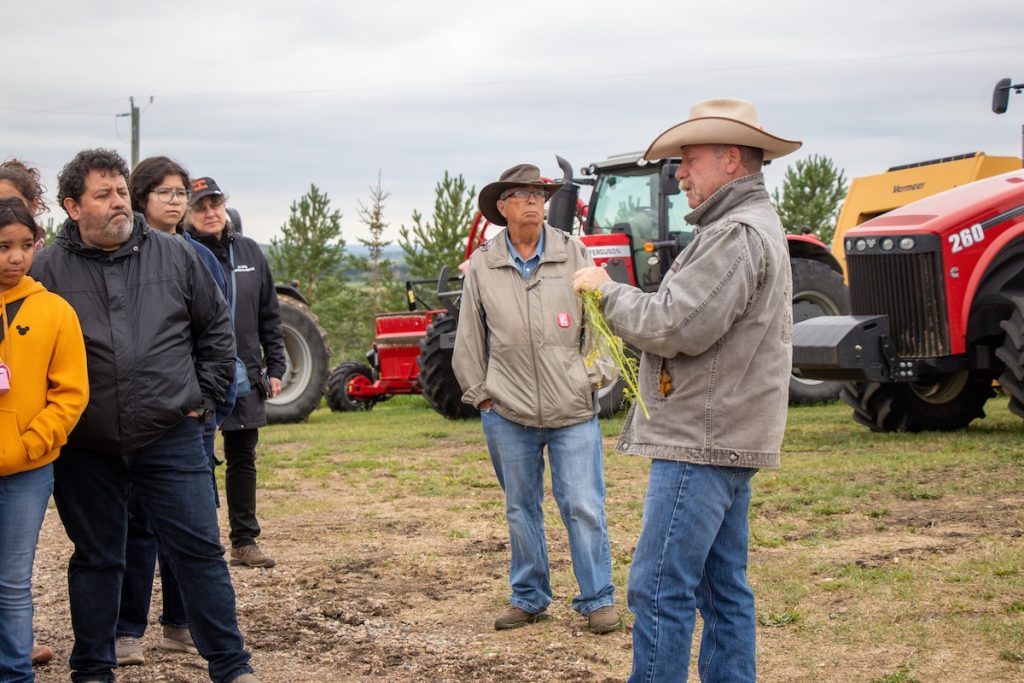
The Wirstas also highlighted the cost of the equipment and how it helps them run their ranch. The family showed visitors their cattle stock trailer, V-rake, tractors, round baler, 14-bale hauler, self-propelled discbine, and combine.
“We explained how much fuel each one of these pieces of equipment can burn in a day,” Kevin says, “and some of the costs associated with it. For instance, for the baler, one belt is just shy of $2,300 and there are eight belts on there.”
The family also showed visitors the crop fields and cattle handling yard.
“We explained to them how we utilize that corn and what it does in terms of enabling our ranch to succeed on fewer acres because of more tonnage,” Kevin says. “We had a pen of bulls and then we had some snow cattle. We talked about each breed and then we went into our handling facilities where I explained how we vaccinate and where we vaccinate and how easy it is when you have the right equipment.”
The producers appreciated the visitors’ curiosity, their questions, and the opportunity to have informed discussions rather than trying to navigate online discourse.
“We just always like welcoming people to our farm and I would say that there was really good engagement. People asked lots of great questions about what we do and were interested in the reality of how a real farm works,” Ryan Kasko says. “Generally, people were impressed with how clean and organized our farm is. Often, people have a perception of what a large farm might be like, and then when they come, they think, ‘Oh, this actually looks pretty good.'”
At Kasko Cattle Co., visitors saw the different types of cattle feed and walked down the alleyways where cattle were being fed.
“We explained the process of bringing cattle in from across Western Canada and other parts of North America and looked at some of the technology we have around feeding,” Ryan says. “We were in our handling facilities and discussed how cattle are vaccinated. And we had a cattle liner on site. You see them driving down the road, but not a lot of people have been inside a cattle liner, so I think especially the kids liked that part of it.”
Overall, the on-farm firsthand experiences help share agriculture’s story.
“Sharing the farm with the community and the local people really is something that is important for bridging those gaps between them and the farmers,” Leona Bonneau says.
Ryan agrees.
“It’s important that we are open to having people come on our farm and be able to explain what we do in an open way and allow people to see real farm production,” he says.
In total, the four operations we talked to hosted over 600 visitors and shared their passion for and knowledge of beef production.
Authenticity over perfection
While producers may wait for the “perfect” time to host Open Farm Days, this year’s hosts urge interested producers to get involved. They encourage producers to show their operation as it is and focus on raising agricultural awareness through storytelling.
“There’s no special recipe. It’s being yourself and representing the best possible farming operation you might have,” Kevin Wirsta says. “The number one key point to the whole Open Farm Days is educating the urban people to understand the process that we go through to bring valuable and safe food to their plates.”
Indeed, visitors appreciate seeing a working farm, including its imperfections.
(Photo by: Kailey Wirsta/K-Cow Ranch)
“It’s kind of like how everybody wants a clean house to have company over,” Leona says. “But your farm doesn’t have to be perfect for people to come out. And people really don’t care. They’re there to see you and visit.”
When planning for Open Farm Days, producers should lean heavily into their operation’s history, values, and best management practices.
“We had one piece called ‘Ask the Farmer Anything,’ and it was a lively session,” says Bob Hahn. “We had people asking everything about organics, environment, animal health, withdrawal periods for drugs, food safety, all those questions that we hoped participants would ask. It’s a really good way to demonstrate that we do know what we’re talking about and that we do care, all producers do. I encourage people to talk about this stuff and go out of your way to tell your story.”
Open Farm Days require some legwork, and producers will need to dedicate time to prepare and host over the weekend, but the extra effort is worth it.
For example, at Charlotte Lake Farms, the Bonneaus set up a boot-wash station, satellite images of their pastures, picnic tables, garbage cans, porta-potties, and signage. They also ensure they have a presentation ready for guests and that their herd is calm enough for visitors to safely view it when they pull wagons into the pasture.
“We’ve been doing this for several years, so the cows are used to it now,” Guy says. “We’ve always made sure that we have a nice quiet herd so we can park right in the middle of the herd, and I can get out and talk.”
Ranchers, visitors appreciate opportunity to connect
After the tractors are turned off and the pasture gates have closed, producers and visitors alike express their gratitude for each taking the time to connect and learn.
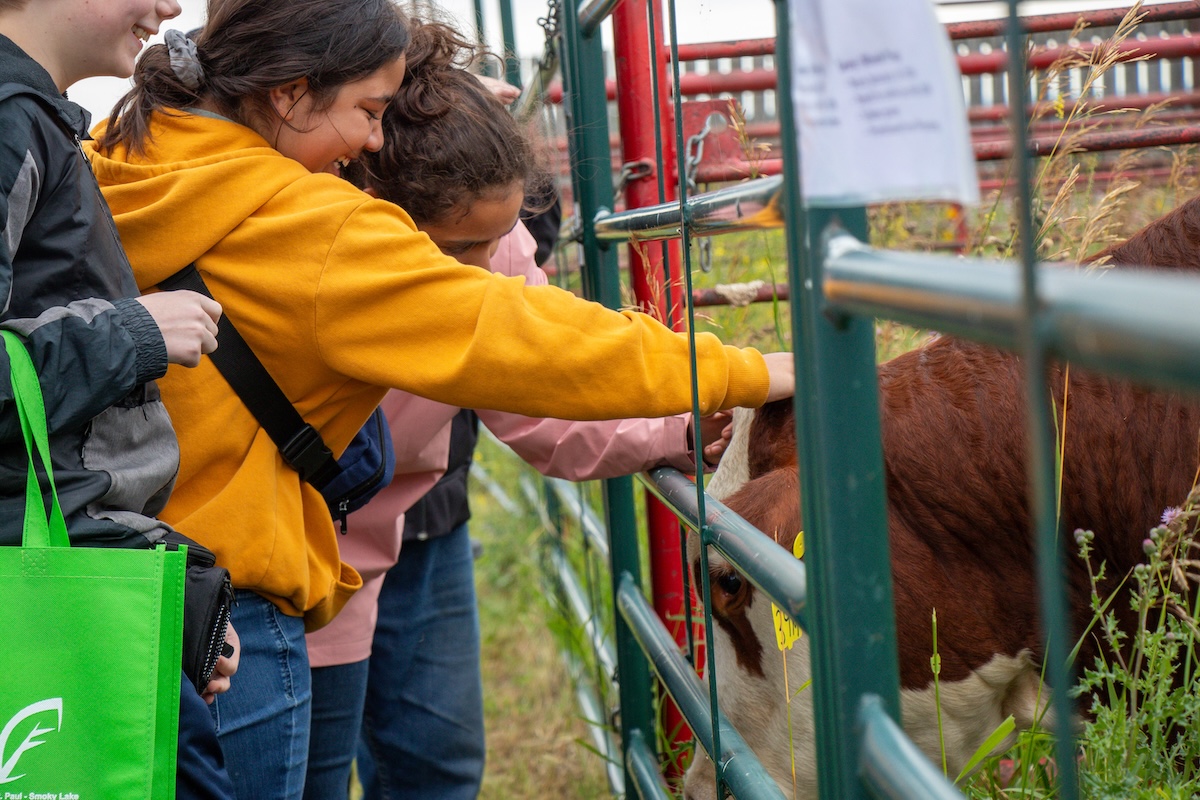
“My favourite part is after the tour because we hang around and they get to come and talk to us and then they get to ask their burning questions. We try and answer everything as truthfully and honestly as we can,” Guy says. “The kids come and shake your hands and thank you because they’ve never been so close to a cow. They always thank us for opening our farm for them.”
Some visitors even follow up with a phone call to say thank you and purchase beef products.
“They were very grateful and thankful, absolutely,” Kevin says.
At the end of the two days, stories are shared and friendships are made.
“I always find it very, very rewarding. That’s why we keep doing this,” Guy says. “As long as somebody learned something about your farm or about agriculture, that’s what it’s all about.”
Producers who are interested in participating in Alberta Open Farm Days next year can visit albertaopenfarmdays.cafor host registration details and resources.
Kate grew up on a cow-calf and cash crop operation in Central Ontario and has been an agricultural journalist since graduating from the University of Guelph in 2017. When not writing, she enjoys running, hiking, biking and farming (on a very small scale) in BC.



Share this article on
About the Author
Kate grew up on a cow-calf and cash crop operation in Central Ontario and has been an agricultural journalist since graduating from the University of Guelph in 2017. When not writing, she enjoys running, hiking, biking and farming (on a very small scale) in BC.