Live: ---
Rail: ---

{{ weatherTemp }}°C
{{ weatherCity }}

AB Direct - Steers
AB Direct - Heifers
Live: ---
Rail: ---
Rail: ---
US Trade- Steers
Live: ---
Rail: ---
Rail: ---
US Trade - Heifers
Live: ---
Rail: ---
Rail: ---
Canadian Dollar
$72.41
0.27
0.27
February 5, 2026
Inspiration
When stewardship works both ways
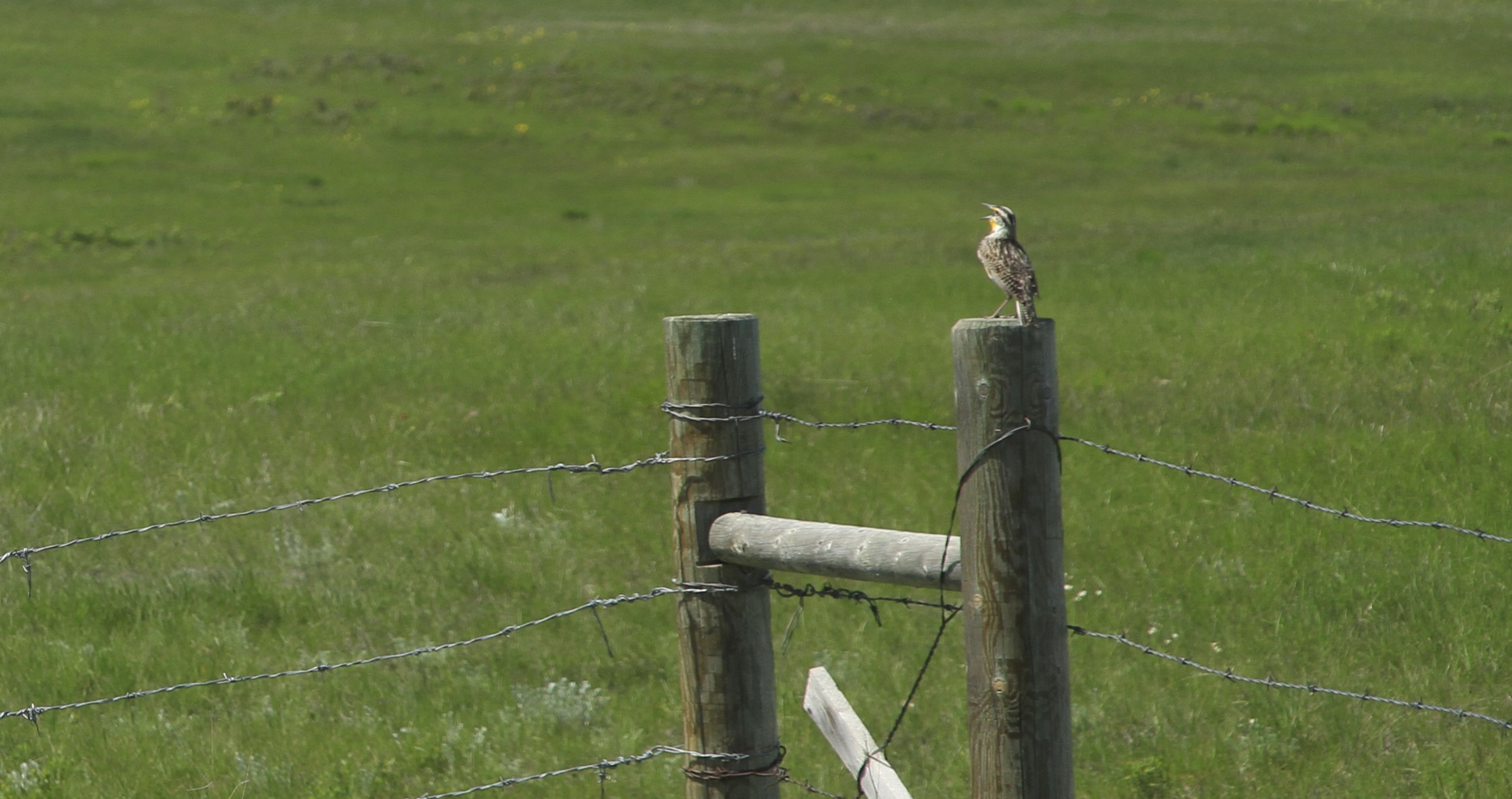
The protection of species at risk in Alberta plays a larger role in the lives of landowners than one might think. The grasslands ecosystem is an essential part of Alberta’s culture, heritage, and economy, providing ranchers with sustainable livelihoods. But grasslands don’t function without every species working together. Each species plays a role in this delicate ecosystem; as populations decline, Alberta’s grasslands also shrink.
The Alberta Wilderness Association notes that the northernmost extent of the Great Plains — Alberta’s Grasslands Natural Region — is one of the most diverse and least protected regions in the province. Alberta’s prairie region contains some of the world’s best and most important remaining grassland and is home to more than 75 per cent of Alberta’s species at risk.
Canada’s national Beef Sustainability Assessment determined that 68 per cent of wildlife habitats in Canada are provided by land managed by beef production. Burrowing owls, pronghorn, swift foxes, ferruginous hawks, and loggerhead shrikes are among the species at risk that prefer unbroken pasture as their habitat.
These species all play an important role in the grassland ecosystem — and on the ranch.
Burrowing owls
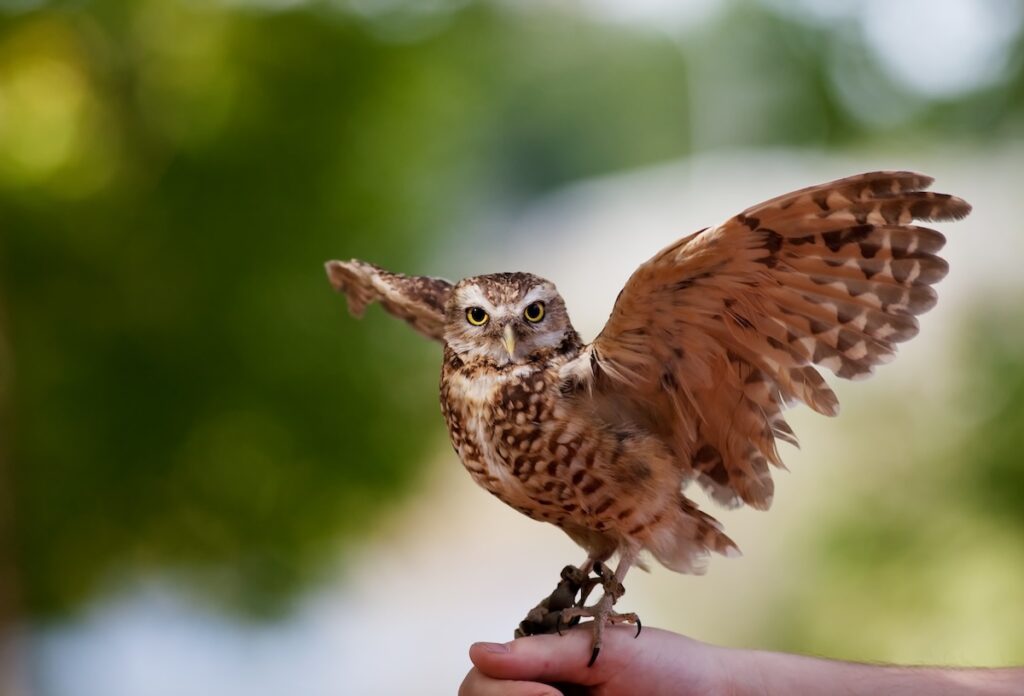
Culturally, burrowing owls are often seen as a sign of good luck or wisdom. For landowners, these tiny owls should also be seen as a good sign, but for a different reason. Burrowing owls play a crucial role in the grassland ecosystem by controlling rodent and insect populations. A family of burrowing owls can consume up to 7,000
insects and 1,800 rodents in a single season. Because of their sensitivity to environmental changes, burrowing owls also serve as indicators of a healthy ecosystem.
Pronghorn
As herbivores, pronghorn play a vital role in shaping plant communities and helping
maintain healthy grasslands.
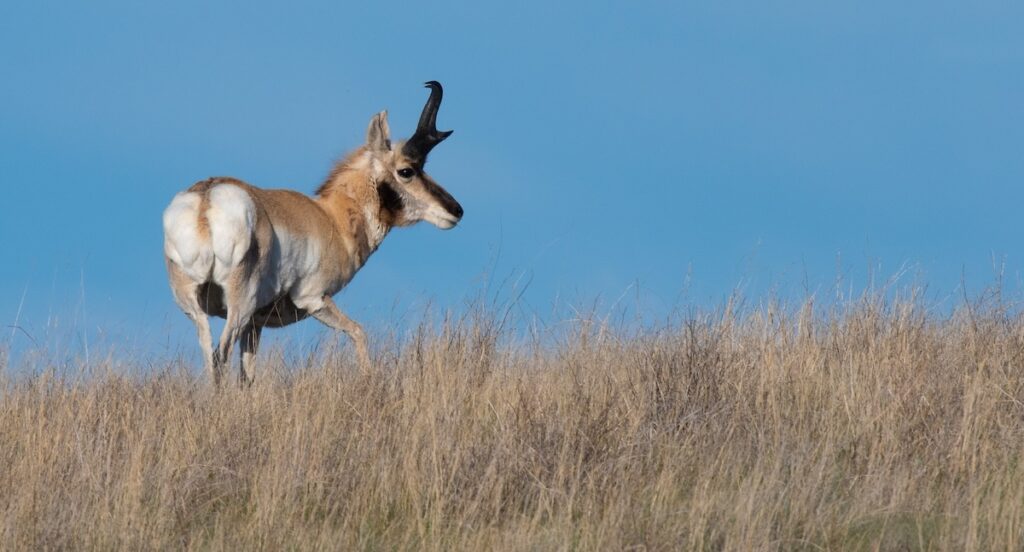
They also have one of the longest migrations of any animal in the Western Hemisphere. With seasonal journeys that can span more than 160 kilometres, pronghorn are essential to nutrient cycling and maintaining connectivity across ecosystems.
Ferruginous hawks
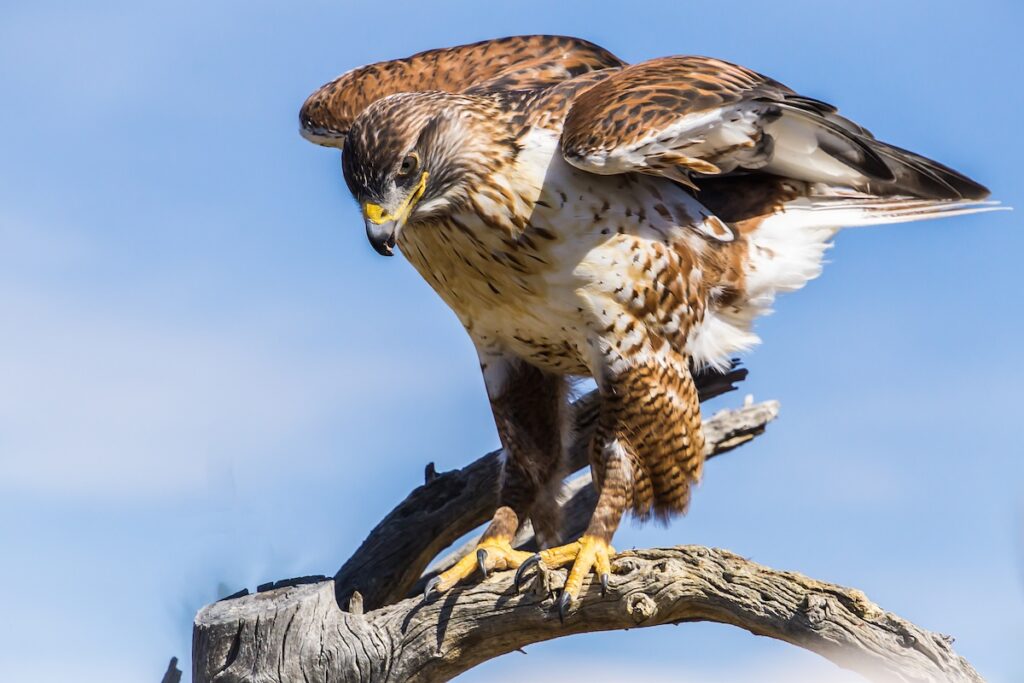
Hawks are another species that play an important role in the grassland ecosystem and provide benefits for landowners. Ferruginous hawks, among other hawk species, offer natural pest control, with a breeding pair killing up to 100 gophers in a single season. Beyond that, their presence supports overall biodiversity by attracting other bird species, helping maintain a natural balance within the ecosystem.
These animals are critical to grassland health, and many practices adopted by ranchers provide co-benefits for these species.
Making progress
Living and working on a generational cattle ranch in southern Alberta has taught Shari Reimer a great deal about land stewardship. The Finstad Ranch, a fifth-generation cow-calf operation, has seen firsthand the value of working with government organizations to ensure ranchers’ needs and concerns are understood. Through this cooperation, landowners like Reimer and her family can see how their input helps shape policies developed with ranchers in mind.
This partnership with government organizations began generations ago, when Reimer’s great-uncle, Hank, worked with the One-Four Research Station.
“He helped in selecting different varieties of grass for reseeding purposes — turning poor farmland back into grassland.”
Stewardship benefits ranchers too
The One-Four Research Facility, comprising mostly leased land, has served as a hub for agricultural and conservation research since 1927. The site encompasses 42,000 acres of semi-arid mixed-grass prairie south of Medicine Hat, Alberta.
Since then, the Finstad Ranch has participated in a number of government-led projects aimed at
protecting native grasslands and species at risk. These initiatives have included off-site solar- and
wind-powered water systems, hawk nest poles, and fencing projects that support both the ranch
operation and the wildlife that call the grasslands home.
One project, supported by Operation Grasslands, helped fund an alternate water source
through a solar- or wind-powered water trough, allowing a dugout to be fenced off. This
enabled grass to grow taller near a burrowing owl nest, helping increase mouse
populations.
For the Finstad Ranch, the project also brought improved water quality, easier cattle access, and reduced erosion around the dugout.
Through Operation Grasslands and FortisAlberta, a hawk nest pole was also installed
on the ranch after hawks had previously nested on a gas well house. The nest was
constructed in 2009, and Reimer says a hawk has used it every year since.
Another project, funded through a grant from the Milk River Watershed Council,
supported the installation of an alternate water source and fencing around a dugout
identified as bat and frog habitat. Once again, the result was cleaner, more accessible
drinking water for cattle, alongside habitat protection.
Taking part in initiatives like these does more than protect wildlife — it benefits ranch
operations as well. Healthy ecosystems and greater plant and animal diversity have
positive, long-term impacts on productivity and resilience.
“Whether it’s to improve our grassland or aid in protecting species at risk, it ultimately
helps us as ranchers,” says Reimer.
Share this article on



Latest News
-
April 8, 2026 Checking in with ABP
Young Creators Contest winners celebrated
-
April 8, 2026 Checking in with ABP
4-H Alberta spotlights volunteers and spring opportunities
-
April 6, 2026 Checking in with ABP
Canfax Weekly Article | Report for the week of April 6, 2026
Cattle Report
Updated: April 8, 2026
Steers
Live: ---
Rail: ---
Heifers
Live: ---
Rail: ---
Choice Steers
Live: ---
Rail: ---
Choice Heifers
Live: ---
Rail: ---
Boner Cows
Over 500 lbs: 326.29
Canadian Dollar
$72.41 0.27
Livestock Price Insurance Index
| Expiry | Fed | Feeder | Calf |
|---|---|---|---|
| 29-Jun-26 | 330 | 492 | -- |
| 27-Jul-26 | 324 | -- | -- |
| 24-Aug-26 | 318 | 494 | -- |
| 21-Sept-26 | 312 | 492 | 600 |
| 19-Oct-26 | 304 | 488 | 602 |
| 16-Nov-26 | 296 | 480 | 596 |
| 14-Dec-26 | 300 | 470 | 596 |
Last Updated on April 2, 2026