Live: ---
Rail: ---

{{ weatherTemp }}°C
{{ weatherCity }}

AB Direct - Steers
AB Direct - Heifers
Live: ---
Rail: ---
Rail: ---
US Trade- Steers
Live: ---
Rail: ---
Rail: ---
US Trade - Heifers
Live: ---
Rail: ---
Rail: ---
Canadian Dollar
$71.87
0.05
0.05
September 15, 2026
Checking in with ABP
From local concerns to provincial action: why producer resolutions matter
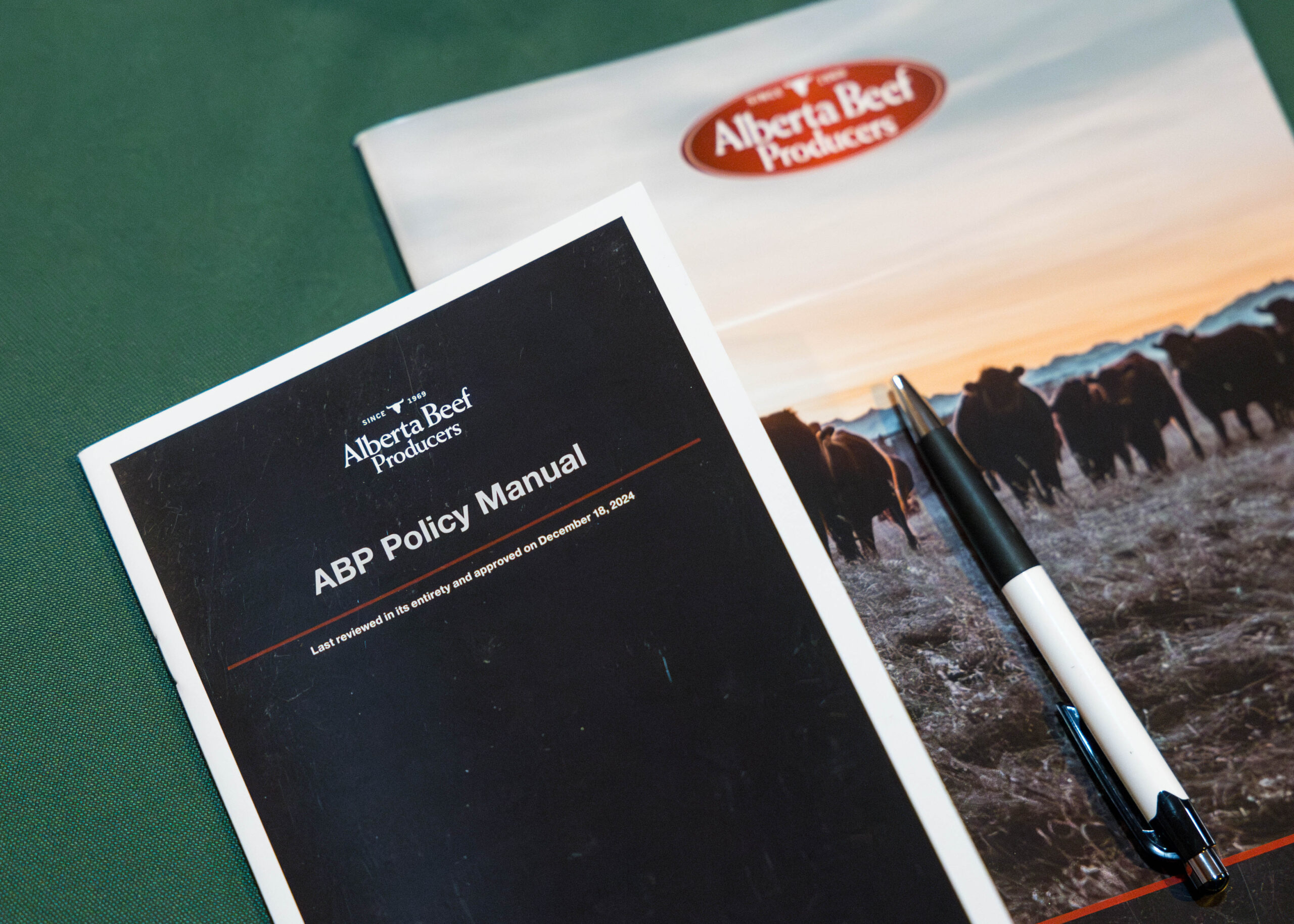
When Alberta Beef Producer’s (ABP) fall producer meetings begin on September 28, 2026, and continue through October, producers from across the province will have an opportunity to discuss the issues impacting their operations and communities, hear updates on industry priorities, and take part in the resolution process.
While the meetings provide a forum for discussion, they also serve another important purpose. They are where producers can bring forward resolutions that help shape the future direction of ABP.
Turning ideas into policy
Resolutions give producers a formal way to identify opportunities, bring forward challenges, and suggest solutions.
Topics can range from business risk management and transportation regulations, to animal health, wildlife, market access, and other issues affecting the cattle industry.
The process starts at the local level. Producers bring forward a resolution outlining a concern and proposing a course of action at a meeting in their zone, where attendees have an opportunity to debate the issue, suggest changes, and ultimately vote on whether it should move forward.
Resolutions that receive support at the local meeting continue through ABP’s resolution process. The next step is ABP’s Resolutions Committee, which directs resolutions to the Board of Directors, delegates at the Annual General Meeting, or a relevant committee. Resolutions that are adopted help guide ABP’s policy positions, advocacy efforts, and future priorities.
What begins as a concern raised at a local producer meeting can ultimately become part of a broader industry discussion and help shape the issues ABP focuses on in the years ahead.
How to draft a resolution
A good resolution starts with a clearly identified issue, and a specific action being requested. The strongest resolutions focus on one topic, and explain why it matters to producers.
A simple way to begin is by answering these three questions:
- What is the issue?
- Why is it important to producers?
- What action should be taken?
Resolutions must follow a standard format.
- WHEREAS statements provide background and explain why the issue is important.
- THEREFORE, BE IT RESOLVED outlines the action being requested.
Keeping resolutions clear, concise, and specific helps ensure other producers understand the issue and the action being proposed.
Producers who are considering a resolution are encouraged to connect with a delegate in their zone before their local meeting. Delegates can answer questions about the process and help ensure the resolution clearly communities its intent.
Who can submit and vote on resolutions?
To submit or vote on a resolution, a producer must have sold cattle and paid check-off in their own name or company name within the previous two years.
Additional eligibility considerations include:
- Producers vote in the zone where their business operates if it differs from their residential zone.
- If a business operates in multiple locations, including the producer’s resident zone, the resident zone is considered the eligible voting zone.
- If cattle are sold under one name, such as by a couple, there is one vote.
- If cattle are sold under one company name with multiple representatives, one representative votes on behalf of the company.
Why it matters
For most producers, industry issues start close to home. This might include concerns about transportation regulations, predator management, veterinary access, business risk management programs, or another challenge affecting day-to-day operations.
The resolution process provides an opportunity to take those concerns beyond coffee-table conversations and put them in front of producers from across the province.
Not every resolution is adopted, and not every issue is resolved immediately. But resolutions help identify the challenges producers are facing and provide direction on where ABP should focus its efforts.
They also create an opportunity for producers from different regions to compare experiences and determine whether a challenge is more widespread than it may initially appear.
Take part in the discussion
Submitting a resolution is one way to participate, but it is not the only one.
Attending a Producer Meeting, taking part in discussions, asking questions, and voting on resolutions all contribute to the process. Those conversations help determine which issues move forward and which concerns producers believe deserve further attention.
The fall Producer Meetings are designed to give producers a voice. Whether you’re bringing forward a resolution, speaking during debate, or simply casting a vote, your participation helps ensure producer priorities continue to guide ABP’s work.
Leave a Comment

Add abpdaily.com to your home screen
Tap the menu button next to the address bar or at the bottom of your browser.
Select ‘Install’ or ‘Add to Homescreen’ to stay connected.
Share this article on
About the Author
Kara grew up on a grain farm near Bow Island, Alta. After studying at SAIT and the University of Calgary, where she earned a degree in communication and media studies and a diploma in broadcast news, she began her career in agricultural communications and journalism.