Creating support for wildlife habitat could net benefits for southern Alberta beef producers, including through financial support under a pilot project.
Just as humans do, wildlife relies on having places and spaces to move around. Even on the wide-open prairies, connecting routes like coulees are important throughways. They also serve as nesting and overwintering bases for many upland game birds and winter cover for deer and antelope. Early season willows that grow in these routes offer important spring habitat for pollinators. While shelter belts serving as moisture conservers and perennial grass cover between strips were common fifty years ago, they’ve become rarer with larger operations and equipment.
The Alberta Conservation Association (ACA) seeks to retain some of these corridors by working with landowners and a wide range of partners, including irrigation districts and municipalities, on some key projects already making a difference in improving those environments.
ACA Senior Biologist Brad Downey oversees the new Habitat Connectivity and Access Project, which he says brings together work that’s been underway for a while under one umbrella.
“A lot of this is tied to connections through some of the more developed agricultural landscapes,” explains Downey.
“There are ribbons of habitat found within them—riparian areas, the coulees, areas around reservoirs that still retain grasslands. Many of them are still grazed by cattle.”
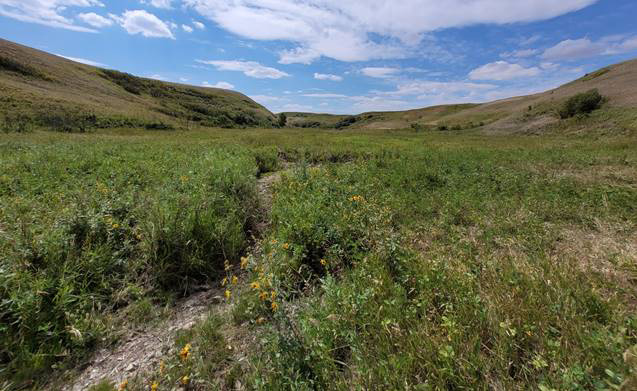
Wildlife corridor in the county of Warner, Alberta. All images supplied.
The conservation group was interested in collaborating with producers in southern Alberta to enhance and maintain habitat for a variety of species, from game birds to ungulates. But it also wants to develop relationships to pave the way for continued hunting access in these areas, which are often rich in wildlife.
Water quality has been another aspect of the habitat work being done.
“We already know even a small 100-acre riparian area can end up filtering the water from about 4,000 acres of land that goes down through it. It might seem like a small ribbon of habitat but it provides an important function for the downstream users when it filters through it. Maintaining that habitat is important for a lot of things.”
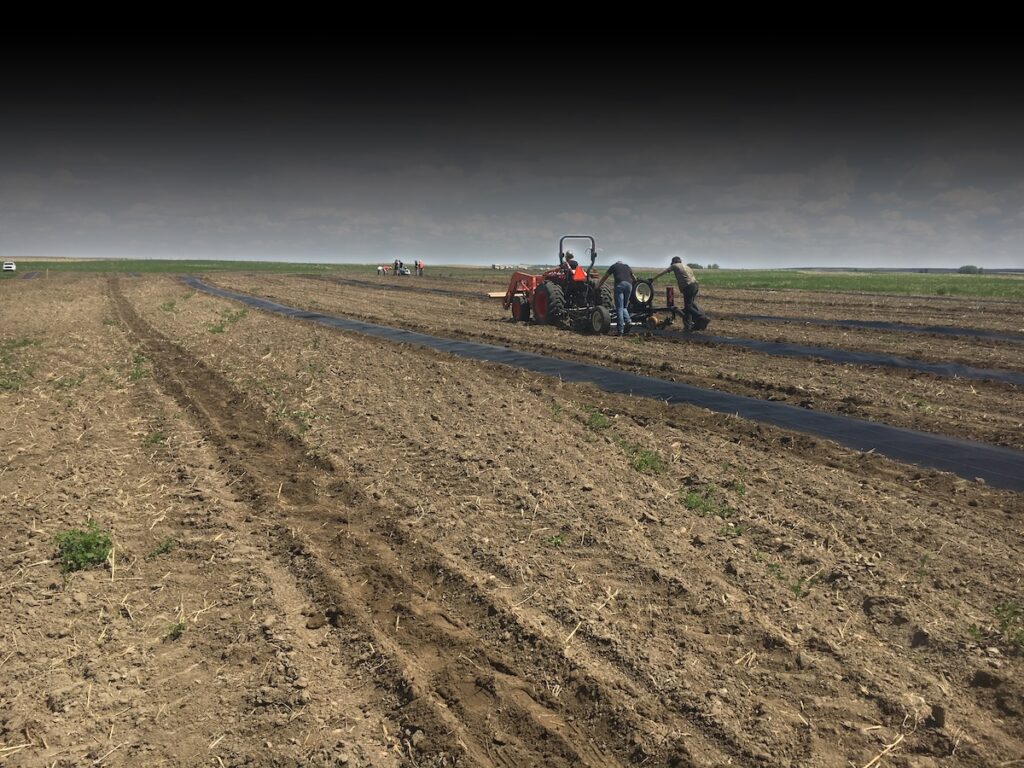
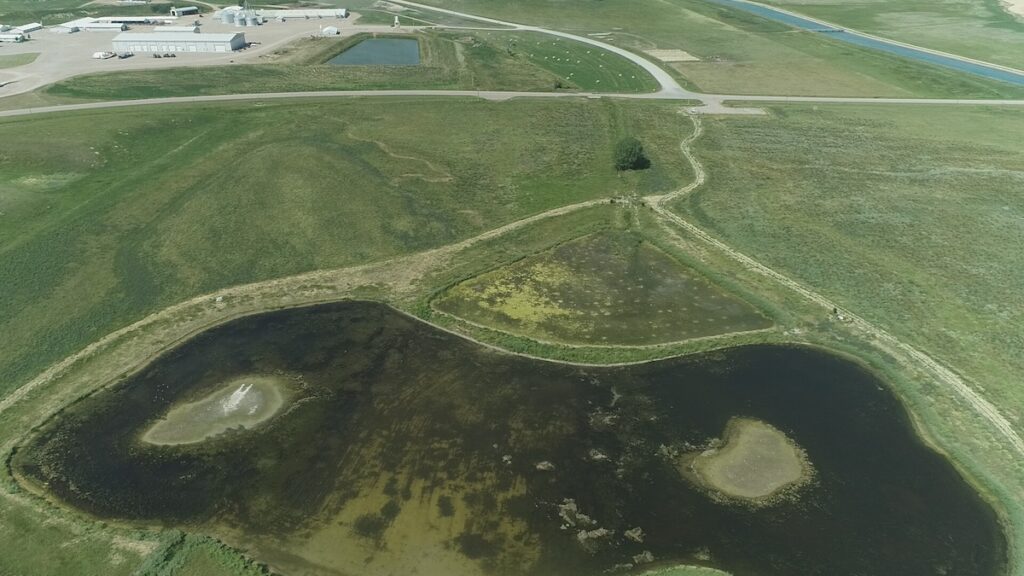
Downey points to the success of projects like the Milk River Ridge Reservoir Water Quality Stewardship Initiative, started 13 years ago. The reservoir was fenced off, and over 40,000 shrubs have been planted around it. Over 500 acres of previously cultivated land has been reseeded into permanent grass cover. Raymond High School students planted more than 2,000 willow stakes through the riparian areas. A nutrient settling pond was constructed to capture and filter runoff from a key drainage channel into the reservoir.
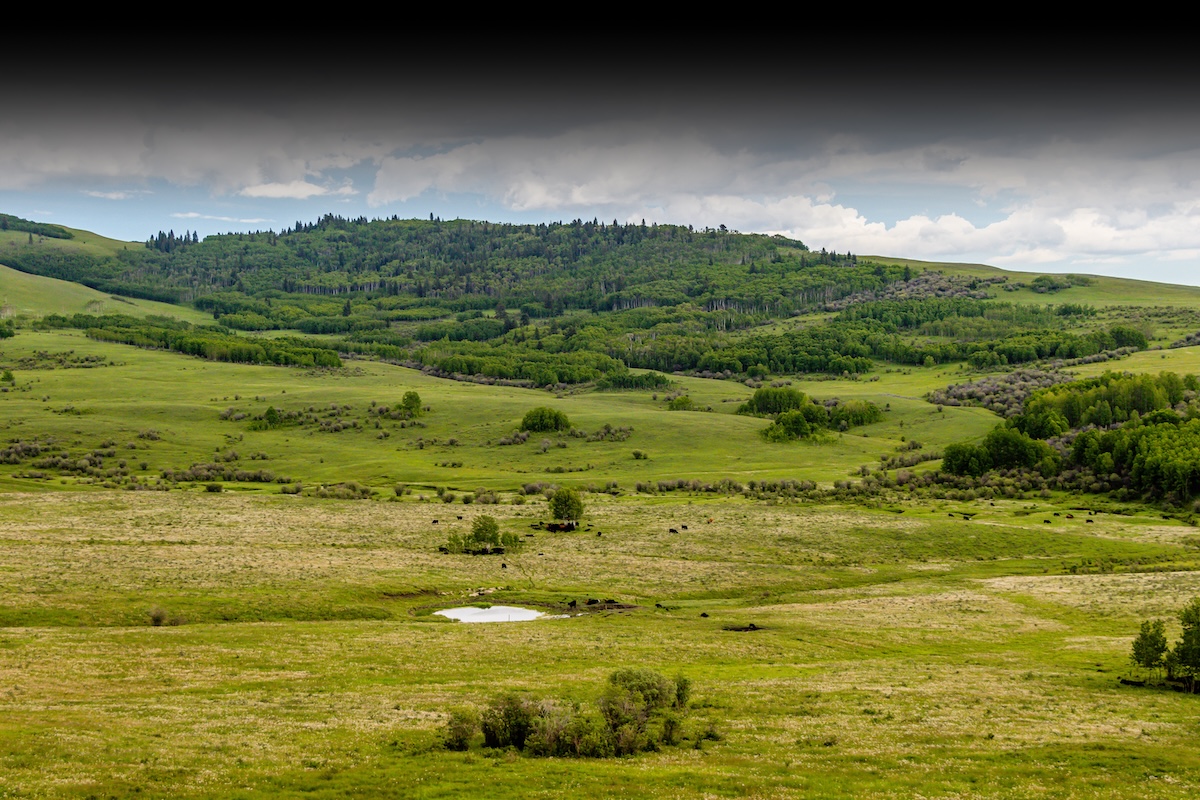
Planted trees, part of the Milk River Ridge Initiative.Green fields and ponds on health habitat near Willow Creek, Alberta,
“If you walk around the Milk River Ridge Reservoir and see the restoration that has occurred, and how it’s being managed for habitat and water filtration, you’d be amazed at the shrubs, wildlife, and the growth that’s out there now,” says Downey. “It’s been a key project and one I know the County of Warner is very happy with and very proud about. I highly recommend going for a walk out there.”
ACA has also collaborated with the St. Mary River Irrigation District on a similar approach around many of its reservoirs and adjacent lands.
“We’ve decided now to look at expanding that effort, focusing on rewarding and recognizing some of those landowners that have those critical features on their landscapes, like coulees, and riparian corridors that you find in some of those cultivated areas,” says Downey.
Funding for incentive payments to landholders has become available this year through the new provincial Ecosystem Services Grant Program. The Corridor Initiative is just getting underway for the South Saskatchewan Watershed, with the pilot program focused on the Counties of Warner, Forty Mile, Cardston, and the south portion of Cypress County.
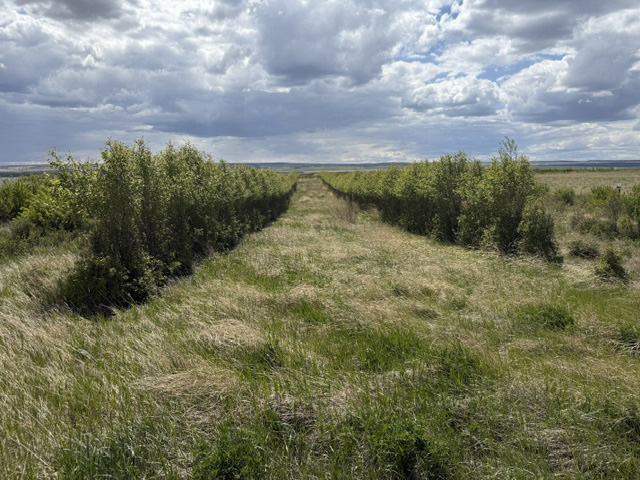
Ridge shrub planting for the Milk River Ridge Initiative.
“We’re looking for landholders interested in working with us. We have a number of producers we already work with that we’re approaching,” explains Downey. “It’s open to others that have coulees or riparian habitats they might consider rolling into the program, and getting compensated for some of that work they have been doing to maintain those important systems on the landscape— the ecosystem services they provide.”
For example, the program could provide payments for idle zones for filtration in cropland areas, or for managed coulee grazing to retain cover for wildlife wintering habitat, or compensation for fencing off riparian areas.
But a new angle being explored involves using virtual fencing to protect coulee and riparian habitat without the need for additional permanent structures on the landscape.
“To me, that’s the future, to be honest,” offers Downey. “You’re putting up this wildlife-friendly fence to protect some of the habitat and for the water filtration. But also, it’s another barrier. If you can do all that work without having to put barriers up, and there are producers who are interested in using these virtual collars to do that, that’s great.”
One trial is already underway with a rancher near Irvine, on a section of a creek.
“They have the Gallagher collars on their cattle and use that as a virtual barrier. It’s the first year of trialling it, and I’ll be excited to hear about it.”
“We’re also trialling Halter collars through our Multisar project in the southeast corner,” Downey says. “I think there’s huge potential for virtual collars across the whole area of the province, to better manage cattle and habitat.”
For people interested in trying virtual fencing, having an organization like ACA see the value, and help provide some dollars, can encourage them to try it out.
“It will be interesting to see where this technology goes over the next five or 10 years, but it’s exciting to see people trying it, and what can be done,” adds Downey.
“In the end it’s all about stewardship, working with landholders, recognizing those on the ground, and looking at ways to further enhance and maintain the habitat.”
“Retaining habitat is critical not only for wildlife but also for your operation for the long road.”
If you have a habitat you think might be eligible for the Corridor Initiative, you can contact Brad.Downey@ab-conservation.com.
West Ridge Wetland, part of the Milk River Ridge Initiative.
Dianne Finstad used her ranch roots to spur on what’s become a long communications career in television, radio and writing, covering agriculture and rodeo. She’s based in the Red Deer area. She serves on boards for Lakeland College and Westerner Park, and you can find her on RFD-TV Canada’s new show Frontline Farming Canada.




Share this article on
About the Author
Dianne Finstad used her ranch roots to spur on what’s become a long communications career in television, radio and writing, covering agriculture and rodeo. She’s based in the Red Deer area. She serves on boards for Lakeland College and Westerner Park, and you can find her on RFD-TV Canada’s new show Frontline Farming Canada.