Live: ---
Rail: ---

{{ weatherTemp }}°C
{{ weatherCity }}

AB Direct - Steers
AB Direct - Heifers
Live: ---
Rail: ---
Rail: ---
US Trade- Steers
Live: ---
Rail: ---
Rail: ---
US Trade - Heifers
Live: ---
Rail: ---
Rail: ---
Canadian Dollar
$70.04
0.01
0.01
November 17, 2026
Business Tools
Cows on Cropland
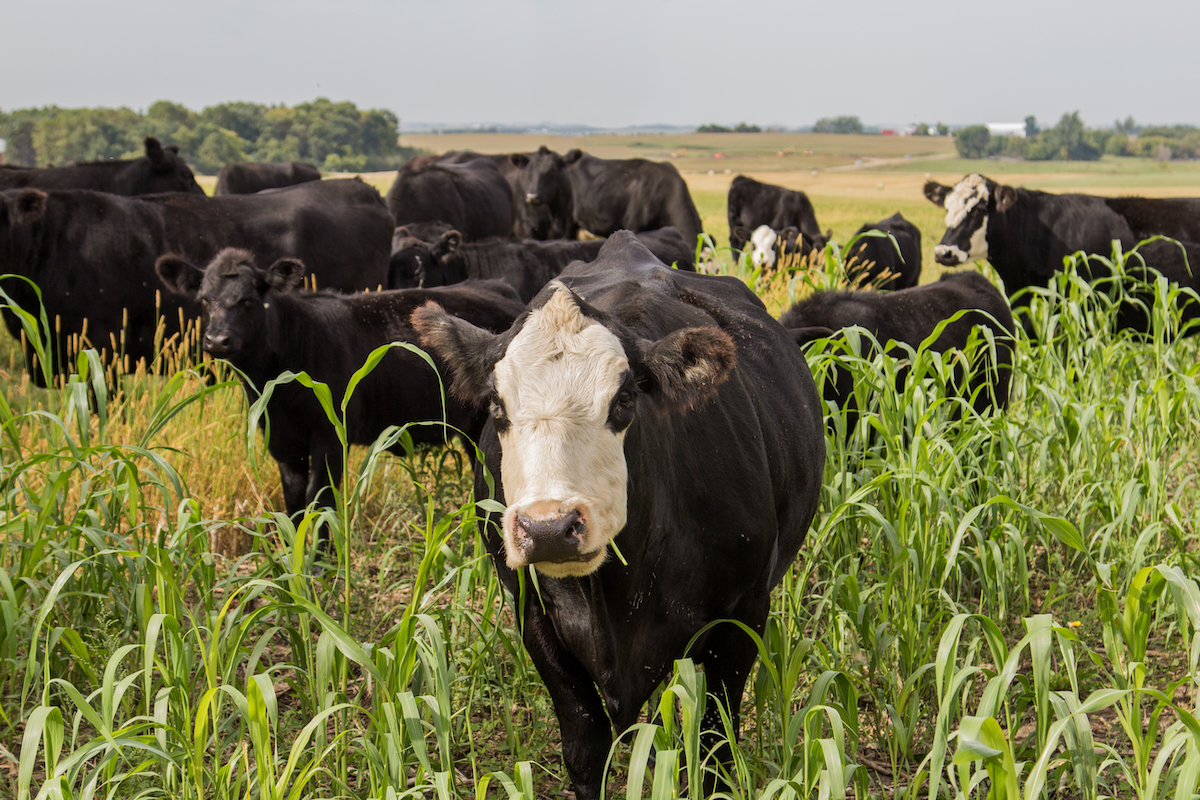
In Alberta, and indeed across the Prairies of Canada and beyond, there is often a distinction between arable land used to produce cash crops and non-arable land used for grazing livestock.
This has created complications on both sides of the equation. There is some debate about the merit of potentially bringing livestock back onto crop acres, though it is not without challenges. Here, we will showcase one unique pairing of a crop with a livestock producer and investigate the strengths and weaknesses of merging these two different land uses.
Cooperative Success
Two Vermilion area producers have created a successful partnership that utilizes cattle as a management tool on annual cropland and meets the needs of their separate crop and cattle operations.
UNDERSTORY CROPS:
Species seeded at a lower density, with the intention of increasing species diversity, extending the photosynthetic and grazing season, natural weed suppression, and habitat for pollinators. E.g. subterranean clover, Italian rye, chicory, safflower.
The crop operation wanted to reduce the impact of crop production on soil health, which led them to investigate different beneficial management practices. Techniques included growing polycrops, intercropping using understory crop species with different root and nutrient characteristics, and including cattle grazing as part of the management strategy. This allowed for improved utilization of the understory crop species and created an additional market for the polycrops, while also returning nutrients in the form of manure and urine to the land.
The cattle operation wanted additional grazing opportunities without having to acquire more land and a local source of feed for their backgrounding operation. Knowing that cattle could be used as a tool but not wanting to take on the additional responsibilities of owning cattle, a partnership between neighbours was proposed. The two producers have been working together on this management system for roughly 10 years and have found it beneficial for both operations.
Could cattle be included as a tool for traditional crop management?
Absolutely. For every crop production philosophy there are opportunities to create benefits with the inclusion of cattle.
Land and Crop Management
The priority of the change in management was to transition marginal or poorer-producing cropland from annual to perennial crops. Benefits of this type of practice include increased soil coverage to reduce erosion, potentially improved soil health metrics, the addition of natural nutrients to the land, and eased pressure on other grazing lands. Next, the priority was intercropping, followed by planting understory crops to expand the range and diversity of plant species in use. The advantages of this practice include improved soil health metrics, increased resilience of the cropland, some economic stability, increased biodiversity on the landscape, and pest management.
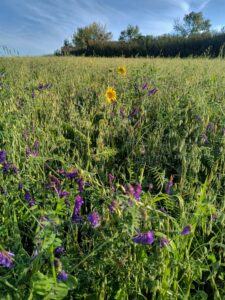
The crop species and mixtures are selected based on maturity date, mycorrhizal fungi associated with the crop species, crop rooting characteristics, and ease of separating crops at harvest or leaving a growing understory crop to maintain a living root in the soil. Deciding what crop species to plant lies mainly with the crop producer in this case, though there is a discussion between both managers to determine blends, values, and uses.
MYCORRHIZAL FUNGI:
These microscopic fungi form a symbiotic relationship with plant roots. They can create humic compounds, polysaccharides, and glycoproteins that bind soils and improve soil structure, among other benefits.
Species with low growth profiles that may be suitable under annuals include: Italian ryegrass, Persian clover, subterranean clover, sunflower, phacelia, millet, plantain, chicory, buckwheat, and flax.
Intercrop mixtures used and planned are pea-canola-spring wheat; faba bean-flax-oats; pea-barley-proso millet-buckwheat; winter wheat-pea; and many others, with an emphasis on planting species with a variety of rooting depths and structures to make the most of the active rooting zone in the soil. The producers don’t use conventional soil tests; instead, they implement a different suite of at-home soil tests, including earthworm counts, infiltration rates, digging to look at worm tracks, and the presence of other insects.
Grazing Management and Cattle Feeding
A variety of grazing opportunities have been employed: swath grazing, grazing standing crop, grazing stubble and chaff piles, and bale grazing. If existing annual grazing resources are limited, space is made in the cropping operation to allow for earlier grazing. Reciprocally, the cattle operation carries a reserve of pasture to allow flexibility in the amount and availability of grazing crops and/or residue. Flexibility in grazing timelines is one of the biggest factors in success.
The class of grazing animals is adapted based on feed quality. Feed testing is used to determine if any supplemental grain, silage or pellets are needed. Once cattle are out on the field, they are monitored by both producers for their own reasons: the amount of grazing material remaining, which under-seeded plants have grown and in what quantity, and water availability.
WORDS OF ADVICE FROM ONE PRODUCER TO ANOTHER:
“This type of cooperative agreement is doable for people working together in good faith. If you must win at all costs, this likely won’t work for you.”
Setting Up
Some of the cropping equipment was exchanged for haying equipment to allow the harvest of the perennial forages on fields that were not prepared for cattle, or to utilize the perennial forages for bale grazing on annual crop fields that are prepared for cattle.
Each half of the partnership needs to know the value of their opportunity costs.
Fencing, an obvious need for grazing, can be achieved through a variety of methods depending on level of risk tolerance and available tools. In this situation, the producers have opted for permanent perimeter fencing with temporary electric cross-fencing to create smaller pastures. Still, other producers have had success using only temporary electric fencing.
In the spring, summer, and fall, water is either hauled in or from dugouts, and snow is used as the primary water source in the winter. Winter water is supplemented with dugout water if the snowfall is inadequate. Most producers do not recommend relying on snow as a sole water source for livestock, but in some cases it can work.
The current funding opportunities for fencing and water systems have been instrumental in initiating the grazing cooperation. The producers have made use of different funding partnerships to implement their grazing on cropland system. One producer lives in a county with an ALUS agreement, so he makes use of that funding opportunity, while the other lives in a county without an ALUS agreement, so he makes use of OFCAF funding to offset implementation costs.

The Financial Aspect
Every year the partners sit down and discuss rates, much of which is based on ensuring each other’s costs are covered. Grazing or grain rates are negotiated for each different crop. Knowing the per-day feeding costs versus grazing costs, while being reflective of crop and supplemental feeding inputs, is the key to determining rates.
The producers developed a long-term view to calculate the cost/benefit, as cattle performance and crop goals don’t always meet, and changed from looking at success as total yield or pounds to net revenue per acre and cow. On the cow side, the producer notes that his net revenue per cow has increased. Meanwhile, on the crop side, the producer notes that his net revenue is comparable to growing high-input crops, but his costs are lower, so the risk is also lower.
Other Considerations
One frequently mentioned issue is the potential for an increase in weeds due to livestock spreading seed through manure. These producers have noted that they do not see an increase in weeds with the cows on the land, with the mindset that what might be spreading was likely there in the first place. All supplemental feed sources are produced from the same land and are considered part of the system, except pellets, which are purchased and brought in. With multi-species crops, herbicide use is limited, but the producers have found that with the diversity of desirable species growing, and the reduction in nitrogen fertilizer they apply, the desirable species are very competitive and keep the weed species in check.
Another aspect of integrating cattle and cropland is how formal the shared land-use agreement should be. These agreements could range from formal contracts to handshake deals. With a less formal approach, it is very important that partners have a good dispute-resolution plan in place to resolve issues amicably. It is also important to inform your insurance company and to make sure your liability coverage is up to date. In this case, these producers do not have a written agreement in place, as they prefer to keep things between themselves with the flexibility that offers both parties. This might not work for everyone, and a producer should always follow the pathway that feels best for them and what they are comfortable with.
Summary
Integrating livestock like cattle back onto cropland is not without challenges, but the benefits can outweigh the costs. This case study shows that such partnerships are possible and highlights some of the potential benefits and challenges. Start a conversation with your neighbours and explore the possibilities and benefits for both of you.
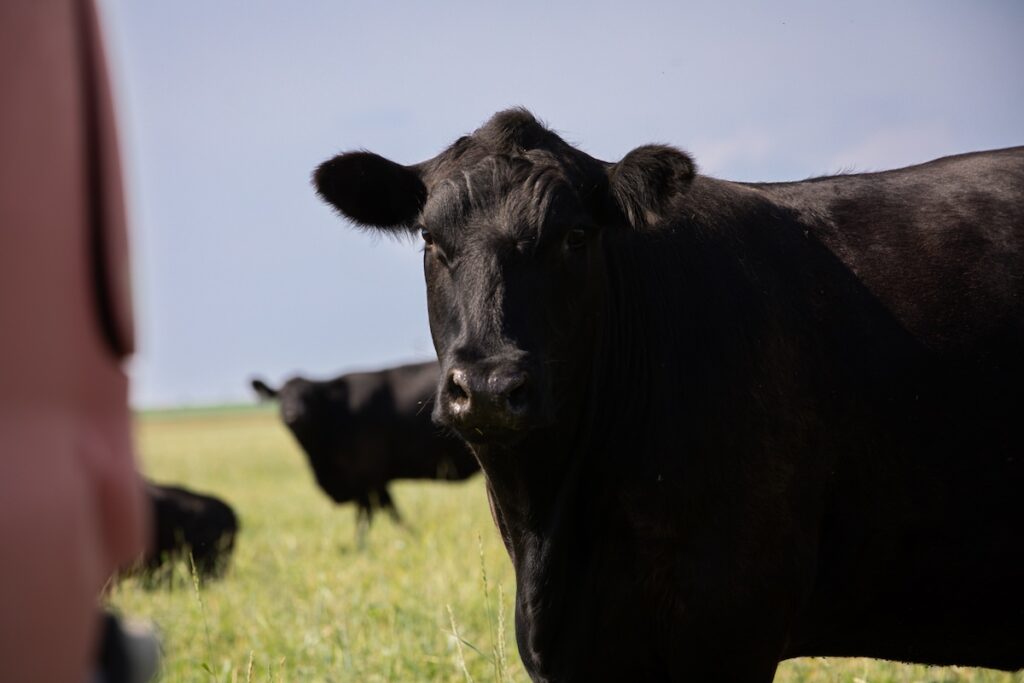
Potential Benefits and Challenges of the Cows/Crops Combo
Some of the possible benefits (not exhaustive) of bringing livestock back onto cropland include:
Improved nutrient cycling
– Livestock provide the direct addition of nitrogen-based fertilizer in the form of manure and urine through their normal grazing activities.
Extended grazing
– Bringing livestock onto crop acres to graze residue or stubble can extend the grazing season for cattle producers.
Alternative revenue source
– Depending on how the structure is set up, there is potential here for either producer to add a revenue stream to their operation.
Some of the possible challenges (not exhaustive) of bringing livestock back onto cropland include:
Compaction of the soil in the field due to livestock trampling, especially in areas of heavy use
– Cattle are notoriously habit forming, and will walk the same pathways every day to water or shelter.
Introduction of weed species from livestock manure
- Some weed seeds can survive for several days within the digestive system of a cow, and be spread in new areas as manure is passed.
- Anecdotal evidence, including from the producers featured in this article, suggests this is not as big a problem as it may seem.
Water and fencing
– Many acres of cropland are neither fenced nor have appropriate water sources for livestock. These issues need to be addressed before any livestock can be brought on-site.
Finding a partner
– Possibly the hardest part of any new venture is finding the right people to work with.
This was first published in Volume 6 Issue 3 of ABP Magazine (September 2026). Watch for more digital content from the magazine on ABP Daily
Leave a Comment

Latest News
-
November 17, 2026 Business Tools
Cows on Cropland
-
November 16, 2026 Current Markets & Forecasts
Canfax report for the week of November 16, 2026
-
November 16, 2026 News
4-H Alberta recognizes Premier’s Award recipient and announces new ambassadors
Cattle Report
Updated: November 17, 2026
Steers
Live: ---
Rail: ---
Heifers
Live: ---
Rail: ---
Choice Steers
Live: ---
Rail: ---
Choice Heifers
Live: ---
Rail: ---
Boner Cows
Over 500 lbs: 238.14
Canadian Dollar
$70.04 0.01
Livestock Price Insurance Index
| Expiry | Fed | Feeder | Calf |
|---|---|---|---|
| 08-Feb-27 | 280 | 456 | -- |
| 08-Mar-27 | 282 | 454 | -- |
| 05-Apr-27 | 299 | 452 | -- |
| 03-May-27 | 294 | 450 | -- |
| 31-May-27 | 302 | 454 | -- |
| 28-Jun-27 | 300 | 454 | -- |
| 26-Jul-27 | 294 | -- | -- |
Last Updated on November 13, 2026

Add abpdaily.com to your home screen
Tap the menu button next to the address bar or at the bottom of your browser.
Select ‘Install’ or ‘Add to Homescreen’ to stay connected.
Share this article on
About the Author
Kristine Flaim is a Professional Agrologist and Certified Professional in Rangeland Management (CPRM) with extensive industry experience. She works in knowledge transfer and engagement with Alberta Agri-Systems Living Lab.