Live: ---
Rail: ----

{{ weatherTemp }}°C
{{ weatherCity }}

AB Direct - Steers
AB Direct - Heifers
Live: ---
Rail: ---
Rail: ---
US Trade- Steers
Live: ---
Rail: ---
Rail: ---
US Trade - Heifers
Live: ---
Rail: ---
Rail: ---
Canadian Dollar
$70.22
0.34
0.34
October 15, 2026
Business Tools
Research project aims to stay ahead of roundworm resistance in cattle
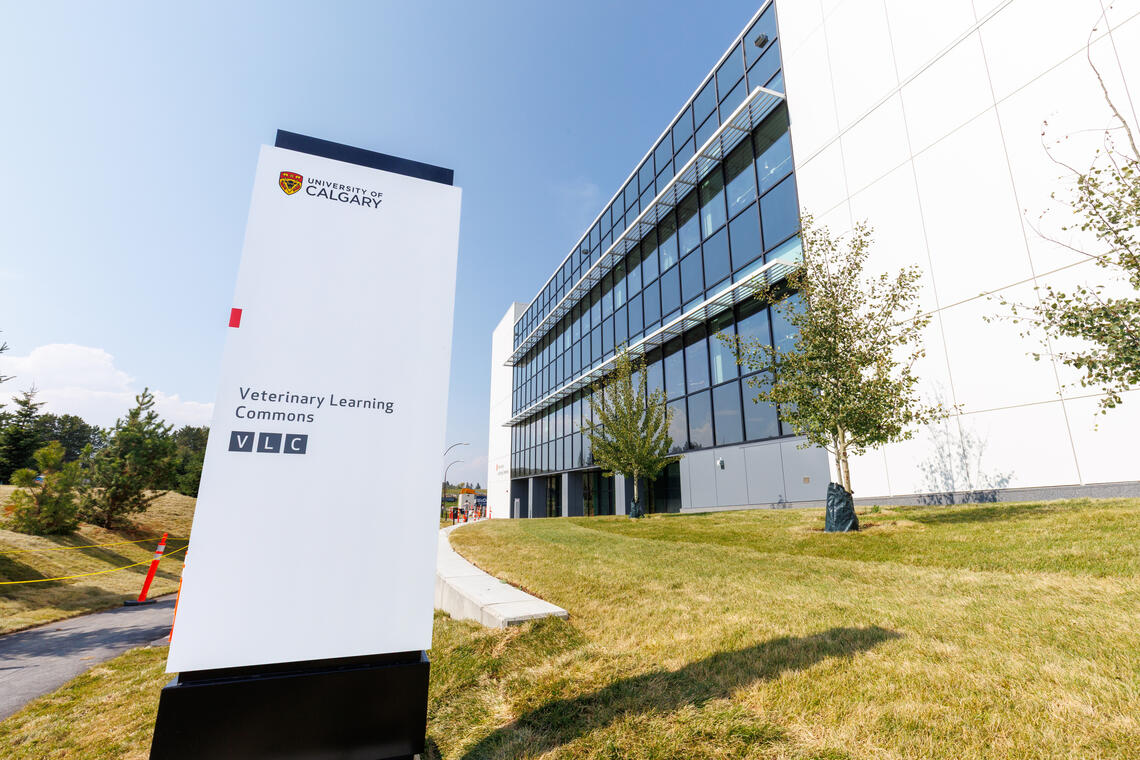
University of Calgary researchers are using genomics and artificial intelligence to search billions of chemical compounds for new ways to control roundworms, also known as nematodes, in cattle.
Supported in part by Alberta Beef Producers (ABP), the project brings together researchers from the University of Calgary’s Faculty of Veterinary Medicine and Faculty of Science. The transdisciplinary team is led by biochemist James Wasmuth, parasitologist Constance Finney, medicinal chemist Darren Derksen and veterinary pharmacologist Brielle Rosa.
Roundworms can affect cattle health and productivity by interfering with digestion, with some species feeding on blood and diverting energy away from growth. Because infections are often subclinical, producers may not notice obvious signs even when animal performance is being affected.
“Internal parasites can quietly reduce cattle performance and profitability, while growing resistance to existing treatments makes effective control increasingly challenging,” says Karin Schmid, Beef Production and Extension Lead with ABP. “Our focus in supporting this research is to find solutions that address this emerging issue and lead to more options for producers.”
Researchers have estimated the benefit of anthelmintic treatments, commonly known as dewormers, at approximately $250 per head.
Finding new treatment options is becoming increasingly important as roundworms develop resistance to ivermectin, a dewormer that has been widely used to control parasites in cattle for decades.
The research team is analyzing roundworm genomes to identify genes and biological processes that are critical to the parasites’ survival. Artificial intelligence is then used to screen roughly four billion known chemical compounds, narrowing the field to about 200 promising candidates for further study.
“Genomics allows us to start with the biology of the parasite and identify the processes it depends on to survive,” says Wasmuth. “We can then use artificial intelligence to search billions of compounds for those most likely to disrupt those processes. Ultimately, we hope this will lead to a new treatment that works against resistant roundworms and is practical for cattle producers to use.”
Those compounds will be tested in the lab, with the strongest candidates advancing to trials in mice and eventually cattle. Researchers hope to reach the cattle-trial stage within five years.
Any potential treatment must not only control parasites safely and effectively but also work under practical cattle-production conditions. Wasmuth notes that a product requiring cattle to be treated several times during the grazing season would be unlikely to meet producers’ needs.
Earlier this year, the project received a $1.4-million Alliance grant from the Natural Sciences and Engineering Research Council of Canada, with support from ABP. The research team has also received $120,000 from Genome Alberta to expand the work further.
While the immediate focus is cattle, researchers say the work could lead to new parasite-control tools for other livestock species, including sheep and poultry.
Learn more
Leave a Comment

Latest News
-
October 15, 2026 Business Tools
Research project aims to stay ahead of roundworm resistance in cattle
-
October 14, 2026 News
Alberta reopens water registration program for eligible grazing leaseholders
-
October 14, 2026 Checking in with ABP
Research projects, disease preparedness among highlights in ABP update
Cattle Report
Updated: October 14, 2026
Steers
Live: ---
Rail: ----
Heifers
Live: ---
Rail: ---
Choice Steers
Live: ---
Rail: ---
Choice Heifers
Live: ---
Rail: ---
Boner Cows
Over 500 lbs: 265.99
Canadian Dollar
$70.22 0.34
Livestock Price Insurance Index
| Expiry | Fed | Feeder | Calf |
|---|---|---|---|
| 04-Jan-27 | -- | -- | -- |
| 01-Feb-27 | 288 | 456 | -- |
| 01-Mar-27 | 286 | 450 | -- |
| 29-Mar-27 | 290 | 448 | -- |
| 26-Apr-27 | 296 | 444 | -- |
| 24-May-27 | 304 | 450 | -- |
| 21-Jun-27 | 302 | 454 | -- |
Last Updated on October 8, 2026

Add abpdaily.com to your home screen
Tap the menu button next to the address bar or at the bottom of your browser.
Select ‘Install’ or ‘Add to Homescreen’ to stay connected.
Share this article on
About the Author
Brad Brinkworth has a deep background in strategic communications and content, working across agriculture in Alberta and beyond. He grew up with extended family involved in both crop and livestock farming, and holds a degree in Journalism and Communications from the University of Minnesota. Brad enjoys telling the story of agriculture and creating clear, purposeful content that connects with producers. He and his family are based in Calgary.