Live: ---
Rail: 500.00 del

{{ weatherTemp }}°C
{{ weatherCity }}

AB Direct - Steers
AB Direct - Heifers
Live: ---
Rail: 500.00 del
Rail: 500.00 del
US Trade- Steers
Live: 220.00 (IA)*few
Rail: 345.00-355.00 (IA, NE)
Rail: 345.00-355.00 (IA, NE)
US Trade - Heifers
Live: 220.00 (IA)*few
Rail: 345.00-355.00 (IA, NE)
Rail: 345.00-355.00 (IA, NE)
Canadian Dollar
$70.94
0.25
0.25
October 17, 2026
Business Tools
Building a uniform cow herd through intentional genetic selection
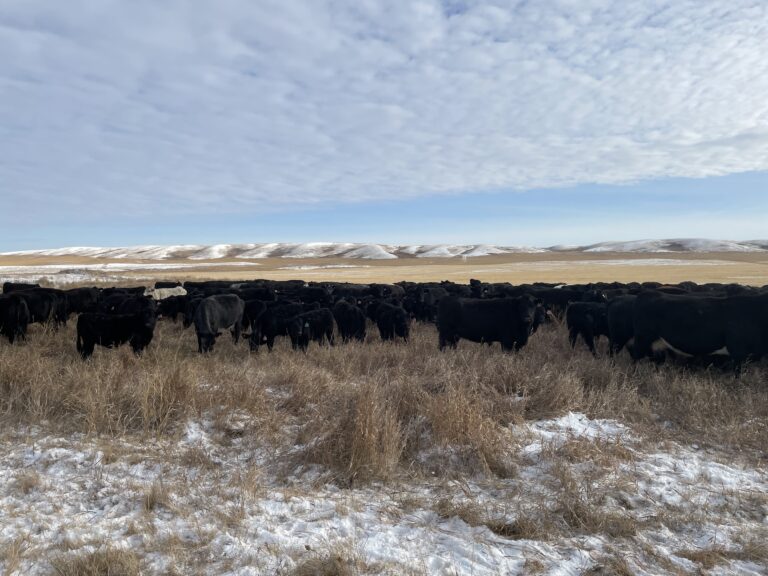
When Chelsey Siemens and her husband, Chris, established Black Diamond Agro 12 years ago, their focus was clear: build a commercial cow-calf herd that could produce consistent, high-quality calves. Operating in west-central Saskatchewan, they now run 300 black Angus-based cows with some Gelbvieh and Shorthorn influence.
With a breeding objective centered on producing calves with strong weaning weights and uniformity, record-keeping has been their main tool for understanding which cows and management decisions drive that success.

“We’ve been building our herd,” Chelsey says, “And right from the start, we realized that if we wanted to make genetic progress, we needed to be tracking the right information.”
Building a foundation of data
Marketing uniform calves is a key driver for Black Diamond Agro’s profitability.
Calves are typically sold through pre-sort sales at the local auction or online with TEAM auctions. Occasionally, they will retain groups of calves to background until February or March.
Chelsey looks after the herd records herself, using a system that’s simple but effective: Excel spreadsheets.
Every cow and calf gets an individual ID, matched during branding or through summer checks. Chelsey records treatments and withdrawal times, weaning weights and visual assessments of calf performance. This has allowed the Siemens to move beyond basic fertility and structure-based culling decisions.
“Now we can cull based on performance,” Chelsey explains. “Before, we were just removing opens or cows with udder or leg issues. But now we’re identifying cows that consistently raise lower-performing calves and make decisions based on that information.”
Using records to drive improvements
Over time, the records began revealing clear trends. While they had been trying to select for both weaning weight and maternal traits, their data showed progress in neither area.
“When we really look at the records, we realized we were trying to do too much at once,” says Chelsey. “So, we decided to outsource our replacement heifer purchases to a producer who focused on strong maternal genetics, while we concentrated on improving weaning weight performance.”
Now, the Siemens buy bred heifers from a trusted source that shares their values for calving ease, docility and moderate milk production—freeing them to select sires for growth and uniformity.
Selecting the right bulls
Chelsey approaches bull selection with a team mindset.
“I think of my bulls as a team rather than focusing on one standout individual,” she says. “I want them all to be fairly complementary and consistent.”
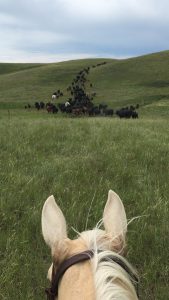
Expected progeny differences (EPDs) are her first selection filter, especially for calving ease and weaning weight. Once a shortlist is developed, she relies heavily on relationships with bull suppliers—learning about cow families, longevity and the traits that don’t show up on paper.
Most bulls are Angus, complementing the predominantly Angus-based cowherd. They usually run 12–16 bulls each breeding season, sourcing from four or five trusted suppliers.
Challenges and looking ahead
“Ten years ago, I wanted to do everything at once—collect every piece of data, analyze everything,” she recalls. “But I’ve learned it’s better to take it one step at a time. The first win for us was just getting a foolproof ID system. Everything else came from that.”
For the Siemens, record-keeping isn’t about spreadsheets or software—it’s about making better, more confident decisions for their herd.
“Good records don’t have to be complicated,” Chelsey says. “They just have to be useful.”
She’s now working on improving efficiency by using RFID readers for faster data capture during handling events.
They also plan to incorporate genomic and parentage testing in the coming years, to link individual performance data back to specific sires. The main barrier so far has been cost, but she believes the return on information will be worthwhile.
“Knowing which bulls are really performing for us will help us make even better breeding decisions,” she says.
Key takeaways
- Define clear, simple breeding goals that align with your marketing strategy.
- Build trusted relationships with bull and heifer suppliers (if you are purchasing replacement heifers).
- Use EPDs and cow family knowledge together for balanced selection.
- Consistency in data collection can drive real progress over time.
Visit the BCRC website to learn more about this resource: BeefResearch.ca/genetics.
Leave a Comment

Latest News
-
October 17, 2026 Business Tools
Building a uniform cow herd through intentional genetic selection
-
October 16, 2026 News
AgKnow to be transferred to new non-profit organization
-
October 15, 2026 Innovation & Technology
New tool helps producers track crop water use
Cattle Report
Updated: October 16, 2026
Steers
Live: ---
Rail: 500.00 del
Heifers
Live: ---
Rail: 500.00 del
Choice Steers
Live: 220.00 (IA)*few
Rail: 345.00-355.00 (IA, NE)
Choice Heifers
Live: 220.00 (IA)*few
Rail: 345.00-355.00 (IA, NE)
Boner Cows
Over 500 lbs: 258.94
Canadian Dollar
$70.94 0.25
Livestock Price Insurance Index
| Expiry | Fed | Feeder | Calf |
|---|---|---|---|
| 08-Feb-27 | 290 | 458 | -- |
| 08-Mar-27 | 290 | 454 | -- |
| 05-Apr-27 | 294 | 452 | -- |
| 03-May-27 | 300 | 450 | -- |
| 31-May-27 | 306 | 456 | -- |
| 28-Jun-27 | 302 | 456 | -- |
| - | - | - | - |
Last Updated on October 15, 2026

Add abpdaily.com to your home screen
Tap the menu button next to the address bar or at the bottom of your browser.
Select ‘Install’ or ‘Add to Homescreen’ to stay connected.
Share this article on
About the Author
The Beef Cattle Research Council (BCRC) is Canada’s national industry-led funding agency for beef, cattle and forage research. The BCRC is funded through a portion of a producer-paid national levy as well as government and industry funding, and is directed by a committee of beef producers from across the country. Find out More