Live: ---
Rail: 490.00-500.00 del (bids/sales)

{{ weatherTemp }}°C
{{ weatherCity }}

AB Direct - Steers
AB Direct - Heifers
Live: ---
Rail: 490.00-500.00 del (bids/sales)
Rail: 490.00-500.00 del (bids/sales)
US Trade- Steers
Live: ---
Rail: ---
Rail: ---
US Trade - Heifers
Live: ---
Rail: ---
Rail: ---
Canadian Dollar
$71.45
0.10
0.10
October 22, 2026
Health & Production
Check dugouts before freeze-up to protect winter water supplies
Before ice settles over farm and ranch dugouts, a fall inspection can help producers protect water quality, check equipment, and prepare for reliable winter livestock watering.
Whether a dugout supplies water year-round or serves seasonal pastures, checking its condition now provides an opportunity to address maintenance needs before winter makes access more difficult.
Alberta Agriculture’s Quality Farm Dugouts manual identifies aeration equipment, water intake positioning, grass buffers and signs of contaminated runoff among as key items to monitor.
Check the aeration system
For dugouts equipped with aeration systems, particularly those supplying water through winter, checking that equipment before freeze-up is an important part of maintaining water quality.
As plants and algae decompose, they consume dissolved oxygen. Ice cover limits oxygen replenishment from the atmosphere, allowing conditions to develop that can leave water black and foul-smelling.
Before freeze-up, check the compressor, inspect the air line for damage and confirm the check valve is functioning. Inspect the diffuser and clean or replace it as needed.
Provincial guidance recommends continuous, year-round aeration, with the diffuser positioned on or near the bottom to circulate oxygen throughout the dugout. A properly selected diffuser distributes air more efficiently than an open-ended hose.
Inspect and position the water intake
Floating intakes also need attention before winter. Inspect and clean the intake, including any screen or perforations that could become plugged.
Alberta’s technical guidance describes suspending the intake approximately four to five feet below the float to keep it beneath winter ice. The intake line also needs sufficient weight to prevent it from floating toward the surface and freezing.
Check the intake’s position against the water remaining in the dugout, particularly where levels have fallen through the grazing season.
Protect the banks and incoming water
A fall inspection should extend beyond the equipment to the banks and the area supplying runoff.
Removing volunteer shrubs and saplings from dugout banks can also reduce the amount of vegetation entering and decomposing in the water.
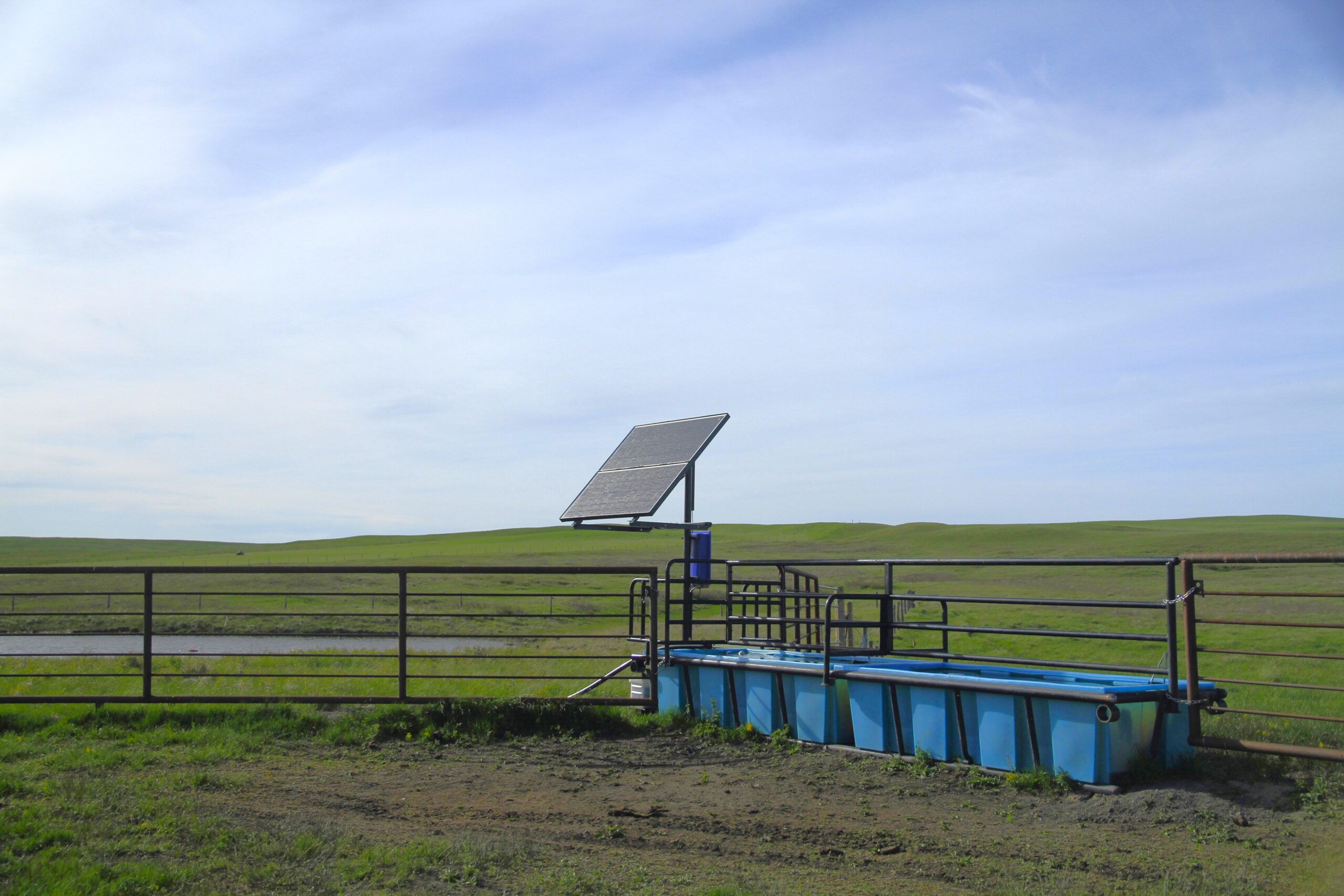
Keeping cattle out of the dugout helps protect both the water supply and the banks. Alberta Agriculture and Irrigation recommends fencing water sources and providing off-source watering through troughs, tanks or pipelines to reduce contamination, trampling and erosion.
Off-site watering can also offer animal health and management benefits. By limiting direct livestock access to dugouts, producers can reduce disturbance of the water source and help maintain more consistent water quality. The Beef Cattle Research Council provides additional information on livestock water systems and the benefits of managing water access.
Plan for winter safety
Aeration can create open water and weak areas in dugout ice, posing a hazard to people and animals.
Post highly visible warning signs and ensure family members and others using the property understand the danger.
Maintain fencing to restrict access. When inspecting close to the water’s edge, avoid working alone and keep a rope with a flotation device available, as recommended in Alberta Agriculture and Irrigation’s June 2026 dugout guidance.
Keep monitoring water quality
Equipment maintenance and visual inspections are valuable, but water testing remains an important part of managing a livestock water supply.
Alberta Agriculture and Irrigation recommends regular testing to assess whether water is suitable for its intended use. Water quality can change without an obvious difference in appearance, smell or taste, so those observations alone cannot confirm suitability.
Producers seeking help with dugout management or water quality can contact an Alberta Agriculture and Irrigation water specialist at 310-FARM (3276). Additional technical information is available through the province’s farm water resources page.
Expanded dugout exemptions support water storage
Alberta producers have greater flexibility to store water under expanded Water Act exemptions announced in January 2026.
The construction approval-exemption threshold for qualifying agricultural dugouts increased from 2,500 to 7,500 cubic metres, while the annual water-use exemption increased to 7,500 cubic metres. Applicable exemption conditions still need to be met.
ABP advocated for increased on-farm water storage through the province’s water availability consultations and welcomed the expanded dugout exemption as a practical step toward improved drought preparedness.
Leave a Comment

You might also be interested in
-
October 20, 2026 News
Alberta launches water studies as demand continues to grow
-
June 10, 2026 Checking in with ABP
From the Government Desk: ABP keeping up momentum
Cattle Report
Updated: October 22, 2026
Steers
Live: ---
Rail: 490.00-500.00 del (bids/sales)
Heifers
Live: ---
Rail: 490.00-500.00 del (bids/sales)
Choice Steers
Live: ---
Rail: ---
Choice Heifers
Live: ---
Rail: ---
Boner Cows
Over 500 lbs: 256.45
Canadian Dollar
$71.45 0.10
Livestock Price Insurance Index
| Expiry | Fed | Feeder | Calf |
|---|---|---|---|
| 08-Feb-27 | 290 | 458 | -- |
| 08-Mar-27 | 290 | 454 | -- |
| 05-Apr-27 | 294 | 452 | -- |
| 03-May-27 | 300 | 450 | -- |
| 31-May-27 | 306 | 456 | -- |
| 28-Jun-27 | 302 | 456 | -- |
| - | - | - | - |
Last Updated on October 15, 2026

Add abpdaily.com to your home screen
Tap the menu button next to the address bar or at the bottom of your browser.
Select ‘Install’ or ‘Add to Homescreen’ to stay connected.
Share this article on
About the Author
Brad Brinkworth has a deep background in strategic communications and content, working across agriculture in Alberta and beyond. He grew up with extended family involved in both crop and livestock farming, and holds a degree in Journalism and Communications from the University of Minnesota. Brad enjoys telling the story of agriculture and creating clear, purposeful content that connects with producers. He and his family are based in Calgary.