Live: ---
Rail: 495.00-500.00 del

{{ weatherTemp }}°C
{{ weatherCity }}

AB Direct - Steers
AB Direct - Heifers
Live: ---
Rail: 495.00-500.00 del
Rail: 495.00-500.00 del
US Trade- Steers
Live: 218.00 (IA, NE)
Rail: 345.00 (NE, IA)
Rail: 345.00 (NE, IA)
US Trade - Heifers
Live: 218.00 (IA, NE)
Rail: 345.00 (NE, IA)
Rail: 345.00 (NE, IA)
Canadian Dollar
$70.27
0.26
0.26
August 5, 2026
Checking in with ABP
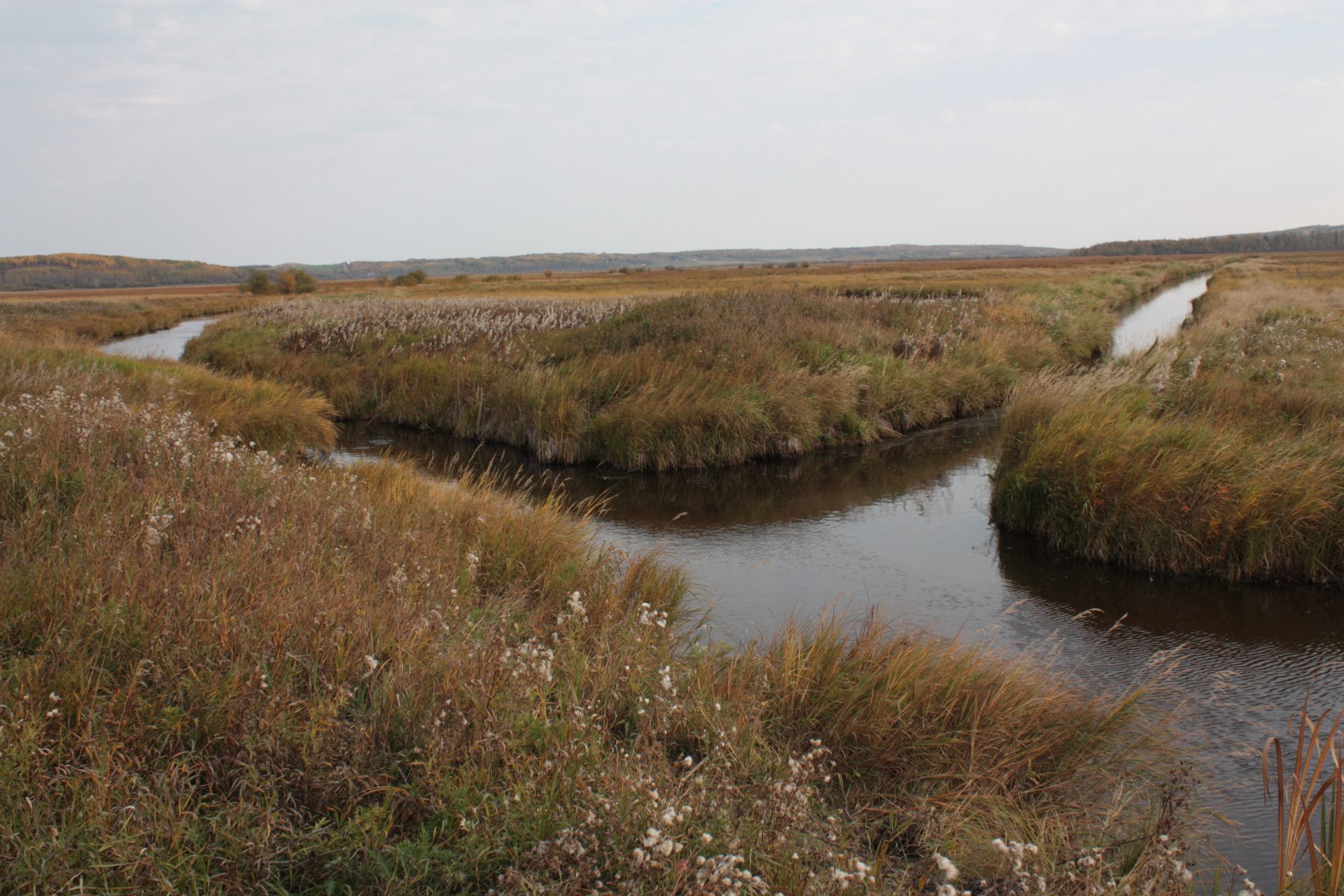
Holding the land in trust for the future
For as long as Grant Taillieu can remember, his family and neighbours have raised cattle and managed grasslands with conservation-minded practices. The health of the soil, plants, wildlife and water is always a top priority, which in turn supports the health of the cattle on the land.
“I was fortunate enough to grow up in a community or a group of people in the southern interior of B.C. where you couldn’t afford to make a mistake on that delicate rangeland. So, it was acknowledged and dealt with 40, 50, 60 years ago,” Grant says of rangeland health. “It was just established as ‘this is what we do.’”
In 2001, Grant’s father Gerry began managing Tomahawk Ranch, a 14,000-acre cattle ranch in Parkland County. Grant worked on this ranch for about 20 years. During this time, Gerry became ALUS Parkland’s first-ever participant, signing up when the program was introduced in 2012.
ALUS engages farmers in creating nature-based solutions on their land. The organization’s collaborative work builds climate resilience and enhances biodiversity for the benefit of communities and future generations.
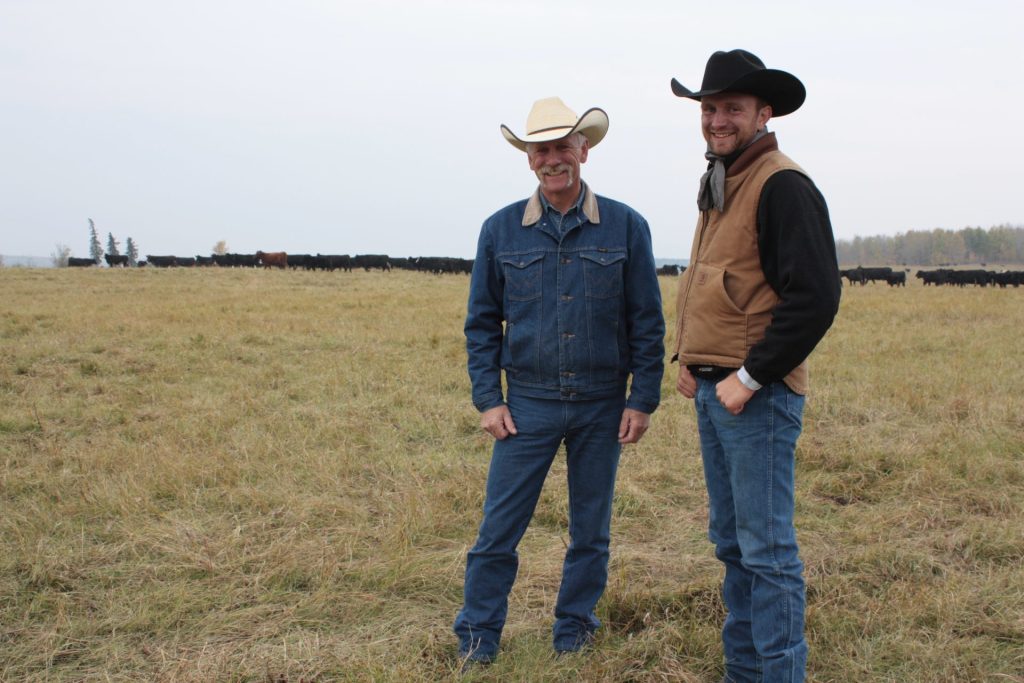
In 2013, Gerry, Grant, and their families were awarded Alberta Beef Producers’ Environmental Stewardship Award, which recognized their long-term commitment to rehabilitating overgrazed grasslands and damaged soils. On this ranch, the Taillieus also protected waterways with exclusion fencing and solar water pumps, which reduce erosion and water quality risks.
Grant and his wife Hali now own Taillieu Cattle Company in Tomahawk. They run 2,700 cow-calf pairs on owned and rented land that comprises tame and native forages as well as aspen forests. The couple recently took on the lease of the Tomahawk Ranch, where Grant is familiar with managing the ecologically sensitive land. Indeed, Grant and Hali continue to use a holistic management approach that addresses the needs of the land, grass and water.
Between the tame and native forages, Grant estimates up to 40 plant species grow in their pastures. The couple work hard to maintain that diversity.
“The [plants] need adequate recovery time, and we try and maintain as much of a leaf component on that plant as we can in between grazings because that’s our solar panel and that’s what drives everything,” Grant says.
The management intensive grazing practices they use ensure the land can rest and recover throughout the season. The intensive part means that Grant and Hali check the land frequently to see what’s happening, respond to conditions and make changes depending on the needs of the land and cattle.
Fortunately, technology has made their jobs a bit easier. About two years ago, the couple began using a drone to check their cattle and water sources.
“It gives us the ability to accomplish in 20 minutes from a comfortable chair what would have taken a staff member the better part of a day to do,” Grant says of the drone. “It gives such a different perspective and is so efficient. I wouldn’t want to be without it now.”
But in ranching, and most agricultural sectors, producers’ livelihoods depend on the weather – a factor that is entirely out of their control.
“No year is the same, no season is the same,” Grant says. “We’re constantly reacting to variables that are absolutely out of our control. I don’t think any business outside of agriculture faces anything like that.”
From the Archives: Alberta Beef Producers presents the 2013 Environmental Stewardship Award.
Indeed, timely rains in June shifted their entire outlook on the year.
“It’s been a good start for the first time in six or seven years. And if you’d asked me three weeks ago how I felt, I’d be terrified,” Grant says. “We were already planning on destocking probably 30 or 40 per cent of our livestock. We’re fortunate enough that we did get three inches of rain over the last two weeks, which is about perfect and that’s changed our whole world.”
Despite the stress, long hours and unpredictability, the Taillieus are deeply connected to the work they do, the land they steward and positive impacts they can have on important ecosystems.
“Ranchers operating on that land are more worried about the health and sustainability of that ground than anybody else ever could be,” Grant says. “We believe we’re holding it in trust for the future. It’s in good hands.”
Share this article on



You might also be interested in
-
July 6, 2026 Checking in with ABP
Stewardship runs deep for the Walton family
-
February 25, 2026 Inspiration
Why the International Year of Rangelands and Pastoralists matters to Alberta ranchers
Cattle Report
Updated: October 9, 2026
Steers
Live: ---
Rail: 495.00-500.00 del
Heifers
Live: ---
Rail: 495.00-500.00 del
Choice Steers
Live: 218.00 (IA, NE)
Rail: 345.00 (NE, IA)
Choice Heifers
Live: 218.00 (IA, NE)
Rail: 345.00 (NE, IA)
Boner Cows
Over 500 lbs: 268.04
Canadian Dollar
$70.27 0.26
Livestock Price Insurance Index
| Expiry | Fed | Feeder | Calf |
|---|---|---|---|
| 04-Jan-27 | -- | -- | -- |
| 01-Feb-27 | 288 | 456 | -- |
| 01-Mar-27 | 286 | 450 | -- |
| 29-Mar-27 | 290 | 448 | -- |
| 26-Apr-27 | 296 | 444 | -- |
| 24-May-27 | 304 | 450 | -- |
| 21-Jun-27 | 302 | 454 | -- |
Last Updated on October 8, 2026