Live: ---
Rail: 525.00-538.00 del

{{ weatherTemp }}°C
{{ weatherCity }}

AB Direct - Steers
AB Direct - Heifers
Live: ---
Rail: 525.00-538.00 del
Rail: 525.00-538.00 del
US Trade- Steers
Live: 235.00-236.00 (TX, KN)
Rail: 372.00 (IA, NE)
Rail: 372.00 (IA, NE)
US Trade - Heifers
Live: 235.00-236.00 (TX, KN)
Rail: 372.00 (IA, NE)
Rail: 372.00 (IA, NE)
Canadian Dollar
$72.99
0.42
0.42
(Seven D Media)
December 20, 2025
Health & Production
Now is the Time: Actively preventing foot and mouth disease
As Canadian beef producers, we take pride in our disease-free status and the global reputation of our livestock industry. Canada has been free of foot and mouth disease (FMD) since 1952, an achievement that has allowed us to maintain valuable export markets and consumer confidence. But this success shouldn’t breed complacency—it should motivate us to stay prepared.
FMD is one of the most contagious animal diseases affecting cloven-hoofed animals, including cattle, sheep, pigs, and goats. While it’s not a threat to human health or food safety, an outbreak would be economically devastating. An FMD outbreak in Canada could cost between $22.6 billion and $75.8 billion depending on outbreak size, severely disrupting animal and meat product exports to international markets.
The disease is currently present in 77 per cent of the global livestock population across Africa, the Middle East, Asia, and limited areas of South America. The FMD virus was recently detected in parts of Europe normally free of the disease and the continent is now experiencing its worst outbreak since 2001. With increased global travel and trade, the risk of introduction is real, making prevention and preparedness essential.
Why act now?
The absence of FMD in Canada creates the perfect opportunity to learn and prepare without the pressure of an active outbreak. Emergency preparedness isn’t about expecting disaster—it’s about being ready if it happens to limit the damage, just like car insurance. Understanding FMD helps protect our livelihoods and industry.
Knowledge is protection
Recognizing FMD symptoms could be the difference between containing an outbreak and facing industrywide devastation. Key signs include fever, depression, excessive drooling, lameness, and blisters on the mouth, teats, and feet. Animals may also show reduced feed intake and milk production. Submitted by the Beef Cattle Research Council.
If you suspect FMD, immediately stop all animal movement and contact your veterinarian. Early detection and rapid response are critical to limiting the spread and economic impact. It’s better to call and be wrong than it is to ignore symptoms that could lead to a multi-billion-dollar cost to our industry.
Prevention is your responsibility and your shield
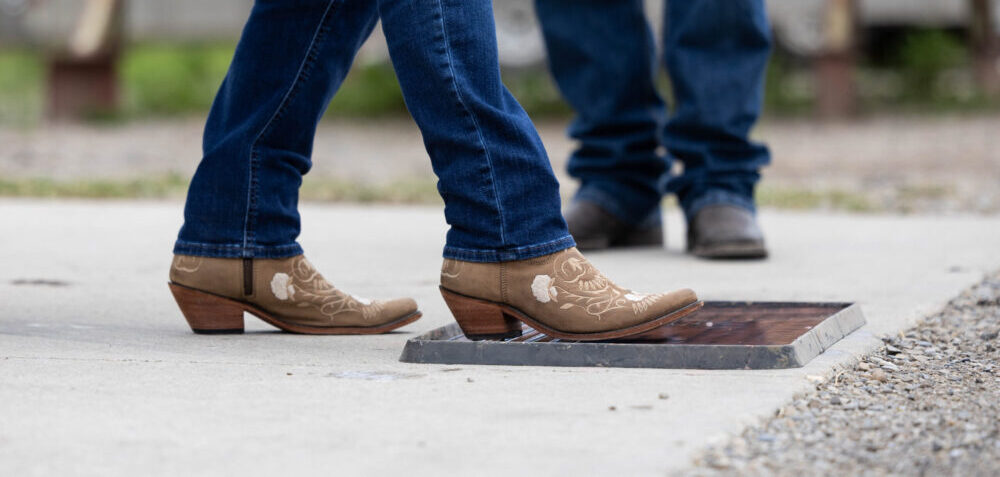
The FMD virus easily hitchhikes on contaminated surfaces, making vehicles, equipment, and footwear prime carriers of the disease between farms. The virus can survive on inanimate objects (called fomites) and organic material for extended periods.
Doing these things can significantly reduce risks:
- Make it a habit to wash vehicles, trailers, equipment, and boots when moving between operations. Anything that comes into direct contact with soil, manure, and animal areas where the virus concentrates create a direct pathway for disease spread across multiple operations. Someone walking or driving through an infected area can carry millions of virus particles to the next location.
- Keep track of who’s coming and going on your operation and set some basic rules for farm visitors. You can implement appropriate precautions (such as boot change or vehicle wash) based on the visitor’s recent activities. Detailed visitor logs enable rapid identification of potentially exposed farms, allowing authorities to implement containment measures quickly and prevent further spread.
- Keep accurate records of animal movements and farm activities. Without accurate records of where your animals went (sales, shows, other farms), investigators lose precious time reconstructing animal movements in the case of an outbreak which allows the disease more opportunity to spread. Complete records enable faster implementation of movement controls and quarantine zones, preventing further spread while maintaining industry operations in unaffected areas.
These measures work together as layers of protection—if one fails, others provide backup security to protect your herd and the broader industry.
For those travelling internationally, especially to FMD-positive countries:
- avoid livestock contact abroad,
- don’t bring back cured or uncured meats, wool or hide,
- clean and disinfect clothing and footwear, and
- wait appropriate periods before contacting animals upon return—five days from any country, or 14 days from FMD-positive regions.
Industry-made resources at your fingertips
The Beef Cattle Research Council, with support from Animal Health Canada, has developed practical materials specifically for Canadian beef cattle producers. These include videos, graphics, travel guidelines, and a symptoms poster—all designed to help you understand, prepare, and respond effectively. Find them at beefresearch.ca/FMD.
Facing potential challenges from a position of strength
Our FMD-free status is a collective achievement requiring ongoing vigilance from every producer. By taking time now to understand the disease, implement preventative measures, and prepare response plans, we protect not just our individual operations but our entire industry.
This article was first published in Volume 5 Issue 3 of ABP Magazine (Fall 2025). Watch for more digital content from the magazine on ABP Daily.
Share this article on


You might also be interested in
-
October 28, 2025 Current Markets & Forecasts
The foundation for market access is built on-farm
-
June 1, 2023 Health & Production
FMD biosecurity advice for international travellers
-
April 6, 2023 Issues & Insights
Federal funding announced for FMD vaccine bank
Cattle Report
Updated: March 13, 2026
Steers
Live: ---
Rail: 525.00-538.00 del
Heifers
Live: ---
Rail: 525.00-538.00 del
Choice Steers
Live: 235.00-236.00 (TX, KN)
Rail: 372.00 (IA, NE)
Choice Heifers
Live: 235.00-236.00 (TX, KN)
Rail: 372.00 (IA, NE)
Boner Cows
Over 500 lbs: 315.65
Canadian Dollar
$72.99 0.42
Livestock Price Insurance Index
| Expiry | Fed | Feeder | Calf |
|---|---|---|---|
| 08-Jun-26 | 302 | 456 | -- |
| 06-Ju-26 | 296 | -- | -- |
| 03-Aug-26 | 294 | -- | -- |
| 31-Aug-26 | 286 | 452 | 454 |
| 28-Sep-26 | 284 | 452 | 450 |
| 26-Oct-26 | 278 | 446 | 444 |
| 23-Nov-26 | 274 | 436 | 434 |
Last Updated on March 12, 2026