Live: ---
Rail: 500.00 del

{{ weatherTemp }}°C
{{ weatherCity }}

AB Direct - Steers
AB Direct - Heifers
Live: ---
Rail: 500.00 del
Rail: 500.00 del
US Trade- Steers
Live: 220.00 (IA)*few
Rail: 345.00-355.00 (IA, NE)
Rail: 345.00-355.00 (IA, NE)
US Trade - Heifers
Live: 220.00 (IA)*few
Rail: 345.00-355.00 (IA, NE)
Rail: 345.00-355.00 (IA, NE)
Canadian Dollar
$70.94
0.25
0.25
April 30, 2026
Health & Production
Maximizing Calf Performance: Where do implants fit on a cow-calf operation?
Growth implants are among the most researched and cost-effective technologies in the beef industry. However, adoption on Canadian cow-calf operations remains relatively low, despite similar performance and economic benefits seen in backgrounding and feedlot cattle.
Questions around labour, economics, animal health, and confidence in the implant procedure often influence producer decisions.
These issues were the focus of a recent Beef Cattle Research Council webinar, “To Implant or Not? What Cow-Calf Producers Need to Know,” featuring Dr. Lauren Younker of TELUS Agriculture and Manitoba beef producer Betty Green of G7 Ranch. The discussion combined research, practical advice, and real-world experience to help producers evaluate whether implants fit their operation.
What are growth implants?
Growth implants are small hormone-containing pellets placed just under the skin on the back of the ear. The compounds mimic naturally occurring hormones to support lean muscle growth and improved feed efficiency.
There is no withdrawal time, as ears are removed at processing and do not enter the food system.
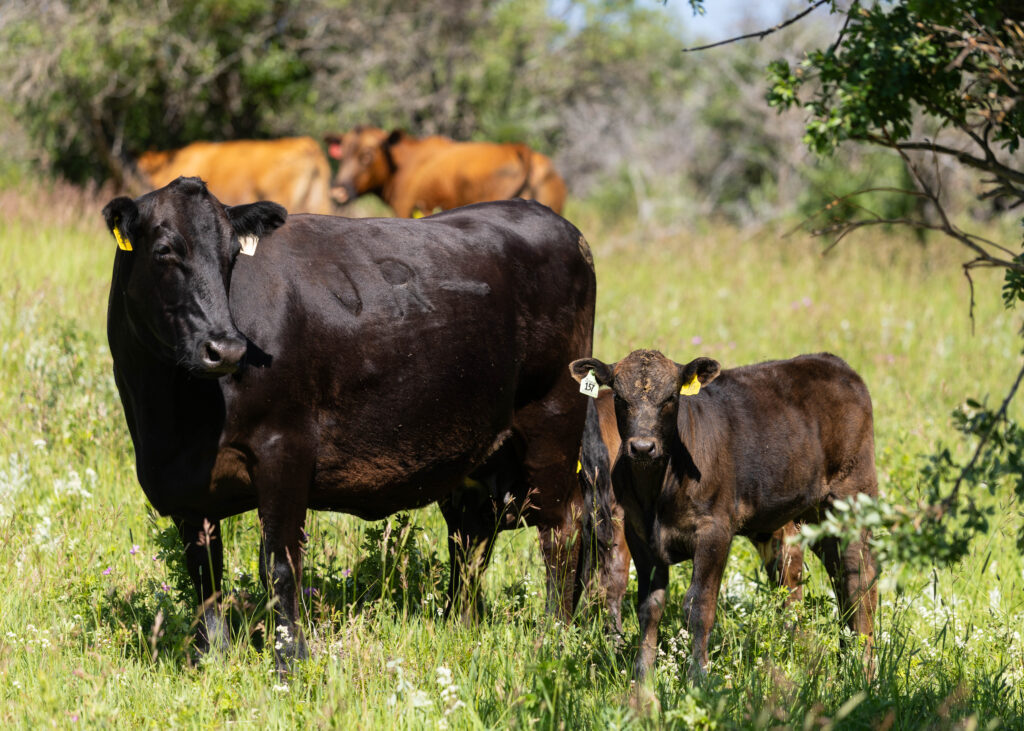
Explaining how implants function in pasture-based systems, Younker noted they help cattle make better use of existing nutrition.
“What it’s doing is essentially helping your calves use the nutrients they’re consuming on pasture to turn into more lean growth and more pounds for you as a producer at weaning time,” she says.
She emphasized that implants are not a replacement for strong management practices, but rather a tool to complement vaccination programs, biosecurity, and balanced nutrition.
Understanding implant types
Not all implants are the same. There are three primary hormone compounds used, each with different potency levels and applications:
- Progestins: Synthetic progesterone; least potent and often used in suckling calves
- Estrogens: Mimic natural estrogen; medium potency
- Androgens: Mimic testosterone; highest potency and typically used in backgrounding or finishing systems
Due to these differences, producers are encouraged to work with their veterinarian to match implant type with production stage.
“Most cow-calf producers would implant at branding with either a progestin or an estrogen-type implant,” says Younker. “Androgen implants are better suited for later production stages when energy intake is higher.”
The economics of implanting
One of the strongest arguments for implants is return on investment.
Implants can:
- Increase average daily gain (ADG) by 10-30 per cent
- Improve feed efficiency by 5-15 per cent
“We always talk about implants in the feedlot world, and in cow-calf too, as being one of the highest ROIs that we can have,” says Younker. “They are the most consistent profit driver available.”
For cow-calf producers, this typically means heavier calves at weaning without significantly increasing costs.
Research from the University of Manitoba also indicates environmental benefits, including:
- 3-10 per cent reduction in greenhouse gas emissions
- 5-11 per cent reduction in land use
- 5-11 per cent reduction in water use
- 3-8 per cent reduction in ammonia emissions
What makes implants work, and what doesn’t
Implants are most effective when combined with strong management fundamentals. Key factors include:
- Healthy calves
- Adequate nutrition
- Minimal stress
- Proper timing and technique
“Cattle that have a better plane of nutrition will have a better response to that implant,” says Younker.
Correct placement is also critical. Poor technique can reduce effectiveness and impact animal welfare.
Proper implantation technique
Producers should follow these steps to ensure correct implant placement:
- Read label instructions and prepare equipment
- Properly restrain the calf
- Inspect and clean the ear
- Ensure hands and applicator are clean
- Disinfect the needle
- Pinch the top of the ear and position the applicator at a slight angle (bevel side up)
- Insert the needle between the skin and cartilage
- Slide the needle back slightly before depositing the implant
- Pull the trigger and withdraw the needle
- Check placement by feeling the implant site
- Clean the needle between animals
A producer’s perspective
Betty Green, co-owner of G7 Ranch in Manitoba, has used implants for more than 30 years.
She notes that consistency and attention to detail are essential.
“Consistency in implant procedures and attention to detail are important to ensure both animal welfare and performance outcomes,” she says.
Her experience reinforces that implants work best when integrated into a broader management system aligned with production goals.
Producers looking to learn more, including considerations around implanting heifers and fertility, are encouraged to review additional resources and consult with their veterinarian to make informed decisions for their operation.
Share this article on



Latest News
-
October 17, 2026 Business Tools
Building a uniform cow herd through intentional genetic selection
-
October 16, 2026 News
AgKnow to be transferred to new non-profit organization
-
October 15, 2026 Innovation & Technology
New tool helps producers track crop water use
Cattle Report
Updated: October 16, 2026
Steers
Live: ---
Rail: 500.00 del
Heifers
Live: ---
Rail: 500.00 del
Choice Steers
Live: 220.00 (IA)*few
Rail: 345.00-355.00 (IA, NE)
Choice Heifers
Live: 220.00 (IA)*few
Rail: 345.00-355.00 (IA, NE)
Boner Cows
Over 500 lbs: 258.94
Canadian Dollar
$70.94 0.25
Livestock Price Insurance Index
| Expiry | Fed | Feeder | Calf |
|---|---|---|---|
| 08-Feb-27 | 290 | 458 | -- |
| 08-Mar-27 | 290 | 454 | -- |
| 05-Apr-27 | 294 | 452 | -- |
| 03-May-27 | 300 | 450 | -- |
| 31-May-27 | 306 | 456 | -- |
| 28-Jun-27 | 302 | 456 | -- |
| - | - | - | - |
Last Updated on October 15, 2026