Live: ---
Rail: 491.75-499.75 FOB feedlot (last week)

{{ weatherTemp }}°C
{{ weatherCity }}

AB Direct - Steers
AB Direct - Heifers
Live: ---
Rail: 491.75-499.75 FOB feedlot (last week)
Rail: 491.75-499.75 FOB feedlot (last week)
US Trade- Steers
Live: 218.00-222.00 (NE, IA), 220.00-222.00 (TX, KS) last week
Rail: 345.00-350.00 (NE, IA) last week
Rail: 345.00-350.00 (NE, IA) last week
US Trade - Heifers
Live: 218.00-222.00 (NE, IA), 220.00-222.00 (TX, KS) last week
Rail: 345.00-350.00 (NE, IA) last week
Rail: 345.00-350.00 (NE, IA) last week
Canadian Dollar
$72.14
0.19
0.19
August 31, 2026
Health & Production
Balancing cost, labour, and nutrition in cattle mineral programs
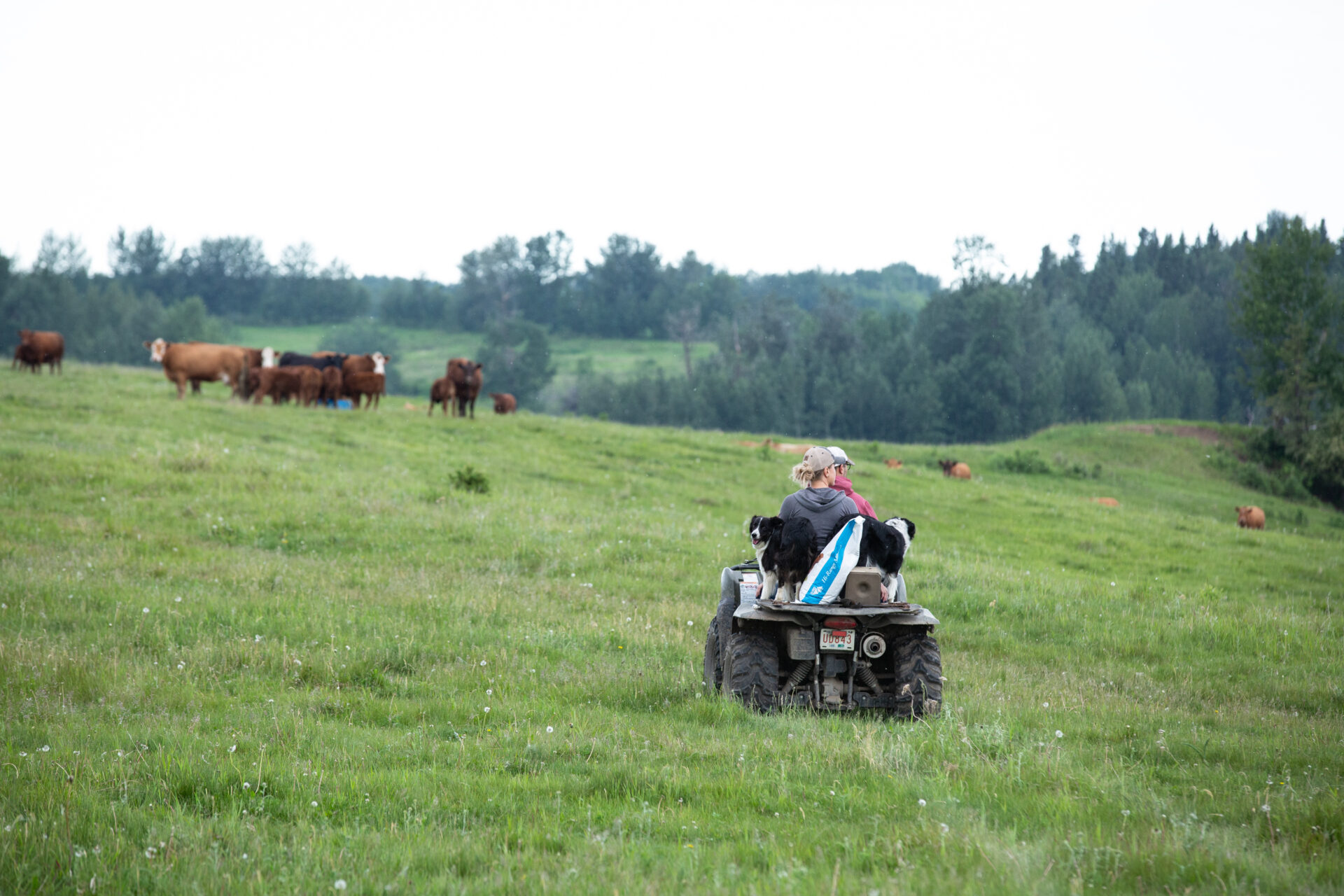
Providing cattle with the right minerals is an important part of herd nutrition, but the way those minerals are delivered can affect costs, labour requirements, and how consistently cattle receive the nutrients they need.
A new resource from the Beef Cattle Research Council (BCRC) compares five common mineral delivery methods and outlines the advantages and limitations producers may want to consider when selecting an approach for their operation.
There is a no one-size-fits-all mineral program. Forage quality, management style, herd size, labour availability, and production goals can all influence which delivery method works best.
Free-choice loose mineral
Loose mineral offers flexibility and can be formulated to complement the nutrient profile of local forages and feeds. Once feeders are in place, labour requirements are relatively low.
However, weather can lead to mineral loss, feeders require regular monitoring, and intake can vary considerably among animals. Herd dynamics may also limit access for some cattle.
Mineral tubs
Mineral tubs can be a practical option for remote pastures or operations looking to reduce labour. They are generally weather resistant, and tubs containing protein can help support cattle grazing mature, lower-quality forage.
The downside is a higher cost per animal compared with loose mineral, along with less flexibility to tailor mineral content to specific forage conditions. Consumption can also fluctuate based on weather, formulation, and herd behaviour.
Total mixed ration
Adding minerals to a total mixed ration (TMR) allows producers to more precisely balance mineral and vitamin levels according to cattle requirements. It can also promote more consistent intake across the herd.
The system requires daily feeding, equipment, and infrastructure such as mixers and scales, making it less practical for extensive grazing operations and some smaller farms.
Injectable minerals
Injectable products can quickly supply minerals such as copper, selenium, and zinc, while ensuring each animal receives a controlled dose. They may be particularly useful ahead of breeding, calving, transportation, or weaning.
Their effects are short term, however, injectable products typically provide only a limited range of minerals. A long-term mineral program is still needed, and repeated treatments can add to costs and handling requirements.
Mineral boluses
Boluses provide a slow release of trace minerals over several months and ensure each animal receives a consistent dose. This can make them a useful option for cattle in remote or extensive grazing systems.
However, boluses carry a higher upfront cost and require cattle to be handled for administration. Once given, the rate of mineral release cannot be easily adjusted to account for changing forage conditions or nutritional needs.
Finding the right fit
BCRC recommends consulting a nutritionist, veterinarian, or extension specialist when evaluating mineral delivery options.
Ultimately, the best strategy depends on balancing cattle requirements with forage conditions, labour availability, facilities and costs, while considering the unique needs of each operation.
Leave a Comment
Latest News
-
August 31, 2026 Health & Production
Balancing cost, labour, and nutrition in cattle mineral programs
-
August 28, 2026 Issues & Insights
Trade uncertainty shaping investment decisions, industry leaders say
-
August 28, 2026 Health & Production
BCRC highlights grazing management resources for summer
Cattle Report
Updated: August 31, 2026
Steers
Live: ---
Rail: 491.75-499.75 FOB feedlot (last week)
Heifers
Live: ---
Rail: 491.75-499.75 FOB feedlot (last week)
Choice Steers
Live: 218.00-222.00 (NE, IA), 220.00-222.00 (TX, KS) last week
Rail: 345.00-350.00 (NE, IA) last week
Choice Heifers
Live: 218.00-222.00 (NE, IA), 220.00-222.00 (TX, KS) last week
Rail: 345.00-350.00 (NE, IA) last week
Boner Cows
Over 500 lbs: 313.12
Canadian Dollar
$72.14 0.19
Livestock Price Insurance Index
| Expiry | Fed | Feeder | Calf |
|---|---|---|---|
| 23-Nov-26 | 266 | 414 | -- |
| 21-Dec-26 | 268 | 408 | -- |
| 18-Jan-27 | 266 | 406 | -- |
| 15-Feb-27 | 266 | 398 | -- |
| 15-Mar-27 | 266 | 398 | -- |
| 12-Apr-27 | 274 | 396 | -- |
| 10-May-27 | 280 | 402 | -- |
Last Updated on August 27, 2026

Add abpdaily.com to your home screen
Tap the menu button next to the address bar or at the bottom of your browser.
Select ‘Install’ or ‘Add to Homescreen’ to stay connected.
Share this article on
About the Author
Brad Brinkworth has a deep background in strategic communications and content, working across agriculture in Alberta and beyond. He grew up with extended family involved in both crop and livestock farming, and holds a degree in Journalism and Communications from the University of Minnesota. Brad enjoys telling the story of agriculture and creating clear, purposeful content that connects with producers. He and his family are based in Calgary.