Live: ---
Rail: ---

{{ weatherTemp }}°C
{{ weatherCity }}

AB Direct - Steers
AB Direct - Heifers
Live: ---
Rail: ---
Rail: ---
US Trade- Steers
Live: 220.00 (NE, IA)
Rail: 345.00-350.00 (IA, NE)
Rail: 345.00-350.00 (IA, NE)
US Trade - Heifers
Live: 220.00 (NE, IA)
Rail: 345.00-350.00 (IA, NE)
Rail: 345.00-350.00 (IA, NE)
Canadian Dollar
$70.36
0.09
0.09
November 26, 2026
Checking in with ABP
BCRC tips: How to cut winter feed waste
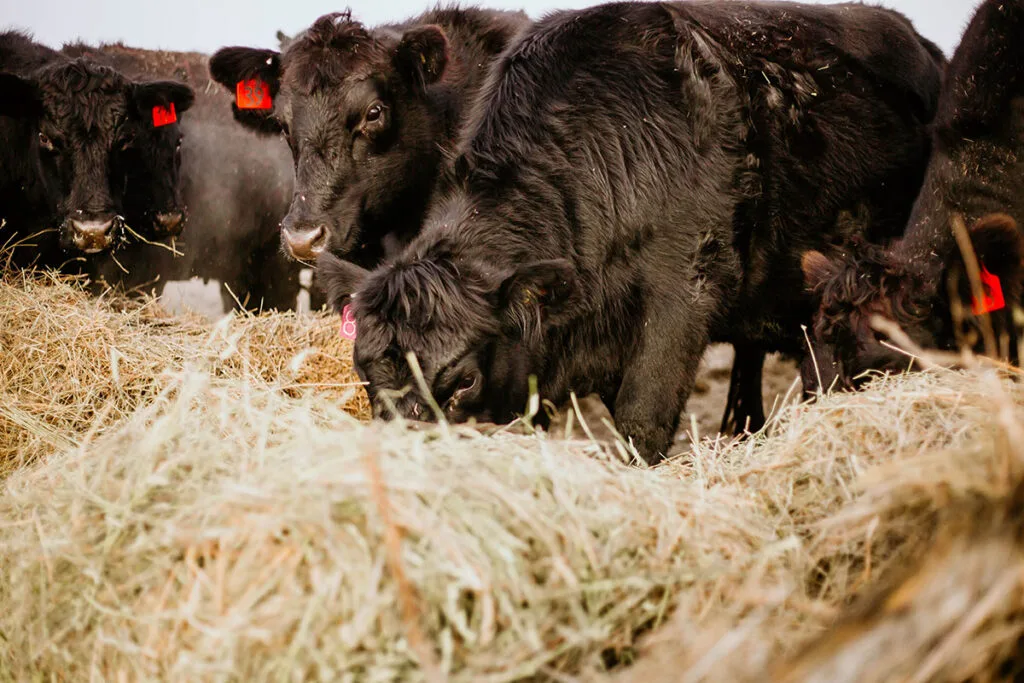
Winter feed is one of the biggest costs for beef producers. When hay spoils in storage or cattle trample forage at feeding time, producers lose feed they’ve already paid to harvest, store and deliver.
The Beef Cattle Research Council (BCRC) has developed an information resource that outlines practical ways to limit those losses, whether producers feed dry hay or silage or extend the grazing season with swath grazing.
Here’s a snapshot of some fundamentals:
Start with a feed test
Knowing the nutrient content of stored forage helps producers decide which feed to use for each group of cattle and where they may need to supplement.
Keep dry hay dry and limit trampling
Store bales on well-drained ground and leave room for air to circulate. At feeding time, give cattle enough space around round-bale feeders to reduce competition and trampling.
A portable bunk can also help limit losses where forage would otherwise be fed directly on the ground.
Keep air out of silage
In a bunker, tight packing and a good seal help protect silage in storage. Once the bunker is open, keeping the exposed face smooth as silage is removed limits air penetration and helps prevent further spoilage.
Manage access to swaths
Use fencing to give cattle access to a section they can clean up in about three days. After heavy snowfall, producers may need to clear snow from the swaths so cattle can reach the forage. Providing shelter away from the swaths can also help keep cattle from bedding down on their feed.
Read the BCRC’s full resource article, Eleven ways to avoid feed waste this winter.
Leave a Comment

Latest News
-
November 26, 2026 Checking in with ABP
BCRC tips: How to cut winter feed waste
-
November 26, 2026 Checking in with ABP
Understanding polled, horned and scurred genetics in beef cattle
-
November 25, 2026 Health & Production
Ergot in cattle feed: New research highlights hidden risks
Cattle Report
Updated: November 26, 2026
Steers
Live: ---
Rail: ---
Heifers
Live: ---
Rail: ---
Choice Steers
Live: 220.00 (NE, IA)
Rail: 345.00-350.00 (IA, NE)
Choice Heifers
Live: 220.00 (NE, IA)
Rail: 345.00-350.00 (IA, NE)
Boner Cows
Over 500 lbs: 233.20
Canadian Dollar
$70.36 0.09
Livestock Price Insurance Index
| Expiry | Fed | Feeder | Calf |
|---|---|---|---|
| 15-Feb-27 | 288 | 454 | -- |
| 15-Mar-27 | 290 | 454 | -- |
| 12-Apr-27 | 298 | 450 | -- |
| 10-May-27 | 304 | 452 | -- |
| 07-Jun-27 | 310 | 456 | -- |
| 05-Jul-27 | 304 | -- | -- |
| 02-Aug-27 | 300 | -- | -- |
Last Updated on November 20, 2026

Add abpdaily.com to your home screen
Tap the menu button next to the address bar or at the bottom of your browser.
Select ‘Install’ or ‘Add to Homescreen’ to stay connected.
Share this article on
About the Author
The Beef Cattle Research Council (BCRC) is Canada’s national industry-led funding agency for beef, cattle and forage research. The BCRC is funded through a portion of a producer-paid national levy as well as government and industry funding, and is directed by a committee of beef producers from across the country. Find out More