Live: ---
Rail: ---

{{ weatherTemp }}°C
{{ weatherCity }}

AB Direct - Steers
AB Direct - Heifers
Live: ---
Rail: ---
Rail: ---
US Trade- Steers
Live: ---
Rail: ---
Rail: ---
US Trade - Heifers
Live: ---
Rail: ---
Rail: ---
Canadian Dollar
$71.42
0.02
0.02
August 20, 2026
Health & Production
Water tips for remainder of summer grazing
As summer grazing continues, cattle producers are reminded that having plenty of stock water available doesn’t necessarily mean that water is good quality.
Water quality can change throughout the grazing season, even in dugouts and wells that have provided suitable water in previous years. High levels of sulphates, sodium and other compounds can affect cattle health and performance, while blue-green algae can create potentially serious toxicity risks.
The Beef Cattle Research Council (BCRC) recommends regular water testing as an important part of summer grazing management.
Poor-quality water can contribute to reduced gains, reproductive problems and disease and, in severe cases, death. Surface water sources such as dugouts, ponds and dams can be particularly variable, with water quality influenced by runoff, groundwater recharge, evaporation, precipitation and surrounding land use.
Test before moving cattle
Producers should consider testing water before moving cattle into that pasture rather than relying on its appearance or previous experience with the water source.
A representative sample should come from the water cattle are actually drinking. Samples can be collected in a clean one-litre container and submitted for analysis. Testing can identify concerns such as elevated total dissolved solids, sodium and sulphates.
Well water shouldn’t be overlooked either. Water quality can change over time, even when a well has historically provided good-quality water.
Regular testing also gives producers an opportunity to respond before water quality becomes a larger herd health issue. Depending on the situation, options may include moving cattle to another water source, hauling water, providing appropriate supplementation or using a pumping system to improve access to better-quality water.
Keep an eye on water sources
Along with testing, producers should regularly monitor cattle and their water sources throughout the grazing season.
When cattle are moved into a new field, taking time to settle them at the preferred water source can help ensure they know where to drink. This can be particularly important in larger pastures with multiple water sources, including temporary potholes or other sources that may deteriorate or dry up later in the season.
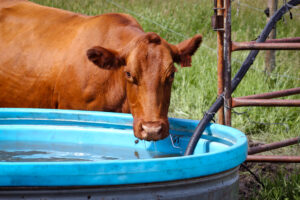
Where cattle depend entirely on a pipeline, trough or pumping system, daily monitoring is important during hot weather in case the system fails. Producers should also make sure calves can reach water in troughs used by cow-calf pairs.
Dugouts and other surface water sources should be monitored for signs of blue-green algae, or cyanobacteria. An oily sheen, appearance resembling spilled paint or material that looks like grass clippings floating in the water can indicate a potential problem.
Water management resources
BCRC has several resources available to help producers assess water quality and evaluate livestock watering options, including information on water systems for beef cattle and a Water Systems Calculator.
Regular testing and monitoring can help producers identify changing water conditions early and make management decisions before cattle health or performance is affected.
Share this article on




Latest News
-
October 21, 2026 Checking in with ABP
Results are in: Updates on animal health and food safety
-
October 21, 2026 Checking in with ABP
The Bovine: Producer priorities, policy, and what's ahead for ABP
-
October 20, 2026 Inspiration
Alberta purebred cattle earn top honours at 2026 Olds Fall Classic
Cattle Report
Updated: October 21, 2026
Steers
Live: ---
Rail: ---
Heifers
Live: ---
Rail: ---
Choice Steers
Live: ---
Rail: ---
Choice Heifers
Live: ---
Rail: ---
Boner Cows
Over 500 lbs: 258.05
Canadian Dollar
$71.42 0.02
Livestock Price Insurance Index
| Expiry | Fed | Feeder | Calf |
|---|---|---|---|
| 08-Feb-27 | 290 | 458 | -- |
| 08-Mar-27 | 290 | 454 | -- |
| 05-Apr-27 | 294 | 452 | -- |
| 03-May-27 | 300 | 450 | -- |
| 31-May-27 | 306 | 456 | -- |
| 28-Jun-27 | 302 | 456 | -- |
| - | - | - | - |
Last Updated on October 15, 2026